
TL;DR
-
Tokyo’s most accessible zoo. A solid 3–4 hour family half-day, with kids under junior high school age entering free
-
Enter via Omote-mon (Main Gate), a few minutes’ walk from JR Ueno Station’s Park Exit: do the East Garden first, then cross to the West Garden and exit via Benten-mon, on the Shinobazu Pond side
-
Stroller rental is ¥500 at each gate, with an 18 kg weight limit, so check your child’s weight before relying on it. Rental units vary in condition; if the wheels feel rough, it’s worth asking staff to swap it
-
In hot weather, the zoo prioritises animal welfare and moves animals indoors, so you may not see everything you planned
-
Some outdoor enclosures close at around 16:30, before the 17:00 official closing. Plan your visit backwards from that
-
Grab the free English guidebook at the entrance gate; it maps the whole zoo clearly
At a Glance
| Entry | Adults ¥600 · Over 65 ¥300 · High school students ¥200 · Junior high and below: Free |
| Hours | 9:30–17:00 (last entry 16:00) · Closed Mondays |
| Nearest station | JR Ueno Station (Park Exit), a few minutes’ walk to Omote-mon (Main Gate) |
| English support | Good. English signage throughout; free English guidebook at the gate |
| Strollers | Yes. Main paths are paved and manageable |
| Stroller rental | ¥500 near each gate. 18 kg weight limit; check before you queue |
| Baby facilities | Diaper-changing rooms in both East and West Gardens |
| Typical visit | 3–4 hours at a comfortable family pace |
Is It Worth It?
Short answer: yes, especially if you go in the morning.
Ueno Zoo is Japan’s oldest zoo and still one of Tokyo’s most practical family outings. Admission is free for children of junior high school age and below, it sits inside Ueno Park (already worth the trip), and there’s enough across both gardens to fill half a day without anyone getting bored or overwhelmed.
The honest version: this is not a world-class zoo by international standards. Some enclosures are older and smaller than you’d hope. On a hot summer weekend, crowds can build by mid-morning, and the heat pushes animals indoors where they’re harder to see. But the highlights (the shoebill, the small mammal house, the elephants, the tigers) reliably deliver. Kids come out talking about at least one animal they weren’t expecting.
We’ve taken our own twins four times since 2022, watching them go from not registering any of it as newborns to recognizing exactly where the bats and the shoebill are by age four. That arc shapes the age-by-age notes below.
By age:
-
0–1 (baby): Manageable with a lightweight stroller or carrier. Main paths are paved. Our first visit was in 2022, when our twins were newborns; we booked online (still required at the time) and went on a quiet weekday with almost no other visitors. The kids didn’t register any of it, but it made for a relaxed adult outing, more of a stroll through Ueno Park with animals along the way than a zoo trip in the usual sense.
-
2–4 (toddler): High sensory input: big animals, dim bat rooms, fish tanks. Attention runs out before the zoo does, so focus on the highlights and aim for around 2 hours. Across our visits at 2, 3, and 4 years old, the thing that never went the way we expected was which animal landed: our kids were far more captivated by a red panda pacing its enclosure than by the giant pandas everyone else had come to see, and one visit was nearly derailed by a sudden, intense interest in a stone turtle statue near the reptile house. By the most recent visit, at four, they’d started remembering where things were from watching animal shows at home, and the whole loop went noticeably more smoothly than the year before.
-
5–8 (young kids): The sweet spot, by reputation. Old enough to read the signs, delighted by the shoebill’s stillness, and surprised by the small mammal house. Can handle the full loop with one or two rest stops. We haven’t reached this age with our own kids yet, so take this bracket as informed expectation rather than firsthand report.
-
9+ (older kids): Will want to linger and read information boards. The small mammal house tends to be an unexpected favourite with this age group. Also ahead of us, not yet lived.
Getting There with Kids
Recommended: JR Yamanote Line or Tokyo Metro → Ueno Station (Park Exit)
Take the Park Exit and walk through Ueno Park to Omote-mon (Main Gate), right by the National Museum of Nature and Science. This is the gate we’ve used on every visit, and it sets you up to do the East Garden first.
| Route | From | Time | IC Card fare (approx.) |
|---|---|---|---|
| JR Yamanote Line | Shinjuku, Shibuya, Tokyo Station | 20–40 min | ¥200–260 |
| Tokyo Metro Ginza Line | Shibuya, Asakusa | 20–30 min | ¥200–250 |
| Tokyo Metro Hibiya Line | Ginza, Roppongi | 15–25 min | ¥180–220 |
IC card: Use Suica or Pasmo. Tap on, tap off, with no tickets and no language barrier at the machines. If you’re navigating Tokyo’s train network for the first time with children, see our full guide: Navigating Tokyo’s Train System with Kids.
By taxi/rideshare: Drop-off at the Ueno Park entrance is easy. Not necessary given how close the station is, but useful with very young children or a lot of gear.
What to See: East Garden
The East Garden is the larger of the two sections and where most families spend the majority of their time. Entering from Omote-mon puts you right at the start of the East Garden circuit.
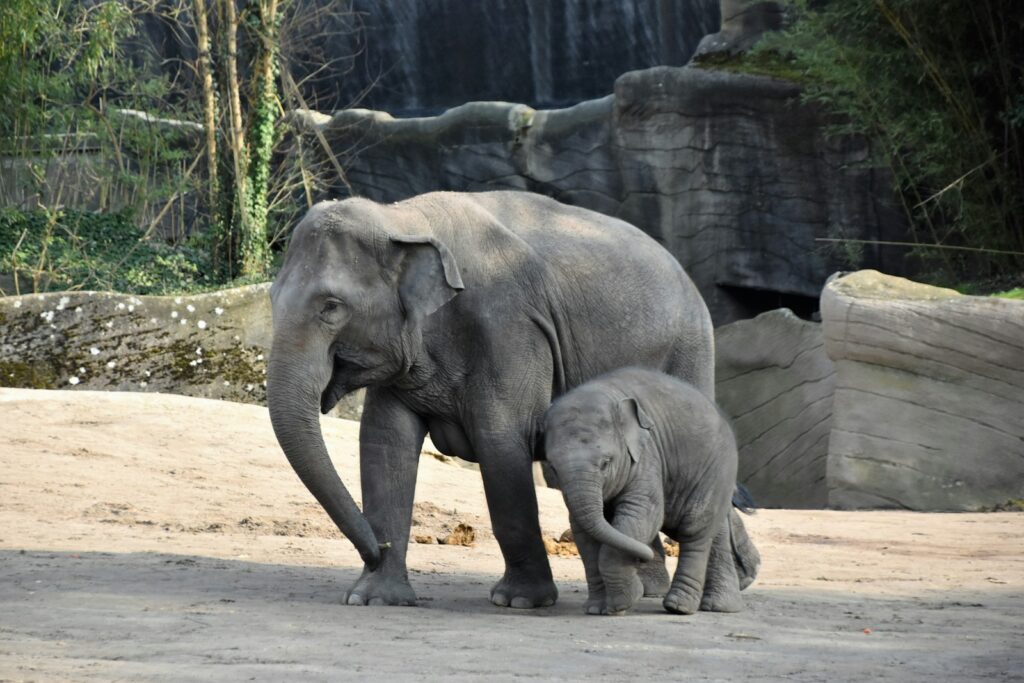
Elephants
The elephants are usually the first genuine “wow” for young kids. The sheer scale is different in person. The outdoor viewing area is accessible and tends not to be crowded first thing in the morning.
Hot weather note: On very hot days, elephants may be moved to an indoor area where viewing is limited. If seeing the elephants is a priority, go early in the day and earlier in the season (spring or autumn).
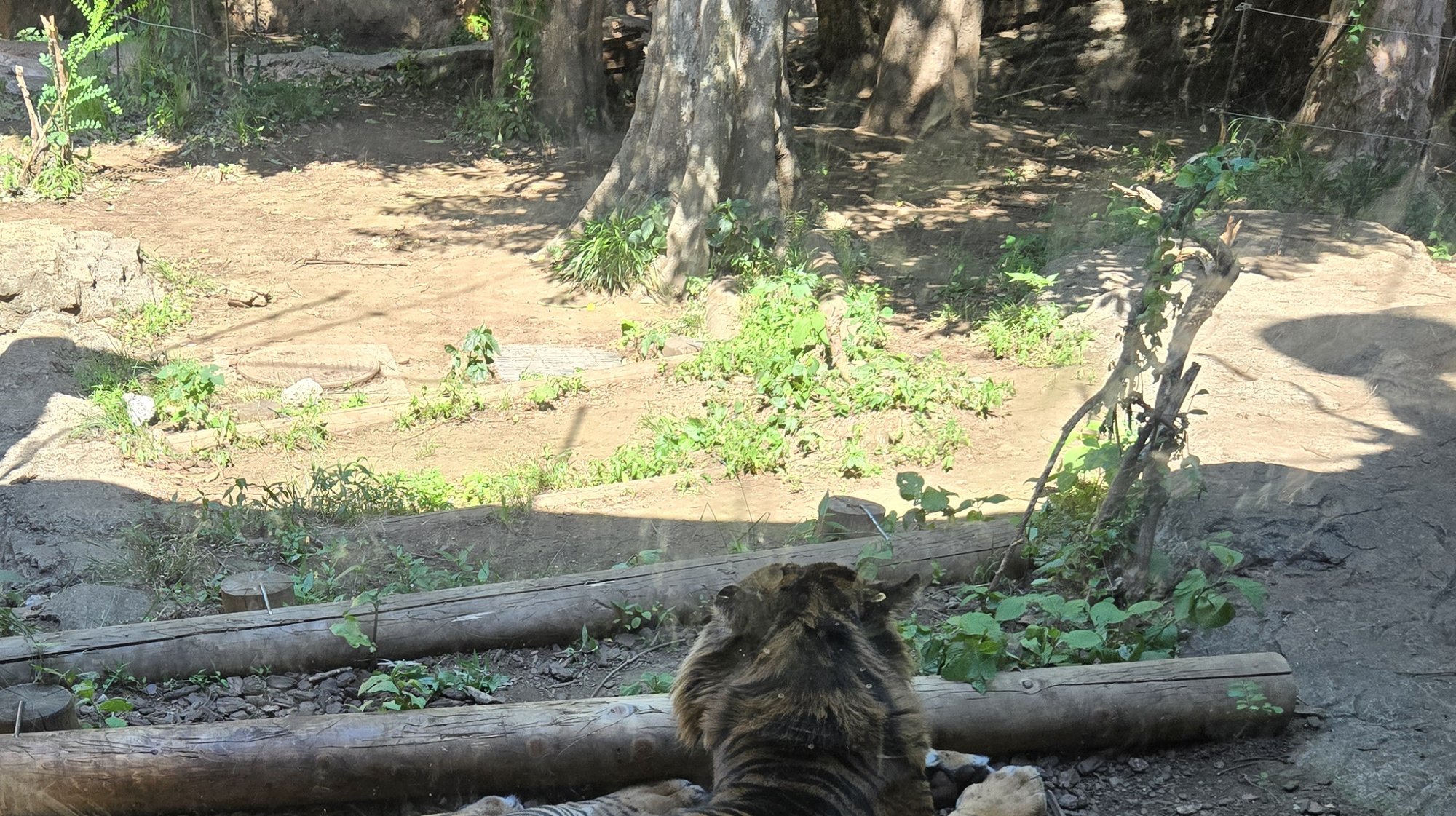
Tigers
One of the most reliable crowd-pleasers. The tiger enclosure offers good sightlines, and the animals are typically active in the morning. By midday in summer they tend to be flat and still, another reason to visit earlier rather than later.
Other East Garden Animals
Gorillas, polar bears, and a range of other species are spread through well-signposted paths. Pick up the free English guidebook at the entrance gate; it maps each section clearly and saves a lot of aimless walking with kids in tow.
Important, 16:30 cutoff for some enclosures: Animals such as the rhino are typically returned to indoor enclosures by around 16:30, well before the 17:00 official closing time. If you want to see these animals, plan to finish the East Garden well before late afternoon.
What to See: West Garden
The West Garden is smaller, generally quieter, and contains some of the most memorable experiences in the zoo for children.
Shoebill
The shoebill has become something of a viral star in Japan, and the reputation is well earned. It stands completely motionless for long stretches; kids find it either deeply fascinating or quietly hilarious. Either reaction is fine, and it’s worth stopping for. On our most recent visit, at four, this was one of two animals our twins asked to see again on the way out.
The shoebill is kept in an outdoor cage enclosure in the West Garden’s bird section, not an indoor exhibit, so don’t count on it being immune to weather the way the small mammal house is.
Tip: The shoebill enclosure can get crowded on weekend mornings. Visit early or loop back in the late afternoon for a clearer view.
Small Mammal House (Shōjū-kan)
This is consistently the highlight for families, and one of the more unusual exhibits at any zoo in Japan. Inside, the lighting is kept dim to simulate nocturnal conditions, with bats and Japanese dwarf flying squirrels (momonga) on display; in our own visits they’ve come close enough overhead to feel like they’re sharing the room with you rather than sitting behind glass.
For kids aged 5 and up, this is often the animal they talk about for days afterward. For toddlers, the dark and enclosed environment can be startling; give them a moment to adjust and stay close. The bats were the other animal our four-year-olds asked to revisit on the way out, once they’d gotten past the initial nervousness of the dark room.
Crowds note: The small mammal house interior is small, and on busy weekend mornings (roughly 10:00–14:00) there can be a short queue. Morning or late-afternoon visits get you a better experience.
Red Pandas
Small, rusty-coloured, and perpetually photogenic, the red pandas in the West Garden are a reliable hit with kids of all ages. They move around more than you’d expect and tend to be active in cooler parts of the day. In our experience, this constant movement is exactly why they’ve out-competed the giant pandas for our kids’ attention on more than one visit: a pacing red panda simply gives a toddler more to watch than a giant panda sitting still.
A Note on Giant Pandas
Ueno Zoo’s giant pandas remain deeply woven into the zoo’s identity; you’ll see panda imagery throughout the grounds. As of 2026, though, giant pandas are not currently resident: the zoo’s twin pandas, Xiao Xiao and Lei Lei, were returned to China in January 2026 under Tokyo’s wildlife conservation agreement with China. We watched this play out in real time across our own visits: pandas on hand for normal viewing in 2022, 2024, and 2025, then a separate lottery application for the final viewing window before the pair left for China (we entered and didn’t win a slot), and no pandas at all by our 2026 visit.
One small tradition survived every visit regardless of whether the pandas themselves were on view: a paid souvenir photo with the panda statue near the panda enclosure. It’s a minor splurge each time, but looking back at four years of the same photo with two kids visibly growing between shots has turned out to be worth more than we expected.
Other West Garden Highlights
The West Garden has a good range of additional species and is noticeably less crowded than the East Garden on busy days, particularly for benches and rest spots. Plan to take at least one proper break here.
Practical Tips for Families
Stroller Rental: Check the Weight Limit, and the Wheels
Stroller rental is available near each of the main gates for ¥500. The strollers are functional single-seat units.
The catch: there is an 18 kg weight limit. If your child is on the heavier end of toddler age, verify this before you queue; discovering the limit at the gate when you have a tired 4-year-old in tow is a frustrating situation. If there’s any doubt, bring your own stroller or pack a carrier as a backup.
We brought our own double stroller for the first three visits and only rented on-site for the first time in 2026. The units aren’t all in the same condition: one of ours had a wheel that dragged and was noticeably harder to push than a normal stroller. We didn’t ask staff to swap it that day, but it’s a reasonable request if yours feels off from the start.
Get the English Guidebook at the Entrance
It’s free and handed out at the gate. The map shows both East and West Gardens clearly, labels each animal’s location in English, and gives enough information to plan a logical route. With kids, walking a large zoo without a map wastes time and energy you can’t afford.
Hot Weather: Some Animals May Not Be Visible
Tokyo summers are hot, and Ueno Zoo prioritises animal welfare. On hot days, animals may be moved to air-conditioned indoor spaces, which can mean obscured or entirely blocked outdoor viewing. Larger outdoor-dwelling species are most affected.
On a very hot day, expect to see less than you would in spring or autumn, and plan your visit around the indoor highlights (shoebill, small mammal house). The indoor exhibits become the most reliable anchors in summer.
After 16:30: Outdoor Enclosures Start Closing
The official closing time is 17:00, but some outdoor enclosures are effectively done by 16:30 or earlier, including the rhino and some other larger animals. If you arrive in the afternoon, work backwards from this time and prioritise accordingly. Arriving at 15:00 and aiming to cover the East Garden highlights before 16:30 is realistic.
Tickets: Advance Booking vs Same-Day
Both options are available. Online advance reservations exist; same-day tickets are sold at the gate. Reservations were effectively required during the pandemic years (our 2022 visit needed one), but that’s no longer the case. On most days now, the wait difference between booking ahead and buying at the gate is minimal, unless you arrive exactly at the 9:30 opening on a peak spring or summer weekend.
Food Courts: Know Which One You’re Near
The zoo has four main food spots, and which one you end up at mostly comes down to where you are in the park rather than any need to seek one out specifically: Bird Song, in the East Garden near the polar bear and seal enclosures, is where we’ve stopped for bento on East Garden days; Saruyama Kitchen, near Monkey Mountain, was under renovation on our most recent visit, so check current status before counting on it; and the West Garden rest area, in front of the Small Mammal House and close enough to Shinobazu Pond to catch the lotus blooms in season, has been our go-to for a second break before heading out via Benten-mon.
Recommended Route
This is the route we’ve settled into over four visits, adjusted a little each year as our kids have grown:
Omote-mon (Main Gate) → East Garden loop → Break at Bird Song → West Garden → Second break → Exit via Benten-mon
- Enter via Omote-mon, closest to Ueno Station’s Park Exit and the natural start for the East Garden circuit
- Head to elephants and tigers early, since they’re most active in the morning before the heat sets in
- Complete the East Garden loop, checking your time against the 16:30 cutoff for outdoor animals
- First break at Bird Song, near the polar bear and seal enclosures; the kids will need it
- Cross to the West Garden on foot; the monorail that used to connect the two gardens was permanently discontinued in December 2023 and no longer runs
- Stop at the shoebill, allowing 10–15 minutes; it earns it
- Do the Small Mammal House, allowing at least 20 minutes; don’t rush this one
- Say hello to the red pandas, a compact enclosure that’s reliably charming
- Second break at the West Garden rest area, noticeably less crowded than the East Garden and easier to decompress
- Exit via Benten-mon toward Shinobazu Pond if you’re heading back to Ueno Station, especially if outdoor animal enclosures were on your list and you’re leaving before 16:30
Total time: approximately 3–4 hours at a comfortable family pace.
Where to Rest & Eat
Rest Spots
The West Garden is your best bet for a proper rest with kids. Benches and rest areas there are consistently less crowded than their East Garden equivalents, even on busy days. If children are fading, aim west.
Food
There are restaurants and kiosks in both gardens: Bird Song in the East Garden, Saruyama Kitchen near Monkey Mountain, and the West Garden rest area in front of the Small Mammal House. Quality is standard zoo fare; it’s convenient, it’s fine, and it’s not the reason to visit. Bringing your own snacks is always a practical move with young children, and the rest areas have vending machines.
Tip: For a proper lunch, consider eating in Ueno Park before or after the zoo rather than inside. There are more options, and the prices are better. Ueno Park has konbini nearby for quick, reliable kid-friendly meals.
Honest Verdict
Ueno Zoo is a dependable family half-day. It isn’t Tokyo’s most spectacular attraction, yet it’s reliable, well-located, and enjoyable with children of almost any age. Free admission for children under junior high school age makes the value hard to argue with. The highlights (the shoebill, the small mammal house, the elephants and tigers) land consistently.
The caveats are real: summer heat reduces what you’ll see, some enclosures feel dated, and Saturday crowds at peak time can make certain areas cramped. Go in the morning, hit the must-sees early, and plan around the 16:30 cutoff for outdoor animals.
For families staying near Ueno or looking for central Tokyo family hotels, it fits naturally into a Tokyo itinerary. For families coming from further away, it’s worth pairing with other Ueno Park attractions to make the journey worthwhile.
Nearby: Combine with Ueno Park
Ueno Zoo sits inside Ueno Park, which gives you several good options to fill a full day without extra transport.
National Museum of Nature and Science
One of the best family museums in Tokyo, right next to the zoo’s main gate. We took our kids once, and the dinosaur skeletons, the whale exhibit, and the steam locomotive were genuine hits in the moment. We haven’t gone back a second time, though: without being able to read the exhibit text yet, a lot of the deeper content didn’t land for them, and we suspect it’s a stronger visit once kids are old enough to follow the English or Japanese signage themselves, which points toward the “6 and older” guidance below rather than pairing it with every zoo trip.
Ueno Park Itself
Large, flat, and free. Great for running around after the zoo. The park is famous for cherry blossoms in late March to early April, but pleasant year-round as open green space in the middle of the city.
Asakusa: 25 Minutes Away
The walk from Ueno to Asakusa through the older eastern side of Tokyo is pleasant if you have the energy. Alternatively, it’s 2 stops on the Ginza Line. The two areas combine well: zoo in the morning, Nakamise street food and the temple in the afternoon. The Asakusa with Kids guide has the full rundown.
FAQ
Is Ueno Zoo free for kids?
Children of junior high school age and below enter free. High school students pay ¥200; adults pay ¥600; visitors over 65 pay ¥300. A family of two adults and two young children pays ¥1,200 total, good value for a half-day out.
Is Ueno Zoo stroller-friendly?
Yes, with one important caveat. The main paths are paved and workable with standard strollers. Stroller rental is ¥500 at each gate, but note the 18 kg weight limit; if your child is a larger toddler, verify their weight before arriving. Bring your own stroller or a carrier as backup if there’s any doubt, and don’t be afraid to ask staff for a different unit if the one you’re handed feels rough to push.
When is the best time to visit Ueno Zoo with kids?
Spring (March–May) and autumn (October–November) offer the best combination of mild weather and active animals. Summer is the most popular time but also the most challenging: animals may be moved indoors, and afternoon heat can make the visit uncomfortable for young children. Whatever the season, go as early in the morning as possible.
Are there giant pandas at Ueno Zoo?
No, not currently. The zoo’s twin pandas, Xiao Xiao and Lei Lei, were returned to China in January 2026 as part of Tokyo’s wildlife conservation agreement with China, following a short lottery-only viewing window in the weeks just before their departure. Panda imagery is still everywhere on-site, which can easily mislead first-time visitors into thinking pandas are on view. In the meantime, the West Garden’s red pandas are a worthy, and very cute, alternative; in our own experience, they’ve held our kids’ attention longer than the giant pandas ever did.
Which gate should I use with kids?
Omote-mon (Main Gate), a few minutes from JR Ueno Station’s Park Exit, is the one we’ve used on every visit; it opens straight into the East Garden. Benten-mon, on the Shinobazu Pond side of the West Garden, is the natural exit if you’re heading back toward Ueno Station or Keisei Ueno Station after finishing the loop. A third gate, Ikenohata-mon, sits on the north side of the West Garden near Nezu Station and tends to be the least crowded of the three, worth knowing if the main gate queue looks long.
How long does Ueno Zoo take with kids?
Plan 3–4 hours for a full visit covering both East and West Gardens at a relaxed family pace. If you have toddlers with shorter attention spans, a 2-hour focused visit hitting the top highlights (elephants, tigers, shoebill, small mammal house) is also very achievable.
Information checked: 2026/09