
At a Glance
| Entry | Free (Senso-ji grounds and main hall) |
| Hours | Grounds: 24/7 · Inner gates: 6:00–17:00 (Apr–Sep), 6:30–17:00 (Oct–Mar) |
| Nearest station | Asakusa (Ginza Line / Tobu Skytree Line / Asakusa Line), 5-min walk to Kaminarimon Gate |
| English support | Good. Bilingual signage throughout; most shops and restaurants have English menus |
| Strollers | Yes, with caveats: cobblestones on Nakamise require a firm grip |
| Stroller rental | Asakusa Culture Tourism Center (1F, next to Kaminarimon), free loan, 9:00–19:00, 5 units |
| Baby facilities | Diaper tables + 2 nursing booths at Asakusa Culture Tourism Center (2F) |
| Typical visit | 2–3 hours (temple + Nakamise); half day with Kappabashi or Sumida Park; full day if ending with Tokyo Cruise water bus to Hamarikyu |
Details above are per the Senso-ji official site and Taito City Tourism information (2026/05).
Is It Worth It?
Short answer: Yes, but go early.
Asakusa is one of Tokyo’s most accessible family destinations. It’s free, it’s visual, and even toddlers who couldn’t care less about cultural heritage will be entertained by the street food, paper fans, and giant lanterns.
That said, the honest version: Nakamise shopping street gets brutally crowded from mid-morning onwards, and pushing a stroller through peak-hour Nakamise is genuinely stressful. Time your visit right and the experience is fantastic. Show up at noon in July and you’ll wonder why you came.
By age:
-
0–1 (baby): Totally doable if you use a carrier rather than a stroller on Nakamise. Cool in autumn/spring, hot in summer. Nursing room and diaper facilities are excellent (right by the gate).
-
2–4 (toddler): High stimulation, good and bad. They’ll love the giant Kaminarimon lantern, the pigeons, and any street snack you hand them. Expect meltdowns if you linger past 2 hours.
-
5–8 (young kids): The sweet spot. Old enough to appreciate the omikuji (fortune slips), excited by rickshaw rides, and able to handle 3–4 hours of walking with stops.
-
9+ (older kids): Will enjoy shopping independently on Nakamise, trying takoyaki and ningyoyaki, and the novelty of a traditional Japanese neighborhood.
What to Expect
The Layout
Asakusa is walkable and compact. The classic route goes:
Kaminarimon Gate → Nakamise-dori → Hozomon Gate → Senso-ji Main Hall → Asakusa Jinja Shrine
From the Ginza Line exit to the main hall is about 350 metres. It takes families 45–60 minutes to walk it without rushing. The temple grounds are wide, flat, and open, with plenty of space for kids to run around once you’re past the main gate.
Nakamise-dori: Go Through, Don’t Linger
The 250-metre shopping street between Kaminarimon and the main hall is packed with souvenir shops and street food stalls. It’s visually impressive and worth walking through, but in one direction only.
Our own routine, after visiting many times with the twins: walk Nakamise on the way in toward the temple. On the way back, take the side street (Nishi-Sando or the parallel arcade street to the east). The shops are less crowded, the pace is slower, and you’ll find smaller, more local vendors that are actually easier to browse with kids.
Crowds
Nakamise peaks between 10:30 and 15:00, especially on weekends and in spring/autumn tourist season. Before 9:00, it’s a different place: quiet, atmospheric, and easy to push a stroller without apologizing every 20 seconds.
If you’re staying in Tokyo, Asakusa at 7:30–8:30 in the morning is one of the best things you can do with kids. The temple grounds are near-empty, the light is beautiful, and the atmosphere is closer to the Japan you imagined.
After 17:00, Nakamise shops close but the temple and lanterns remain. Evening visits have a completely different mood; the illuminated Kaminarimon at dusk is genuinely stunning.
What Kids Actually Love
-
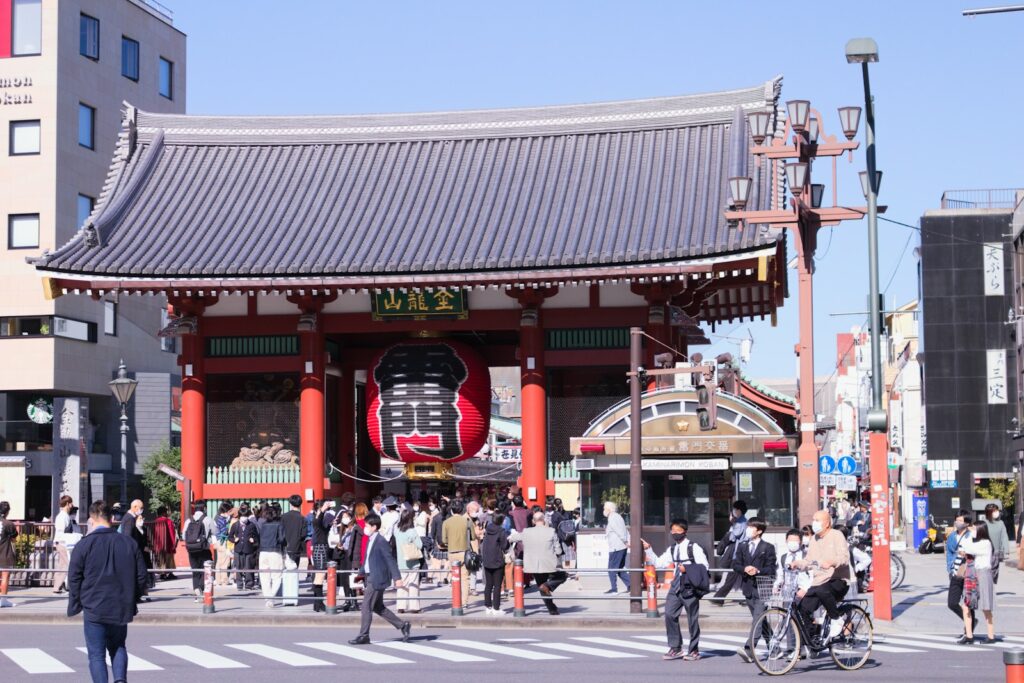
The giant red Kaminarimon lantern, always a photo moment
-
Omikuji (fortune slips): shake the box, pull a stick, find your fortune. Kids love this ritual. If you get a bad fortune, tie it to the rack outside and leave it behind.
-
Street food along Nakamise: ningyoyaki (sponge cake shaped like figures), melonpan, and dango are universally loved
-
Pigeons: there are hundreds. Small children will spend more time here than anywhere else.
-
Rickshaw ride: optional, but if your kids are old enough to sit still (roughly 3+), a 30-minute rickshaw tour of the backstreets is genuinely memorable
Family Tips
Rickshaw Rides
Two main operators work the Asakusa area: Ebisuya and Tokyo Rickshaw.
-
30 minutes: ¥10,000 for 2 people / ¥9,000 for 1 person (Ebisuya rates, as of 2026)
-
Kids under school age (roughly under 6) can sit on a parent’s lap at no extra charge
-
No advance booking required for walk-up, but popular in peak season, so arriving before 10:00 avoids queues
-
The runners speak basic English and give commentary; some offer English route options
Rickshaws are a good solution when kids are getting tired of walking, since they get to ride while you cover more ground.
Strollers on Nakamise
The stone-paved surface of Nakamise-dori is workable with single strollers but rough with anything wider (double strollers, large travel strollers). Practical options:
- Use the side streets: the roads running parallel to Nakamise on both sides have normal pavement
- Baby carrier: by far the easiest option for babies and toddlers on this stretch
- Stroller loan: if you left yours at the hotel, Asakusa Culture Tourism Center lends free strollers (1F counter, 9:00–19:00, 5 units, first come, first served)
Nursing and Diaper Change
Asakusa Culture Tourism Center (2F, the glass building directly across from Kaminarimon)
-
1 diaper table, 2 nursing booths
-
Open 9:00–20:00 / Free to use
Other options nearby:
-
Asakusa EKIMISE (5F): in the station building, 10:00–20:00
-
Asakusa ROX (5F): towards Rokku, 10:30–21:00
-
Senso-ji temple grounds: multi-purpose toilets with diaper tables at the north and south ends of the grounds
Coin Lockers
Available at Asakusa station (Ginza Line and Tobu Skytree Line exits). Useful if you arrive with luggage before hotel check-in. Size varies; medium lockers (for backpacks and daypacks) are usually available.
What to Eat With Kids
On Nakamise: Ningyoyaki (¥200–400), melonpan, taiyaki, and roasted sweet potato are kid-friendly street foods. Portions are small, which works well for snack-sized testing.
Sit-down lunch: The streets to the east and north of Senso-ji have quieter restaurants that are far easier to enter with a stroller than the shops on the main strip. Tempura, soba, and unaju (eel over rice) are the local specialties, and most have picture menus.
Riverside eel lunch, Komagata Maekawa: If there’s one sit-down meal worth planning around in Asakusa, this is it. We’ve eaten at eel restaurants in this area with our own kids many times, and it’s a genuinely reliable choice. Komagata Maekawa, dating to the Bunka-Bunsei era of the early 19th century (per the restaurant’s own history page), is one of the very few restaurants in the area with genuine Sumida River views: tatami-style seating, lacquered unaju (eel over rice) served in the traditional way, and a pace that’s genuinely relaxed rather than rushed. Child-friendly for lunch (confirmed). Unaju is mild in flavour and easy for kids to eat.
Reservation is strongly recommended; walk-ins are hit or miss and the most scenic tables go first. The restaurant’s website is in Japanese, so the easiest route is to book via your hotel concierge, or use a service like Pocket Concierge or Tableall which handle English reservations for traditional Japanese restaurants. For more help with booking in Japanese, see our guide to booking restaurants in Japan.
Personal recommendation: Monjayaki (a Tokyo-style savory pancake cooked at your table) is a fantastic experience for families with kids old enough to participate in the cooking. There are a handful of restaurants in the Asakusa area, but it’s worth booking ahead, especially on weekends. The interactive element keeps kids engaged and the flavor is mild enough for most palates.
Rainy Day Plan
Asakusa is primarily an outdoor destination, so rain takes some of the magic away. Options:
-
Walk Nakamise: covered shopping arcades on both sides provide partial shelter
-
Asakusa Culture Tourism Center: exhibitions on the upper floors; free entry, interesting for adults while kids rest
-
Asakusa ROX: indoor shopping mall for a break
-
Sumida Hokusai Museum (10-min walk): excellent small museum, fully indoor, genuinely interesting art for older kids
If rain is forecast, consider building in an indoor anchor attraction (Tokyo Skytree is 10 minutes away).
Getting There
Recommended: Ginza Line → Asakusa Station (Exit 1)
Asakusa Station Exit 1 puts you right at the base of Kaminarimon Gate. Literally walk up the stairs and you’re there.
| Route | From | Time | IC Card fare (approx.) |
|---|---|---|---|
| Tokyo Metro Ginza Line | Shibuya, Shinjuku, Ueno | 20–35 min | ¥200–280 |
| Tobu Skytree Line | Asakusa direct from Shinjuku area (with transfer) | varies | varies |
| Toei Asakusa Line | Shinagawa, Haneda area | 30–40 min | ¥300–400 |
Stroller note: The Ginza Line Asakusa Station has an elevator at Exit 1 (the main exit for Kaminarimon). Confirm before you visit as elevator availability can change, but this station is generally stroller-accessible.
IC card: Use Suica or Pasmo. Tap on, tap off, no tickets to buy, no language barrier at the machines.
By taxi/rideshare: An option if you’re traveling with a lot of gear or have young kids who need flexibility. Drop-off near Kaminarimon is easy; pickup can require a walk to a wider road.
Nearby and How to Combine
Walk to Kappabashi (Kitchen Town), 10 minutes
One of Asakusa’s most underrated additions for families. Kappabashi-dori is Japan’s wholesale kitchen supply street: block after block of cooking equipment, ceramic bowls, plastic food models, and unusual utensils. Kids are fascinated by the fake food displays, and it makes for genuinely unique souvenirs (a small ramen bowl or matcha teacup).
Walk north from Senso-ji, then cross over to Kappabashi. It’s a pleasant 10-minute stroll through a more residential, less touristy part of the neighborhood.
Tokyo Skytree via Sumida River Walk, 15-minute walk
Japan’s tallest tower is visible from Asakusa and easy to combine in a half-day, but skip the train and walk instead. Sumida River Walk is a riverside pedestrian path that runs alongside the Tobu railway bridge, connecting the Asakusa side of the river directly to the Skytree area in Oshiage. It opened in 2020 and quickly became one of the more pleasant short walks in eastern Tokyo.
Along the way and in the Oshiage end you’ll find a cluster of well-designed cafes and small shops, a noticeably different vibe from the tourist crowds of Nakamise. Kids enjoy the elevated river views and the walk is entirely flat and stroller-friendly. Good for clear days at Skytree; less worth it when overcast.
Sumida Park, 5 minutes on foot
Just east of the Senso-ji grounds, along the river. Free, open space, perfect if you need kids to run around and decompress after the crowds. Best in late March/early April for cherry blossoms, but pleasant year-round. Riverside walking path goes all the way toward Skytree.
Tokyo Cruise Water Bus: Asakusa to Hamarikyu (and beyond)
One of the best ways to end an Asakusa day, especially with kids who are done walking. The Tokyo Cruise water bus departs from Azumabashi Pier (literally a 3-minute walk from Kaminarimon) and heads downriver toward Hinode Pier, with a stop at Hamarikyu Gardens.
-
Journey time: Asakusa → Hamarikyu: approximately 40–50 minutes
-
Fare: Approx. ¥800–1,000 per adult (children half price); check Tokyo Cruise for current fares
-
Hamarikyu Gardens: A beautifully preserved Edo-period tidal garden right in the middle of modern Tokyo. Entry is around ¥300 for adults; under 12 free. Ideal for a quiet stroll after the sensory overload of Asakusa.
-
Continue to Odaiba: If you want to extend the day, the water bus continues beyond Hinode to Odaiba, turning the whole journey into a proper river cruise
The boat ride itself is a highlight for kids. Passing under the bridges of the Sumida River, with views of Skytree behind you and the Tokyo skyline ahead, is memorable in a way that no train journey is, according to Tokyo Cruise’s own official site (checked 2026/05).
Walk to Ueno, 25 minutes on foot or 2 stops on train
We’ve made this walk with our own kids more than once, and if you have the energy, it’s a good way to see a range of Tokyo’s older eastern neighborhoods on foot rather than underground on a train. Ueno has the zoo, a science museum, and the park itself, enough for a full second half of the day. See our guide to the zoo: Ueno Zoo with Kids: The Honest Family Guide.
One Visit Is Never Enough
Most Tokyo guides treat Asakusa as a half-day tick-box: Kaminarimon photo, Nakamise walk, temple stamp, done. That’s a fine first visit, but it’s also the most crowded, most overwhelming version of Asakusa there is.
Come back a second time and you’ll notice things you missed: the quieter Asakusa Jinja shrine tucked beside the main temple, the covered shotengai arcades that stretch north toward Rokku, the backstreets where local families eat lunch far from the tourist shops.
A third visit, and Asakusa starts to feel like a neighbourhood rather than a destination. Early morning with kids before the crowds arrive. A long lunch at a riverside eel restaurant. A late afternoon walk along the Sumida as the lanterns come on.
The tourist version of Asakusa is real, and it’s worth seeing. But the neighbourhood rewards return visits in a way that very few places in Tokyo do. If you find yourself in Tokyo more than once, come back at a different time of day, take a different route, and eat somewhere your guidebook didn’t mention.
Information checked: 2026/09