
TL;DR
-
Tokyo is cheaper than most Western families expect. Compared to cities like London, New York, or Sydney, your money goes significantly further here
-
Preschoolers ride trains for free. Children under 6 travel at no charge on all Tokyo trains, subways, and buses; many major attractions also waive entry fees for under-6s
-
Accommodation is your biggest cost driver. Budget ¥15,000–35,000 per night for a family room; this is where your choices have the most impact
-
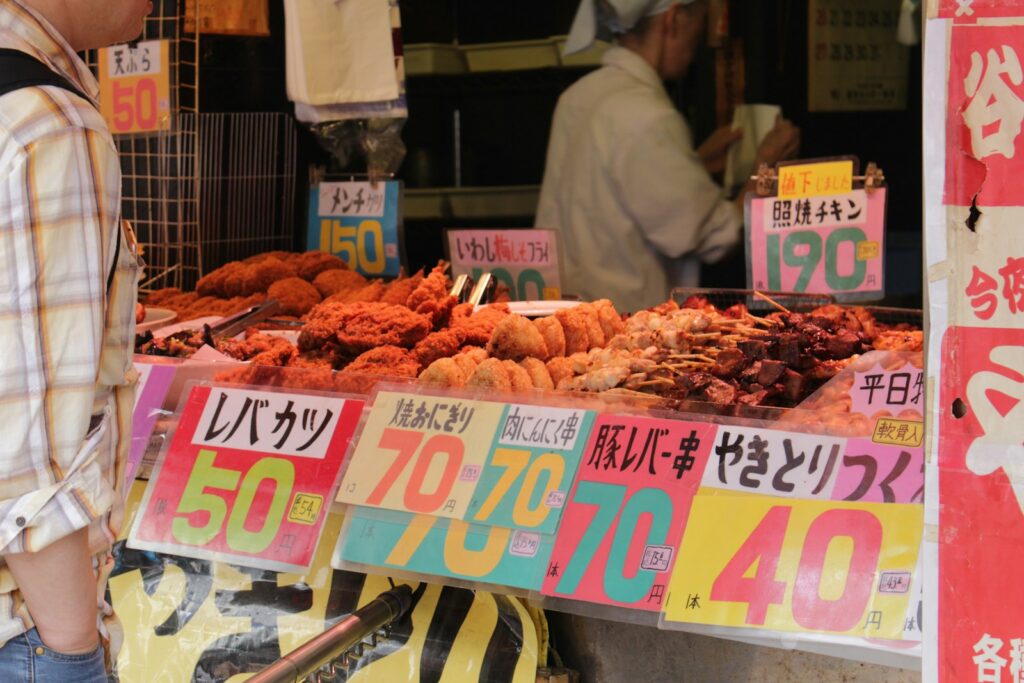
Food costs are highly controllable, from ¥500 konbini breakfasts to excellent sit-down lunches under ¥2,000 per person; tourist zones are where spending spikes
-
A realistic mid-range week for 2 adults + 2 preschoolers runs around ¥200,000–350,000 excluding flights and international transport
The Situation in Japan
Ask most Western families what surprised them most about Tokyo, and the answer is almost always the same: it was cheaper than we expected.
This runs against Tokyo’s reputation as one of the world’s most expensive cities, a reputation that was accurate in the 1990s and has clung on long past its expiry date. Japan’s prolonged low inflation and a weaker yen have made Tokyo genuinely good value compared to comparable global cities.
The numbers that matter for families:
| City | Family hotel per night (4 people) | Casual dinner (family of 4) | Train across the city |
|---|---|---|---|
| Tokyo | ¥20,000–35,000 (~$130–230) | ¥4,000–8,000 (~$25–55) | ¥180–300 per adult |
| London | £200–400+ | £60–100+ | £5–8 per person |
| New York | $250–450+ | $80–150+ | $2.90 per person |
| Sydney | A$250–450+ | A$100–180+ | A$4–6 per person |
Two things genuinely do cost more in Tokyo: major theme parks (DisneySea, Disneyland) and accommodation during peak season (Golden Week, cherry blossom season). Budget for these as separate line items; they’re exceptions, not the baseline.
Budget Breakdown by Category
Accommodation
Your single largest expense. A family of 4 typically needs a proper family room or two connected rooms.
Budget tier: ¥15,000–22,000/night:
Business hotel chains (Toyoko Inn, APA Hotel, Dormy Inn) with family rooms or adjoining doubles. Clean, well-located near train stations, and functional. No amenities beyond the essentials, but most families spend their time out anyway.
Mid-range tier: ¥22,000–40,000/night:
Comfortable hotels in tourist areas (Shinjuku, Asakusa, Shibuya, Ueno). Family-sized rooms with proper beds for all four, often with buffet breakfast options. This tier hits the sweet spot for most families.
Upscale tier: ¥40,000–80,000+/night:
International brand hotels (Hilton, Marriott, Park Hyatt) with spacious family rooms, club lounge access, and dedicated family services. Worth considering if you’re traveling with very young children who need more space and support.
Practical note for families with preschoolers: Many Japanese hotels advertise “children under 6 stay free using existing bedding.” In practice, this means your child shares your bed; a standard double or twin room won’t comfortably sleep four people. Confirm room dimensions when booking, and prioritize hotels that offer genuine family rooms (usually listed as such, with extra floor space or a sofa bed).
Figures above are per booking.com and hotel official sites, checked 2026/09.
Getting Around
The biggest pleasant surprise for families with young children: Children under 6 ride FREE on all trains, subways, and buses in Tokyo. No card, no ticket; they simply walk through the barrier with a parent. For families with preschoolers, this cuts your daily transport bill nearly in half.
For adults (and school-age children 6–11, who ride at half fare):
IC cards (Suica or PASMO): The right answer for almost all family transport in Tokyo. Load money, tap in and out. A typical adult trip across central Tokyo runs ¥180–300. No route-planning required, works on every line.
Day passes:
-
Tokyo Metro 24-hour pass: ¥600/adult, good value on days you’re moving between multiple neighborhoods
-
Tokyo Metro 72-hour pass: ¥1,500/adult, useful for a 3-day city focus
-
Note: these don’t cover JR lines (including the Yamanote Loop). IC cards remain more flexible for mixed-line days.
Typical daily transport cost for 2 adults + 2 preschoolers:
-
Light day (2–3 outings): ¥600–900
-
Active day (4–6 trips): ¥1,200–2,000
Taxis are available but add up quickly; a 10-minute ride runs ¥1,000–1,500. Reserve them for late nights, station-to-hotel luggage runs, or when small children have hit their limit.
Figures above are per Tokyo Metro’s and JR East’s own official sites, checked 2026/09.
For a full breakdown of how Tokyo’s train network works, see Navigating Tokyo’s Train System with Kids.
Food
This is where Tokyo delivers the most value, and where the gap between “tourist trap” and “eating smart” is widest.
Breakfast
-
Konbini (convenience store): ¥1,000–1,500 for a family of 4. Onigiri, sandwiches, hot foods from the counter, yogurt, juice. Not a consolation prize; a legitimate breakfast that locals rely on. See our guide to Japan’s convenience store food with kids for what to pick.
-
Café or bakery: ¥2,000–3,500. Bakery chains (Andersen, Vie de France, Paul) have seating and broad selections that work well for families.
-
Hotel buffet: Usually included in mid-range/upscale rates, or available as an add-on for ¥1,500–2,500/adult.
Lunch
Lunch is Tokyo’s best-value window. Many restaurants that are expensive at dinner run set lunch menus (teishoku or ranchi setto) at dramatically lower prices.
-
Fast-casual chains (Yoshinoya, Matsuya, Marugame Udon, Hanamaru Udon): ¥500–800/adult, negligible cost for small kids. Quick, filling, and genuinely good.
-
Family restaurants (Gusto, Jonathan’s, Saizeriya): ¥1,500–2,500 for the family. Kid-friendly menus, high chairs, picture menus. Reliable and low-stress.
-
Good sit-down restaurant: ¥3,000–5,000 for the family. Here’s what surprises most visitors: a proper Japanese restaurant in a non-tourist neighborhood at lunchtime often costs ¥1,000–1,500/adult including a drink. This is where Tokyo genuinely punches above its weight.
Office district timing tip: Business district restaurants (Marunouchi, Shinjuku, Shibuya business side) fill completely from 12pm–1pm. Arrive right at opening (usually 11:30am) or wait until after 1pm; both windows get you a table easily and a more relaxed meal.
- Tourist area restaurants: Budget ¥800–1,500/person even for casual food. Asakusa’s Nakamise, the teamLab venue area, Odaiba waterfront: prices run noticeably higher than equivalent spots in non-tourist neighborhoods.
Dinner
-
Casual dinner (ramen shop, family restaurant, soba): ¥3,000–5,000 for the family.
-
Chain izakaya or yakiniku (Torikizoku, Gyu-Kaku, Ushijima): ¥5,000–8,000 for the family. Surprisingly good quality, and tabletop grills make for genuinely fun family dining. High value for what you pay.
-
Nicer dinner (dedicated restaurant, hotel dining): ¥10,000–20,000+. Reserve for one or two evenings as a deliberate treat.
The practical strategy: Mix one splurge dinner with two casual evenings per trip segment. Use konbini and fast-casual for breakfasts and quick lunches. Put your appetite, and budget, into one genuinely good sit-down meal per day.
One note on food variety: Tokyo is one of the great food cities in the world, not just for Japanese cuisine. Some of the best Italian, French, Korean, Indian, and Southeast Asian food in Asia exists here. Don’t limit yourself. A lunch at a Nepalese spot in Shin-Okubo or a pizza in Nakameguro can cost the same as a convenience store meal and be far more interesting.
Attractions & Entrance Fees
The family advantage: Many of Tokyo’s best attractions are free for under-6s. Japan’s major public facilities (parks, public gardens, national museums on certain days) offer significant discounts or free entry for young children.
Free or nearly free:
-
Ueno Park grounds: Free
-
Shinjuku Gyoen: ¥500/adult, free for children under 15
-
Yoyogi Park: Free
-
Imperial Palace East Gardens: Free
-
Odaiba waterfront and beach area: Free
-
Most shrine and temple grounds: Free
Budget-friendly paid attractions (family of 4: 2 adults + 2 preschoolers):
| Attraction | Adult price | Child price | Family total |
|---|---|---|---|
| Ueno Zoo | ¥600 | Free (under middle school age) | ¥1,200 |
| Ghibli Museum | ¥1,000 | ¥400 (ages 4–12), free under 4 | ¥2,000–2,400 |
| teamLab Planets | ¥3,200 | ¥1,000 (ages 4–12), free under 4 | ¥6,400–7,400 |
| Tokyo Skytree (350m) | ¥2,100–3,100 | Free under 6 | ¥4,200–6,200 |
Major theme parks (budget these as anchor days):
| Attraction | Per adult | Per child (4–11) | Under 4 | Family of 4 estimate |
|---|---|---|---|---|
| Tokyo DisneySea | ¥9,400–10,900 | ¥4,700–5,700 | Free | ¥18,800–21,800 |
| Tokyo Disneyland | ¥9,400–10,900 | ¥4,700–5,700 | Free | ¥18,800–21,800 |
Add ¥3,000–5,000 for food inside Disney on top of entry. These are the budget outliers; plan for them deliberately.
Figures above are per official attraction websites, checked 2026/09.
Best Options: Sample Day Budgets
The following cover daily spending excluding accommodation.
Budget Day: ¥10,000–15,000
| Item | Cost |
|---|---|
| Breakfast (konbini) | ¥1,500 |
| Lunch (fast-casual chain) | ¥2,000 |
| Dinner (chain izakaya) | ¥5,000 |
| Transport (IC cards, adults) | ¥1,200 |
| Attraction (Ueno Zoo) | ¥1,200 |
| Snacks | ¥500 |
| Total | ~¥11,400 |
Mid-Range Day: ¥20,000–30,000
| Item | Cost |
|---|---|
| Breakfast (hotel café or bakery) | ¥3,000 |
| Lunch (proper sit-down restaurant) | ¥5,000 |
| Dinner (nicer restaurant) | ¥10,000 |
| Transport (metro day passes) | ¥1,800 |
| Attraction (teamLab Planets) | ¥7,400 |
| Snacks + drinks | ¥1,200 |
| Total | ~¥28,400 |
Theme Park Day: ¥30,000–40,000
| Item | Cost |
|---|---|
| DisneySea entry (2 adults + 2 preschoolers) | ¥18,800–21,800 |
| Food inside Disney | ¥4,000–6,000 |
| Breakfast before (konbini) | ¥1,500 |
| Transport round-trip (adults) | ¥1,500 |
| Total | ~¥26,000–31,000 |
One-Week Estimate (2 Adults + 2 Preschoolers, Excluding Flights)
| Category | Budget trip | Mid-range trip |
|---|---|---|
| Accommodation (7 nights) | ¥105,000–154,000 | ¥175,000–280,000 |
| Food (7 days) | ¥49,000–70,000 | ¥98,000–140,000 |
| Transport | ¥7,000–10,500 | ¥10,500–14,000 |
| Attractions | ¥15,000–25,000 | ¥40,000–60,000 |
| Total | ~¥176,000–259,500 | ~¥324,000–494,000 |
Exchange reference: ¥150,000 ≈ US$1,000 / £780 / A$1,550 at mid-2026 rates. Check current rates before your trip.
For accommodation options at each budget tier, see Best Family Hotels in Tokyo.
Common Mistakes
1. Budgeting Tokyo like a European capital.
The instinct to price Tokyo like Paris or Amsterdam leads to over-budgeting on cash and under-budgeting on time. Dining, transport, and most cultural attractions are measurably cheaper. The mental reset most families need: Tokyo is a value destination that just happens to be large and international.
2. Eating every meal in tourist areas.
Asakusa’s main streets, the teamLab venue neighborhood, Harajuku’s Takeshita-dori: these charge significant premiums. Walking two blocks off the tourist drag, or choosing a business district lunch spot over a sightseeing zone restaurant, can cut your food spend in half for equivalent quality.
3. Underestimating attraction costs for older preschoolers.
Children 4 and above pay admission at most ticketed venues. While still cheaper than adult rates, entry for teamLab Planets, Ghibli Museum, and theme parks adds up meaningfully for a family of four. Under-4 free entry is a genuine advantage; use it.
4. Forgetting snack and incidental spend.
Tokyo’s convenience stores, street food stalls, and café stops accumulate. Families with young children who want snacks throughout the day should factor in ¥500–1,000/day for incidentals.
5. Booking family rooms too late.
Hotels with proper family-sized rooms, not a doubled-up business room, have limited inventory, especially in popular neighborhoods during peak periods. Book 3–6 months ahead if your dates are fixed. This is the one area where last-minute flexibility genuinely costs you.
FAQ
How much should I budget per day in Tokyo for a family of 4?
Excluding accommodation, a comfortable mid-range day runs ¥15,000–25,000 for 2 adults and 2 preschoolers. Theme park days sit closer to ¥30,000–35,000. For accommodation, add ¥20,000–35,000/night for a decent family room.
Is Tokyo expensive for families with young children?
Less expensive than most Western families expect. Compared to London, New York, Sydney, or Paris, Tokyo is cheaper for dining, transport, and most cultural attractions. The main cost spikes are accommodation in tourist areas during peak season, and major theme parks.
Do children under 6 really ride trains for free in Tokyo?
Yes. Children who have not yet started elementary school (under 6) ride all trains, subways, and buses in Tokyo at no charge. No card or ticket is needed; they walk through the gate with a parent. This applies across JR lines, Tokyo Metro, Toei Subway, and most private rail lines.
What’s the most affordable way to eat in Tokyo with young kids?
Convenience stores (7-Eleven, FamilyMart, Lawson) are the most cost-effective option for breakfasts and quick meals, and the food quality is genuinely good. Fast-casual chains (Matsuya, Marugame Udon) are excellent for quick lunches. For dinners, chain family restaurants (Gusto, Saizeriya) offer children’s menus, high chairs, and picture menus at reasonable prices. See our guide to convenience store food in Japan with kids for a full breakdown.
What are the biggest cost surprises in Tokyo for families?
Positive: how cheap the trains are, how affordable a proper lunch is outside tourist zones, how many attractions are free for young children. Unexpected costs: DisneySea and Disneyland are expensive for a full family day; restaurants in tourist areas can cost double their equivalent in business neighborhoods.
How do I save on Tokyo attractions with preschoolers?
Lean into Tokyo’s excellent free options first: Ueno Park and its surrounding area, Shinjuku Gyoen, Yoyogi Park, Odaiba waterfront, and most shrine and temple grounds. Low-cost public facilities like Ueno Zoo (¥600/adult, free for school-age children and under) are exceptional value. Reserve expensive ticketed venues, teamLab, Ghibli Museum, DisneySea, for two or three anchor days rather than every day.
Is a JR Pass worth it for a Tokyo family trip?
For a trip focused mainly in Tokyo, generally no. The JR Pass covers JR lines (including the Yamanote Loop) but not the Tokyo Metro, which handles most tourist-area travel. The pass makes more sense if you’re traveling between cities (Tokyo to Kyoto or Osaka). For Tokyo-only itineraries, IC cards (Suica or PASMO) are more cost-effective and more flexible. See Navigating Tokyo’s Train System with Kids for the full breakdown.
When does Tokyo get most expensive for families?
Golden Week (late April–early May) and cherry blossom season (late March–early April) are peak periods with higher hotel rates and maximum crowds. Obon (mid-August) is busy domestically. February and June offer the lowest accommodation prices for equivalent quality. See Best Time to Visit Tokyo with Kids for the full seasonal breakdown.
Information checked: 2026/09