
TL;DR
-
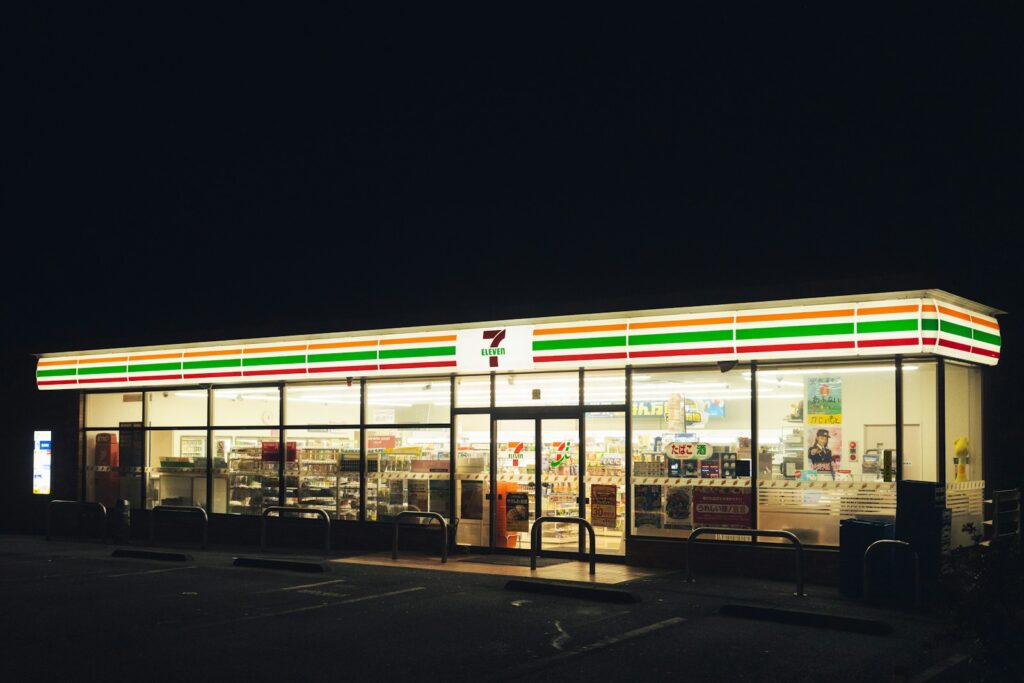
Japanese convenience stores (konbini) are not gas station food. The quality is genuinely good, and they are one of the best tools a traveling family has
-
All three major chains (7-Eleven, FamilyMart, Lawson) sell fresh onigiri, hot snacks, pastries, sandwiches, and drinks that kids will actually eat
-
7-Eleven wins on consistency and ATM access; FamilyMart wins on fried chicken and nikuman; Lawson wins on desserts and premium sweets
-
Hot food behind the register (fried chicken, steamed buns, sausages) is ready immediately. Nod when the cashier says atatamemasu ka? (“Shall I heat that up?”); the microwaveable bento and ramen are surprisingly good
-
Plastic bags cost ¥3–5, so bring a tote, and always join the single queue that forms across all registers, not an individual lane
-
When the kids are finally asleep, konbini is the place to grab a cold beer, premium desserts, or a regional cup noodle in the hotel room
Why Konbini Are Different from What You Know
Back home, “convenience store food” is code for mediocre. In Japan, that assumption will cost you real meals.
Japanese convenience stores, or konbini, operate on an entirely different model. Stock is delivered fresh daily. Onigiri are made that morning. Sandwiches have expiry times, not expiry days. Hot food rotates by season. Trained staff follow exact preparation protocols set by the chain’s central kitchen. The result is food that, by any reasonable standard, is good.
There are roughly 55,000 konbini locations across Japan. In Tokyo, you will rarely walk more than five minutes without passing one. They are open 24 hours, 365 days a year. They also function as post offices, bill payment centres, ticketing kiosks, and ATMs. For a family navigating Tokyo, a konbini is effectively a neighbourhood service hub that also sells lunch.
What this means for families
You will use konbini every day, whether you plan to or not. The sooner you understand how they work, the better you eat.
For parents of young children especially: konbini solve the problem of picky eaters who won’t touch unfamiliar restaurant food. Onigiri, egg salad sandwiches, steamed pork buns, hot dogs, and chocolate milk are all recognisable, all palatable, and all available at 7am when your jet-lagged toddler is awake and demanding food.
Konbini have also quietly picked up a role the old neighborhood dagashi (penny candy) shops used to play. With fewer of those shops left, we’ve noticed that konbini in areas with a lot of families now stock kid-sized, kid-priced candy, sometimes with a small basket by the display so children can pick out their own. We set a simple rule with our own twins, two pieces each, and let them do the choosing and carrying to the register themselves. It gives them a genuine little shopping moment, not just a snack stop.
Step-by-step: How to Use a Konbini
Step 1: Find one
You don’t need to find one; you’ll walk past several. But if you need the nearest location, Google Maps searches for the chain name in English work: “7-Eleven”, “FamilyMart”, “Lawson”.
Step 2: Navigate to the hot food station
Just inside the entrance or near the register, you’ll find a heated display case with items wrapped in branded packaging: fried chicken pieces, steamed buns, sausages, and more. These are ready to eat.
At Lawson, look for Karaage-kun, small fried chicken bites in a yellow box. Kids almost universally love these. At FamilyMart, the Famichiki is a boneless fried chicken piece, crispier and more substantial. At 7-Eleven, the hot chicken is milder in flavour and reliable in quality.
Steamed buns, known as nikuman, were traditionally a winter item, but all three chains now stock them year-round. FamilyMart is widely considered the benchmark for nikuman quality, but you’ll find them at 7-Eleven and Lawson too.
Oden deserves a special mention. This is a simmered broth dish kept warm in a heated vat near the register, with daikon radish, fish cake, boiled eggs, konnyaku, and tofu slow-cooked in dashi stock. It disappears in summer but runs roughly October through March. You pick items using tongs (or point for the staff to help), tell the cashier how many of each, and it comes in a small cup with broth. The boiled egg and fish cake (chikuwa, hanpen) are the most approachable for kids. It is deeply, unmistakably Japanese, one of the experiences in Japan that has no real equivalent elsewhere.
Step 3: Pick up the cold section items
Onigiri (rice balls) are in a refrigerated section near the entrance. They come in:
-
Tuna mayo (tsuna mayo): the universally safe choice for kids
-
Salmon (shake)
-
Pickled plum (umeboshi): strongly flavoured, better for adventurous kids
-
Grilled chicken and teriyaki variants
Sandwiches sit in the same refrigerated area. Egg salad (tamago), ham and cheese, and BLT are the most consistently available options across all three chains. 7-Eleven sandwiches have a slight edge in quality; FamilyMart versions are a close second.
Drinks, juice boxes, milk cartons, canned café au lait, and bottled water, are in glass-doored refrigerators along the back wall.
Step 3b: The bento and noodle aisle
This section gets underestimated by tourists who skip straight to the onigiri. The bento selection, pre-packed meals with rice, protein, and sides, is substantial. You hand the box to the cashier and ask for it to be heated.
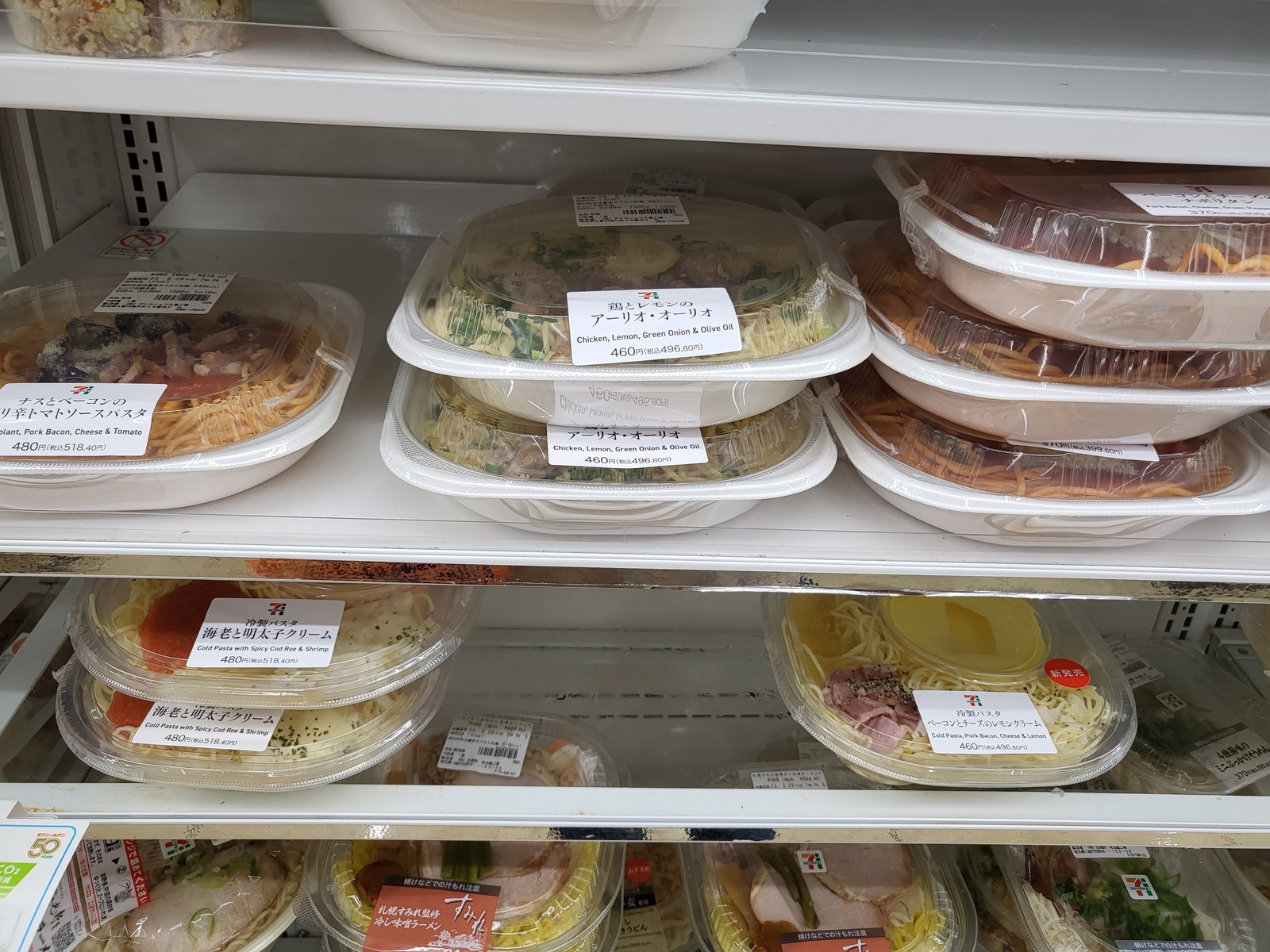
The noodle section deserves particular attention. All three chains now invest heavily in microwaveable ramen and udon: individual portions in sturdy containers, heated at the register in 2–3 minutes. The microwaveable ramen at 7-Eleven is genuinely good, noticeably better than the category would suggest, with proper broth and noodle texture. It is a full meal for around ¥400–500 and an excellent option when you’re back at the hotel and don’t want to go out again.
Cup noodles (kappu ramen) are also sold in enormous variety. Japan produces regional and limited-edition flavours that don’t exist outside the country. Many hotels provide hot water kettles; cup noodles are a legitimate hotel-room dinner option for one more night when everyone’s too tired to go anywhere.
Local secret: Konbini bento and side dish flavours vary by region. The seasoning in Tokyo leans saltier and soy-forward; in Osaka and western Japan it shifts lighter and sweeter. If you’re travelling beyond Tokyo, try the same product in a different region and you’ll notice the difference.
Step 4: Heat it up at the register
When you place items on the counter, the cashier will ask something like atatamemasu ka?, “Shall I heat that up?” Nod if yes. The item goes into a microwave behind the counter and is handed back within 30–60 seconds.
You can also say: atatamete kudasai, “Please heat this up.”
Not everything needs heating. Onigiri are fine cold. Sandwiches are meant to be eaten cold. Steamed buns (nikuman) and karaage-kun should definitely be heated.
Step 4b: Order coffee or a smoothie at 7-Eleven
7-Eleven’s Seven Café self-serve machines deserve a separate step. Unlike the register coffee at most chains, Seven Café uses a proper espresso-based machine mounted near the register area. Here’s how it works:
- Pick up a cup from the display beside the machine (sizes: S/M/L/iced)
- Tell the cashier you want a coffee, or tap the machine’s touchscreen to select your drink and pay at the register
- Take your cup to the machine, place it on the platform, and press the button for your size
- The machine does the rest
Regular coffee (hot S) is around ¥110. Iced versions and lattes cost slightly more. Smoothies and fruit-blend drinks (green smoothie, mixed berry) are also available at the machine, a solid option for parents who want something fruit-forward and kids-friendly in the morning.
This system is fast enough that you can do it with a stroller and a toddler in tow, provided you position the stroller before picking up the cup.
Step 5: Use the ATM if you need cash
Konbini ATMs are often the most reliable option for international bank cards in Japan.
-
7-Eleven: 7Bank ATMs accept Visa, Mastercard, AmEx, JCB, and most international cards. Available in English. This is the most widely recommended option.
-
FamilyMart: E-net ATMs accept many international cards. English available.
-
Lawson: Lawson Bank ATMs accept international cards and offer English menus.
Details above are per each chain’s own official site as of 2026/05; withdrawal fees apply and vary by card issuer.
7-Eleven vs FamilyMart vs Lawson: What Each Does Best
| 7-Eleven | FamilyMart | Lawson | |
|---|---|---|---|
| Locations (Japan) | ~21,000 | ~16,500 | ~14,500 |
| Onigiri variety | Widest (~50 types regularly) | Strong | Good |
| Rice / bento / noodles | Best overall | Good | Good |
| Sandwiches | Best overall quality | Very good | Good |
| Fried chicken | Reliable, mild | Famichiki (crispy, boneless) | Karaage-kun (bite-sized) |
| nikuman / steamed buns | Good | Best (benchmark standard) | Good |
| Coffee / smoothies | Seven Café, best in class plus smoothies | FamiCafé (reliable) | Machi Café (good) |
| Desserts / sweets | Good | Good | Best (Uchi Café brand) |
| Premium items | Gold label snack range | FamilyMart Collection | Uchi Café, Uchi Café SWEETS |
| ATM for tourists | Easiest (7Bank, widest support) | E-net (most international cards) | Lawson Bank (international OK) |
| Overall | Best all-round food quality | Best for fried items & pastries | Best for dessert lovers |
Store counts and product details above are per each chain’s own official site (2026/05).
7-Eleven
The default choice for most travellers, and the strongest all-round option for food quality. 7-Eleven Japan invests more in its rice and prepared meal development than the other chains, and it shows. The onigiri, bento, and microwaveable noodle range are consistently rated highest by domestic consumers. If you only eat at one chain the whole trip and you care about food, eat at 7-Eleven.
The ATM infrastructure (7Bank) is the most reliable for international cards, and the Seven Café self-serve machine (see Step 4b) produces better coffee than the price suggests.
If you’re only going to one chain, 7-Eleven is the safe pick.
FamilyMart
FamilyMart’s hot food counter is exceptional. The Famichiki has a cult following, a boneless fried chicken piece with a seasoned batter that’s crisper and juicier than competitors. The nikuman (when in season) is consistently rated best in class. The bakery section (near the entrance in most stores) also tends to be broader than 7-Eleven’s, so look for cream-filled buns and croissant-style items in the morning.
Best for: families who prioritise hot food and pastries.
Lawson
Lawson’s differentiator is the Uchi Café brand, a premium dessert and snack line that includes puddings, cream puffs, premium ice cream, and chocolate. If someone in your group has a strong sweet tooth (or you’re making a late-night post-bedtime run for yourself), Lawson is the destination.
Karaage-kun is Lawson-exclusive and a reliable kid pleaser: small fried chicken bites, available in regular, red (spicy, avoid for young kids), and seasonal flavours, sold in a small cardboard box for around ¥250.
Best for: dessert lovers and anyone with a late-night snack mission.
After the Kids Are Asleep
This deserves its own section.
By 9pm, when the kids have finally crashed at the hotel, the konbini transforms. You have thirty minutes and a wallet. Here’s what to get:
Drinks
-
Craft beer and regional nama (draft-style) beers have expanded significantly across all chains. Look for Kirin, Sapporo, and Yona Yona Ale in the chilled section.
-
Premium sake in single-serve cartons or small bottles is widely available, particularly at Lawson and FamilyMart.
-
Natural wine and low-alcohol options for non-beer drinkers.
Food
-
Lawson’s Uchi Café cream puffs or premium puddings: the gap between these and average convenience store desserts is real.
-
FamilyMart’s FamilyMart Collection premium snack range (cheese crackers, aged ham, seasoned nuts).
-
Any hot food from the counter: Famichiki or karaage without children competing for it is a different experience.
-
Cup noodles: If the hotel has a kettle (most do), pick up a cup ramen from the konbini. Japan produces a staggering range of regional and limited-edition flavours: tonkotsu from Kyushu, spicy miso from Hokkaido, niboshi from Tokyo. This is not a compromise; it is genuinely a thing adults enjoy doing in Japan at midnight.
The ritual
Returning to the hotel with a bag of genuinely good snacks and a cold drink, eating quietly while the kids sleep, is one of the underrated pleasures of travelling in Japan. Budget ¥1,000–1,500 and enjoy it without guilt.
Common Mistakes Families Make
1. Thinking everything needs to be heated
Onigiri and sandwiches are designed to be eaten cold. Asking to heat a tuna mayo onigiri will make it unpleasantly warm and slightly mushy. The cashier will heat whatever you hand over, so know what you want.
2. Buying too much at once
Konbini portions are well-sized and filling. One onigiri is typically 180–200g. Kids often need half. Buy less than you think, then go back; you’ll pass another one in five minutes anyway.
3. Ignoring the expiry time
Sandwiches and fresh items have a time (not just a date) on the label. Items approaching their expiry time are sometimes discounted with a sticker. This is fine for immediate consumption.
4. Missing seasonal items
Konbini rotates seasonal products: spring sakura flavours, summer ramune editions, autumn chestnut items, winter nikuman and oden. If you see something that looks interesting and seasonal, buy it. It may not be there tomorrow.
5. Assuming the ATM works with your card
7Bank (7-Eleven) is the most reliable option. If your card doesn’t work at a 7Bank ATM, try Japan Post ATMs (inside or near post offices) as a backup. Carry some cash whenever possible in Japan; many smaller restaurants and shops are still cash-only.
6. Not knowing about the bag fee
Plastic bags at the register cost ¥3–5 each; Japan introduced mandatory bag fees in 2020. The cashier will ask something like fukuro wa yoroshii desu ka?, “Do you need a bag?” If you have a daypack or tote, you can decline by saying daijoubu desu, roughly “I’m fine, thanks.” Carrying a small reusable bag saves a few yen per trip and avoids the decision every time.
7. Cutting the queue
Japan queues in single file and takes it seriously. At busy konbini, especially near station exits during rush hour, there is a single line that feeds to all registers. Join the back of the line, not the shortest individual register queue. This is one of those cultural norms that’s not posted anywhere but immediately noticed by locals.
8. Overlooking the freezer section
Japanese convenience store ice cream is genuinely excellent. The Haagen-Dazs Japan-exclusive flavours (found at all three chains), Meiji Essel Super Cup, and Yukimi Daifuku (ice cream wrapped in mochi) are worth picking up as afternoon treats.
FAQ
Can my kids eat konbini food safely?
Yes. Japanese food safety standards are very high, and konbini chains maintain strict freshness protocols with daily delivery schedules. Allergen information is printed on all packaging (in Japanese; use Google Translate’s camera function to scan). The most common allergens (wheat, egg, dairy, shellfish) are clearly marked.
Are there vegetarian or vegan options?
Vegetarian options exist but aren’t labelled as such, so you’ll need to check ingredients. Onigiri with pickled plum (umeboshi), seaweed, or kelp are plant-based. Some snacks and sweets are dairy-free. Fully vegan shopping is possible but requires careful label reading. Halal options are very limited in standard konbini.
What’s the best konbini breakfast for kids?
Egg salad or ham and cheese sandwich plus a carton of milk or juice. Alternatively, a tuna mayo onigiri and a small yogurt. The morning pastry selection (particularly at FamilyMart) is worth checking: melon bread, cream buns, and chocolate cornets are popular with children.
How much does a typical konbini meal cost per person?
A filling meal (onigiri + drink + small snack) runs ¥400–600 per person. Hot food items range from ¥130 (karaage-kun) to ¥300 (Famichiki). Premium desserts are ¥200–400. Konbini is not just convenient; it is genuinely budget-friendly.
Do konbini have seating?
Some do, particularly those on high-traffic street corners or near train stations; look for a counter along the window or a few stools. Most do not. In Tokyo, eat your onigiri on the steps outside, at a nearby park, or back at the hotel.
Is 7-Eleven Japan the same as 7-Eleven in other countries?
No. 7-Eleven Japan operates independently and to a significantly higher standard than most international branches. The Japanese franchise pioneered the modern konbini model in the 1970s. Don’t judge it by what you know from home.
Is oden available year-round?
No, oden disappears in summer and returns around October. See the hot food section above for a full description. If you’re visiting in autumn or winter, it’s worth trying at least once: point at what you want, or say the number of each item (hitotsu, one; futatsu, two). Boiled egg and fish cake are the gentlest entry points.
Which chain has the most locations near tourist areas in Tokyo?
7-Eleven and FamilyMart have the densest coverage near central Tokyo tourist spots (Shinjuku, Shibuya, Asakusa, Ueno). Lawson is also well represented. In practice, you’ll see all three within a few blocks of any major attraction.
Internal links: Navigating Tokyo’s Train System with Kids · Best Quick Breakfasts in Tokyo for Families · Best Snacks for Kids in Tokyo
Information checked: 2026/09