
TL;DR
-
Tokyo’s snack culture runs from cheap dagashi (old-school penny candy) to department-store matcha sweets, so there’s a good option at every budget
-
Dagashi shops sell mostly inexpensive items (many under ¥50, some over ¥100) and are one of the few places kids can pick out their own treat with actual pocket money, often with a kuji-biki lottery draw for a small toy on the side
-
Taiyaki and imagawayaki (warm, fish- or disc-shaped cakes filled with sweet red bean or custard) are street-snack staples that read as “familiar” to most kids even on a first taste
-
Matcha sweets range from very kid-friendly to quite bitter. Matcha soft serve and matcha Kit Kats are mild and popular; strong matcha wagashi can be an acquired taste, so sample before committing to a whole one, and it’s worth thinking about caffeine before handing matcha treats to very young kids
-
Konbini desserts are a legitimate snack stop on their own. See our full convenience store guide for the chain-by-chain rundown
-
Department store basements (depachika) have the widest single-location variety, but it’s also the easiest place to overspend without meaning to. Set a rough budget before you go in
Why Snacking Is Part of the Experience
In a lot of countries, kids’ snacks are an afterthought, something grabbed at a gas station between destinations. In Japan, snacking is closer to its own small tradition, with dedicated snack shops, street-food stalls, and department store floors built entirely around it. For traveling families, that’s good news: snack breaks double as a fun, low-stakes part of the day, not just a way to prevent a meltdown.
The other advantage: most Japanese snacks are portioned small. A taiyaki, a bag of dagashi, or a single matcha treat is enough to satisfy a kid without derailing the next meal, useful when you’re trying to keep a sightseeing day moving. In our own experience raising twins here, we buy less candy day-to-day than you’d expect, since local festivals hand out a surprising amount of it on their own; the snack shopping described below tends to happen on dedicated outings rather than constantly.
Best Options by Type
Dagashi: Old-School Penny Candy
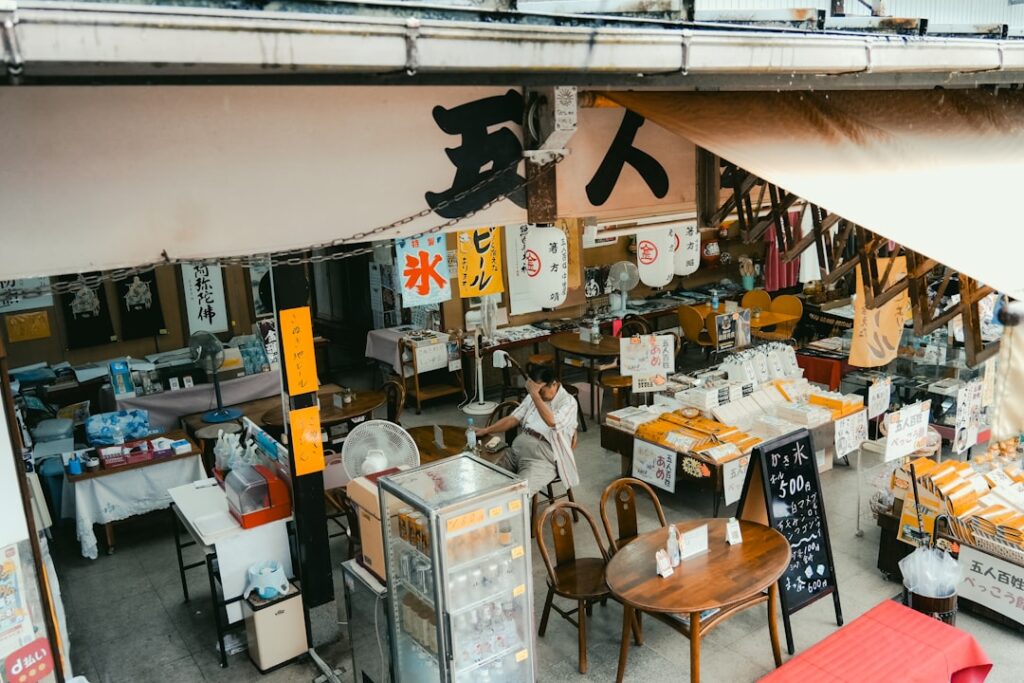
Dagashi shops are small, old-fashioned stores stocked with inexpensive Japanese candy, snacks, and small toys. Most individual items are cheap, commonly ¥10–50, though it’s not a strict rule; even a well-known staple like umai-bo has crept up to around ¥15 with inflation per Yaokin’s own price notice, and some packaged items run over ¥100. They’ve existed for generations as the place Japanese kids buy treats with their own allowance, and that’s still the appeal: it’s one of the few spots on a trip where a child can pick out their own snack with real money in hand and get real change back. Many also have a kuji-biki lottery draw by the register, a small paid ticket that wins a little toy or extra treat, which adds a game-like layer kids enjoy on top of the candy itself.
A word of warning: old-school dagashi-ya are hard to stumble across in Tokyo now. Many have closed over the decades, and in our own experience wandering neighborhoods with the twins, they’re not a “keep an eye out and you’ll spot one” category; it’s worth seeking out a specific destination shop rather than counting on passing one by chance. The Yanaka Ginza shopping street area (near Sendagi Station) is one of the more reliable pockets, with a handful of old-school shops still operating in and around it. We’ve also had good luck with a small shop near Kudanshita Station, stopped into after lunch more than once for nostalgic candy and the kuji-biki draw (we couldn’t tell you the shop’s name off the top of our heads, but it’s worth a look if you’re in the area). Selection varies shop to shop, but expect gummies, small chocolates, rice crackers, and novelty candy in colorful individual packaging.
Cost: typically a handful of treats for a couple hundred yen total, though this varies shop to shop.
Worth knowing beyond dagashi shops themselves: a category of “play candy” (interactive candy with an activity built in) is a genuine hit with young kids and isn’t limited to dagashi-ya; it’s sold at ordinary supermarkets and convenience stores too. Neru Neru Neru Ne (a mix-it-yourself fizzy candy kit) and gummy-fishing sets like Gumi Tsureta (where a toy rod “catches” gummy fish) are the kind of thing our own twins reach for over a plain bag of sweets, and they travel well as an activity for a train ride or a quiet moment at the hotel.
Taiyaki & Imagawayaki: Warm Filled Cakes
Taiyaki (fish-shaped cake, usually filled with sweet red bean paste, though custard and chocolate versions are common too) and imagawayaki (the same idea in a round, disc shape) are two of Tokyo’s most reliable street snacks. Both are cooked fresh to order in a hot iron mold, served warm, and cost roughly ¥150–300 depending on the filling and shop.
They’re an easy sell for kids who haven’t tried Japanese sweets before: the outside is a mild, pancake-like batter, and the classic red bean filling reads as “not too sweet, not too strange” to most first-timers. If red bean feels like a risk, look for a stand offering custard or chocolate filling as a safer starting point. In our own experience, both of our twins are on board with taiyaki, and if a sweet filling doesn’t land with your kids, a savory street snack like takoyaki is worth trying instead; it’s won over our own kids just as reliably as any dessert on this list.
A distinction worth knowing: taiyaki shops split into two styles, described with a fish-farming metaphor. Ikkoyaki (“one-at-a-time,” nicknamed “tennenmono” or “wild-caught”) uses individual fish-shaped molds cooked one by one, giving a thinner, crisper shell; yoshoku (“farmed”) uses a large multi-fish mold plate for faster output. Neither is wrong, but the one-at-a-time style tends to have the more distinctive crust. Taiyaki Wakaba, near Yotsuya-sanchome, is one of Tokyo’s best-known ikkoyaki shops, in business since 1953, thin-skinned, with a lightly salted Hokkaido azuki filling. That touch of salt is exactly why it’s a personal favorite of ours among Tokyo’s taiyaki shops. It’s popular enough to draw a short queue, so build a few minutes of wait time into your plans.
Konbini Desserts: Reliable and Everywhere
Convenience stores deserve their own mention here; they’re a real snack option, not a fallback, and all three major chains (7-Eleven, FamilyMart, Lawson) stock a rotating seasonal dessert selection worth checking regularly. Each chain has its own strengths; see our Japan’s Convenience Store Food with Kids guide for the full chain-by-chain comparison.
Cost: commonly ¥150–400 per item; for example, Lawson’s Uchi Café dessert line runs roughly ¥170–400 as of mid-2026.
Matcha Sweets: Mild to Genuinely Bitter
Matcha (powdered green tea) shows up across an enormous range of snacks, and the kid-friendliness varies a lot by format:
-
Matcha soft serve and matcha-flavored Kit Kats are mild, sweet, and popular with most kids: a safe starting point.
-
Matcha-flavored snacks aimed at a general audience (cookies, pastries, convenience store treats) are usually sweetened enough to be approachable.
-
Traditional matcha wagashi, especially anything served with the concentrated ceremonial-grade tea itself, can taste distinctly bitter to a palate used to sweeter flavors, worth a small taste before buying a full portion for a picky kid.
If you’re unsure how a specific matcha item will land, start with the smallest size available, or ask if a sample is available (not all shops offer them). Matcha does contain caffeine, and in our own family we’ve simply held off giving our twins matcha treats so far for that reason; if caffeine is a concern for your kids, it’s worth asking staff about a specific item rather than assuming a snack-format matcha treat is negligible.
Depachika Sweets Floors: Widest Variety, Easiest to Overspend
The basement food floor (depachika) of a major department store is one of the best places to see Tokyo’s snack variety in one stop: rows of counters selling everything from traditional wagashi to Western-style pastries to regional specialty sweets. Some counters put out samples for tasting, though this varies by shop and isn’t guaranteed. It’s a fun browse with kids, letting everyone point at what looks interesting.
A specific pick worth knowing: the wagashi (traditional Japanese sweets) section on the B1 floor of Isetan Shinjuku is a standout, directly connected to Shinjuku-sanchome Station. One counter there, Suzukake, sells a seasonal strawberry daifuku (ichigo daifuku) that’s known for drawing a queue; arriving close to opening gives you the best odds of getting one before it sells out, and waiting until later in the day can mean a long line or none left at all.
Beyond department stores: standalone neighborhood wagashi shops are worth a detour too, and tend to be less crowded than a depachika counter. Akasaka Aono, a wagashi shop with roughly 120 years of history right by Akasaka-mitsuke Station, is a good example, known for its furoshiki-wrapped “Akasaka mochi” and other signature sweets.
The depachika catch: individually, items are often ¥300–800+, and it’s easy to end up with a basket of six different treats before you’ve noticed the total. In our own visits, the senbei and okaki (rice cracker) counters that sell by the piece are an easy place for this to happen, so we’ve made a habit of setting a number (“one each,” say) before we start browsing rather than after. Set a rough per-person budget before you go in, or agree with your kids in advance on “one treat each” to keep the browsing fun rather than stressful.
Common Mistakes Families Make
1. Buying a full-size matcha treat before tasting it
Matcha ranges from mild to quite bitter, and it’s not always obvious which you’re getting from packaging alone. Ask for a sample, or start with a small format like a Kit Kat, before committing a whole allowance to something a picky kid might reject after one bite.
2. Skipping dagashi shops because they look unassuming
Dagashi shops often look cluttered and old-fashioned compared to a bright convenience store, which makes them easy to walk past. They’re worth seeking out specifically; the pocket-money-shopping experience is hard to replicate anywhere else, and the prices mean there’s very little risk in letting a kid choose freely.
3. Not checking the filling before buying taiyaki
Classic taiyaki is usually filled with sweetened red bean paste (anko), which isn’t a familiar flavor for every kid. Most stands also offer custard or chocolate; check the options rather than assuming red bean is the only choice, especially for a first try.
4. Losing track of spending in a depachika
Because each item is sold individually and looks reasonably priced on its own, it’s easy to end up with a surprisingly large total after browsing several counters. A rough budget or a “one treat per person” rule going in keeps this fun instead of a source of friction.
5. Assuming all convenience store desserts are equally good
They’re not identical across chains: Lawson leans hardest into premium desserts (Uchi Café), while the other chains are stronger in other categories. See our convenience store guide for which chain to hit for what.
FAQ
What is dagashi, and where can I find it in Tokyo?
Dagashi is inexpensive, old-fashioned Japanese candy and snacks, most individual items are cheap, though not every item is under ¥100, traditionally sold in small dedicated dagashi shops. Look for them in older shopping streets (shotengai) rather than modern malls; Yanaka Ginza and the area around Kudanshita Station are both worth checking.
Are Japanese snacks generally kid-friendly for foreign travelers?
Most are. Taiyaki, konbini desserts, and mild matcha treats tend to be an easy sell even for kids trying Japanese food for the first time. The main exception is strong, traditional matcha, which can taste bitter to palates used to sweeter flavors; sample before committing to a full portion.
What’s the difference between taiyaki and imagawayaki?
They’re close cousins: both are warm, cooked-to-order cakes with a sweet filling (usually red bean, though custard and chocolate are common). Taiyaki is shaped like a fish; imagawayaki is a round disc. The taste and texture are very similar, so either makes a good street-snack stop.
Does matcha contain caffeine that I should worry about for young kids?
Yes, matcha contains caffeine, and the amount varies a lot by product; snack-form items (soft serve, Kit Kats, pastries) generally use less matcha than a full cup of brewed tea. Exact caffeine content isn’t usually listed on snack packaging, so for very young children or kids sensitive to caffeine, it’s worth asking staff or checking the product, and treating strong matcha items (ceremonial-grade drinks and concentrated wagashi) with more caution than a mild matcha-flavored snack. We’ve taken the cautious route ourselves and simply held off on matcha treats for our own twins so far.
How much should we budget for snacks per day?
It varies widely by how often you stop, but ¥500–1,500 per person per day is a reasonable range if you’re doing a couple of snack stops: a dagashi haul, a taiyaki, and maybe one depachika treat. Set a rough number in advance if you want to avoid the depachika overspend trap.
Where’s a good single spot to see a wide variety of snacks at once?
A department store’s basement food floor (depachika) is a strong one-stop option; it concentrates traditional wagashi, Western-style pastries, and regional specialties from across Japan in one place, with samples available at some counters. The wagashi section at Isetan Shinjuku (B1, connected to Shinjuku-sanchome Station) is a particularly strong example.
Can I find these snacks outside major tourist areas?
Yes. Convenience stores and supermarkets are everywhere regardless of neighborhood, and most residential shopping streets have at least one bakery or sweets shop; interactive “play candy” like mix-it-yourself kits or gummy-fishing sets is common supermarket stock, not a tourist-area specialty. Dagashi shops and dedicated taiyaki stands are more concentrated in older, traditional shopping areas, but aren’t exclusive to tourist zones.
Plan Your Next Snack Stop
Also useful:
-
Japan’s Convenience Store Food with Kids: 7-Eleven vs FamilyMart vs Lawson
-
How Much Does Tokyo Cost for a Family? (2026 Honest Budget Guide)
Information checked: 2026/09