
TL;DR
-
Children 6–11 pay exactly half the adult JR Pass price; kids under 6 ride free on a parent’s lap without their own ticket or pass
-
The pass is not automatically cheaper. Since the October 2023 price hike (roughly +70%), it only pays off if your itinerary includes real long-distance Shinkansen travel, not just Tokyo sightseeing
-
A single Tokyo↔Kyoto round trip doesn’t clear break-even on its own; you generally need that plus at least one more long leg (a multi-city “Golden Route” trip, for example) before the pass beats point-to-point tickets
-
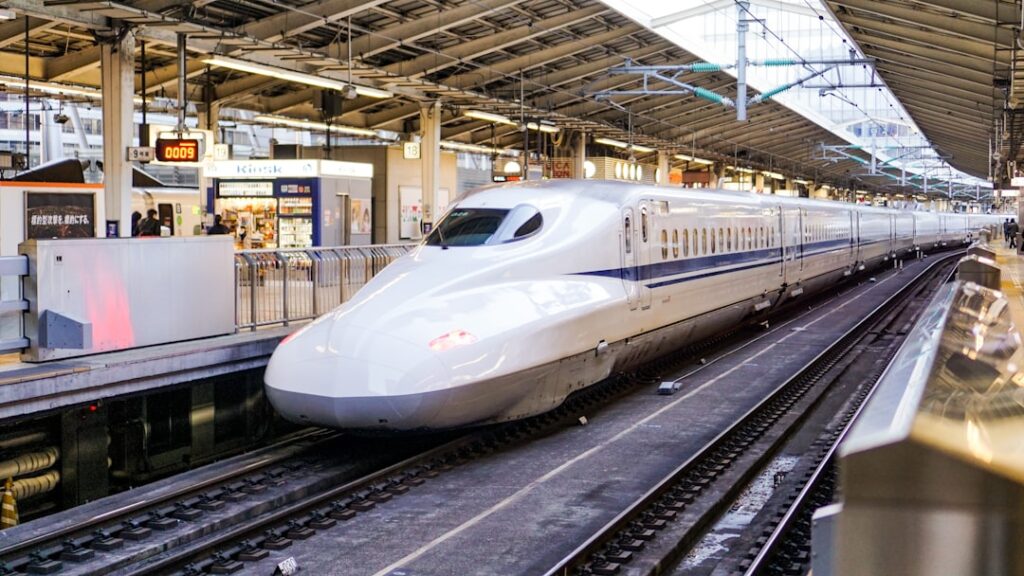
Nozomi and Mizuho Shinkansen are excluded. Hikari and Kodama (Tokaido/Sanyo) or Sakura/Tsubame (Kyushu) are covered instead. You can still ride a Nozomi/Mizuho by buying a special ticket in advance, but you can’t just pay a difference at the gate
-
The pass is still a physical item. It doesn’t tap like an IC card, and if you bought it online you’ll receive the physical pass in Japan; if you bought a voucher through an overseas agency, you exchange that voucher for the pass instead
-
Seat reservations are free. Reserve as a family so everyone sits together, especially useful with young kids and strollers (you can’t double-book overlapping trains, so plan your legs before reserving); some Shinkansen types don’t even have a non-reserved car, so this isn’t always optional
-
Buy on the official website rather than a third-party agency if possible. Agency pricing is set to rise from October 2026, while official online pricing is staying at current rates for now
What the JR Pass Actually Is
The Japan Rail Pass (JR Pass) is an unlimited-ride pass covering almost all JR trains nationwide, including most Shinkansen (bullet train) services, for a fixed number of consecutive days. For a family planning to move between cities (Tokyo to Kyoto, Kyoto to Hiroshima, Osaka back to Tokyo), it bundles what would otherwise be several separate ticket purchases into one pass, with free seat reservations included.
It’s worth being upfront about something a lot of older guides gloss over: in October 2023, JR raised the pass price by roughly 70%. Before that, the pass was close to a default recommendation for almost any multi-city Japan trip. Since the increase, that’s no longer automatically true; for some itineraries, especially ones that stay mostly in Tokyo or cover just one round trip, buying individual tickets is now cheaper. This guide is about figuring out which category your family’s trip falls into before you buy, based on JR Group’s official October 2023 price revision notice and current published pricing.
This is a tourist-specific product (short-term visitor status is generally required to buy one), so the guidance below is built from official JR sources and route-pricing math rather than our own JR Pass trips. Where we’ve ridden the Shinkansen with our own kids, using ordinary point-to-point tickets rather than a pass, we’ve noted it, since some of what we ran into still applies either way.
Step-by-Step: Deciding, Buying, and Using the Pass
Step 1: Work Out Your Family’s Prices
Current official prices (Ordinary/standard class):
| Duration | Adult | Child (6–11) |
|---|---|---|
| 7 days | ¥50,000 | ¥25,000 |
| 14 days | ¥80,000 | ¥40,000 |
| 21 days | ¥100,000 | ¥50,000 |
Green Car (first class, wider seats, less crowded):
| Duration | Adult | Child (6–11) |
|---|---|---|
| 7 days | ¥70,000 | ¥35,000 |
| 14 days | ¥110,000 | ¥55,000 |
| 21 days | ¥140,000 | ¥70,000 |
Children under 6 don’t need a pass or ticket at all, as long as they sit on a parent’s lap rather than in their own seat. If you’d rather guarantee your toddler a seat next to you on a full train, buy them a child ticket for that leg (more on this in Common Mistakes below). Age brackets have some edge cases (school-year cutoffs, age at time of travel vs. purchase), so check the official conditions for use if your child’s birthday falls near a boundary.
Step 2: Check Whether Your Route Clears Break-Even
This is the step families skip, and it’s the one that determines whether the pass makes sense.
A reserved-seat, non-Nozomi round trip between Tokyo and Kyoto costs roughly ¥26,000–27,000 per adult (about half that per child), already more than half of the ¥50,000 seven-day adult pass, but not the whole thing on its own. The pattern holds roughly the same whether you’re pricing it for an adult or a 6–11-year-old, since the child pass and child point-to-point fares are both close to half the adult price.
Rough guide:
| Trip shape | Point-to-point tickets vs. 7-day pass |
|---|---|
| Tokyo-based trip, day trips only (Nikko, Kamakura, Hakone) | Pass is usually not worth it. These trips involve little or no Shinkansen distance, so the pass rarely beats a regional pass or ordinary tickets |
| One long round trip (e.g. Tokyo ↔ Kyoto and back) | Often close to, but under, break-even. Price out your specific dates before buying |
| Multi-city itinerary with two or more long-distance legs (e.g. Tokyo → Kyoto → Hiroshima/Osaka → Tokyo) | Often close to break-even on the long-distance legs alone; adding local JR rides across a multi-day stay, or a further long-distance leg, is usually what tips it toward the pass. Price your actual route before assuming it’s a clear win |
This is a starting point, not a substitute for doing the math on your actual itinerary; route, date, and ticket type (regular vs. discounted) all move the number. Run your real dates and stations through the JR East fare finder or a booking site like SmartEX before deciding.
Step 3: Buy Through the Official Site First
You can buy the pass through the official JR Pass website or through authorized travel agencies. Prices are currently the same either way, but from October 1, 2026, overseas agency prices are set to rise (for example, the 7-day Ordinary adult pass moves from ¥50,000 to ¥53,000 through those channels). JR has said the official online purchasing service’s prices will stay at current rates “for a limited time” to encourage direct bookings, without yet announcing when that freeze ends. If you’re booking on or after October 2026, check the official price-change notice before paying an agency mark-up.
Step 4: Get Your Physical Pass and Reserve Seats
The JR Pass isn’t a tap-and-go card like Suica or Pasmo, and how you receive it depends on where you bought it: buy through the official website and you receive the physical pass in Japan; buy a voucher through an overseas travel agency and you exchange that voucher for the physical pass at a JR ticket office or designated exchange counter once you land (major airports and stations all have one). Either way, you show or insert the pass at staffed or ticket-slot gates rather than tapping it.
Seat reservations are free on covered trains. If you bought your pass on the official website, you can reserve online in advance through the dedicated JAPAN RAIL PASS Reservation site; otherwise, reserve in person at a reserved-seat ticket machine or a Midori-no-Madoguchi ticket office once you’re in Japan. We’ve only ever booked ours in person at the counter, since that’s what the process looked like the last time we needed it ourselves, but the online reservation route is worth using now if you’d rather have it sorted before you land. One catch worth knowing: you can’t hold overlapping reservations for the same time slot on different trains, so plan your legs before you start reserving.
With kids, reserve seats every time you can, rather than relying on non-reserved cars. It costs nothing extra, and it means your family sits together instead of splitting up or standing with a stroller and bags during a 2+ hour ride. It’s also not always optional: some Shinkansen services, like the Tohoku Shinkansen’s Hayabusa, don’t have a non-reserved car at all, so a reservation is the only way on. We took the Hayabusa from Tokyo with our kids for a day trip to a railway museum, and having sorted the reservation ahead of time meant we weren’t figuring that out on the platform. During peak periods (Golden Week, Obon, New Year), seat availability isn’t guaranteed even with a reservation window open, so book as early as you can around those dates.
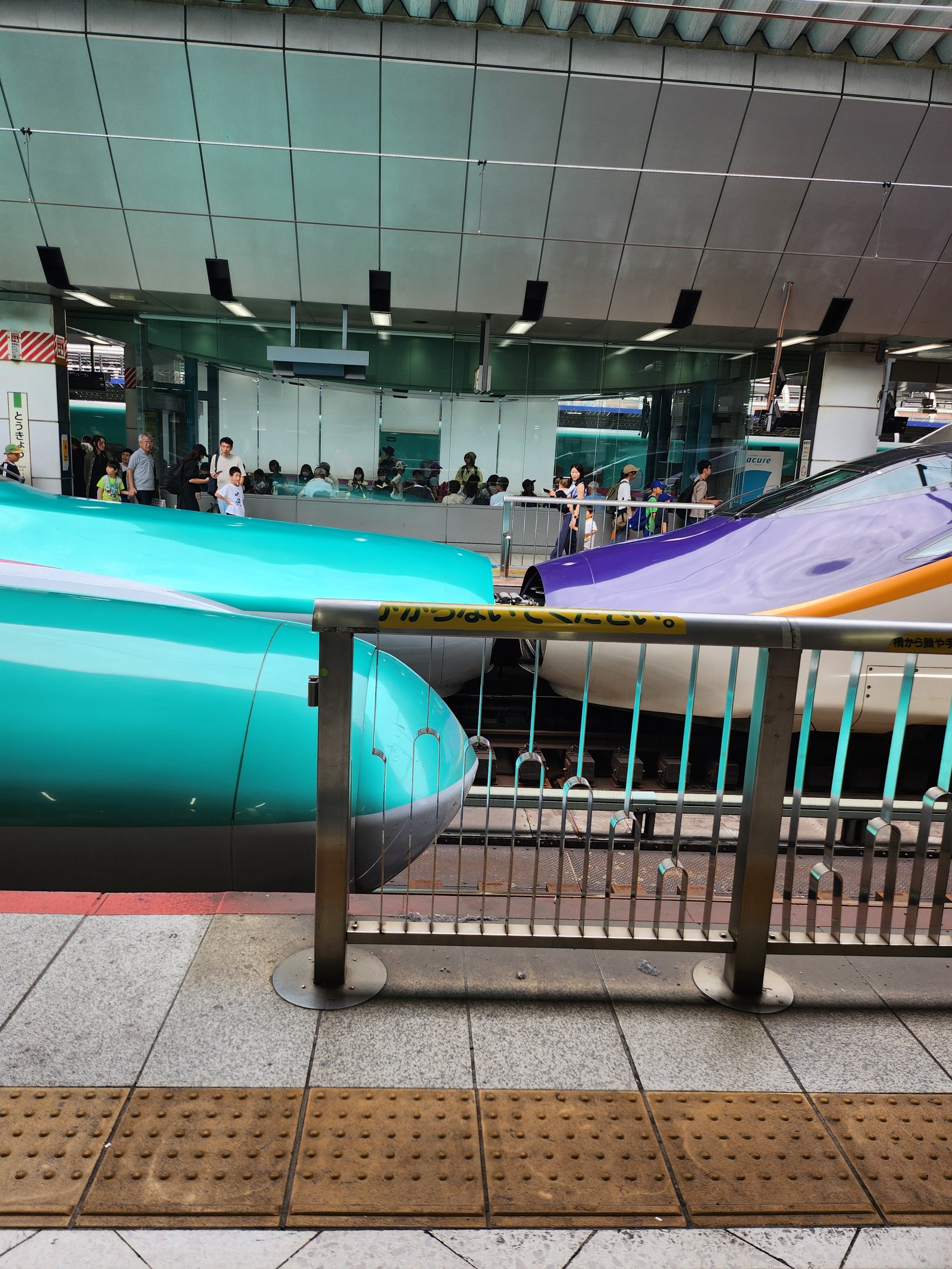
One small logistics note if you’re departing from Tokyo Station: buy your ekiben (bento) before you go through the Shinkansen ticket gates, not after. The selection inside, past the gates, shrinks a lot compared to the concourse outside. Restrooms, on the other hand, are available on both sides of the gate, so that part isn’t a concern either way.
Step 5: Know What’s Excluded
The pass covers most JR trains, but not everything:
-
Nozomi and Mizuho Shinkansen are excluded. Use Hikari or Kodama (Tokaido/Sanyo Shinkansen) or Sakura/Tsubame (Kyushu Shinkansen) instead. These are covered, and on most routes only add a modest amount of travel time (around 30 minutes on Tokyo–Kyoto/Shin-Osaka; the difference can be larger on longer routes). You can still ride a Nozomi or Mizuho, but only by buying a separate “[ONLY WITH JAPAN RAIL PASS] NOZOMI MIZUHO Ticket” before boarding; you can’t pay a fare difference at the gate or on board. Example prices: Tokyo–Nagoya ¥4,180, Tokyo–Kyoto/Shin-Osaka ¥4,960, Tokyo–Hiroshima ¥6,500. On a family trip to Kyushu, we rode a Nozomi ourselves from Hakata to Okayama on ordinary tickets; if we’d been travelling on a JR Pass instead, that exact leg is the kind of thing that trips people up, since Nozomi is the fast, frequent default on that corridor and Hikari would have been the pass-covered (and somewhat slower) option.
-
Non-JR trains and subways are excluded. Tokyo Metro, Toei Subway, and most private railways (Tokyu, Odakyu, Keio, and others) aren’t covered. You’ll still want an IC card for getting around within Tokyo day to day.
-
Highway buses, night-train sleeping compartments, and some regional private lines aren’t covered either.
Common Mistakes Families Make
1. Buying the pass for a Tokyo-only trip
If your itinerary doesn’t leave the greater Tokyo area, the pass has almost nothing to offer. The JR Yamanote Line is covered, but so is a ¥200 Suica tap, and you’ll spend more on the pass than you would on trains all week. Skip it and use an IC card instead.
2. Not pricing out the actual break-even before buying
It’s tempting to buy the pass “just in case it’s cheaper,” but since the 2023 price rise, that assumption isn’t safe anymore. Price your specific route with point-to-point fares first; it takes ten minutes and can save real money either way.
3. Boarding a Nozomi or Mizuho by habit
These are the fastest, most frequent Shinkansen on the Tokyo–Osaka–Hakata corridor, so it’s easy to walk onto one without checking. Pass holders need Hikari or Kodama (or Sakura/Tsubame on Kyushu Shinkansen) instead, and unlike some fare mix-ups, you can’t fix this after the fact by paying a difference on board. Check the departure board before you board, not after.
4. Assuming a lap child never needs a ticket
Under-6s ride free without their own seat, but on a busy reserved-seat train, “free” can mean holding a toddler on your lap for two hours with no seat guarantee for them. If the ride is long or the train is likely to be full, it’s often worth buying your under-6 a child ticket for that leg so they have a seat next to you.
5. Forgetting to reserve seats as a family
Reservations are free with the pass, but they’re not automatic; you have to make them yourself. Skipping this step risks your family getting split across a non-reserved car during a busy travel day, which is a lot harder to manage with young kids and luggage, and on some services (Hayabusa among them) there’s no non-reserved car to fall back on at all.
FAQ
Is the JR Pass worth it for a family with kids in 2026?
It depends entirely on your route, and even a solid-looking multi-city itinerary can land close to break-even rather than a clear win. A three-leg loop like Tokyo–Kyoto–Hiroshima–Tokyo, priced with ordinary reserved-seat fares, runs to roughly ¥44,000 per adult in point-to-point tickets, close to the ¥50,000 seven-day Ordinary pass and sometimes cheaper, depending on your exact dates. What tips the balance toward the pass is usually local JR rides added on top of the city-to-city legs (the Yamanote Line in Tokyo, JR lines around Kyoto or Hiroshima) across a multi-day stay, or a fourth long-distance leg on your route. For a Tokyo-based trip with day trips only, or a single round trip to one other city, the pass is often close to a wash or even more expensive. Price your actual dates and stations before buying either way.
Do children need their own JR Pass?
Children aged 6–11 need their own pass, priced at exactly half the adult rate. Children under 6 don’t need a pass at all as long as they’re sitting on an adult’s lap rather than occupying their own seat.
Can my toddler under 6 have their own seat on the Shinkansen?
Yes, but they’ll need a ticket for it. The free-with-a-lap rule only applies if they’re not occupying a seat of their own; if you want a guaranteed reserved seat for them next to you, buy a child ticket for that leg.
What’s the difference between Ordinary and Green Car passes?
Green Car is JR’s first-class option (wider seats, generally less crowded carriages) for about 30–40% more than Ordinary. For most families, Ordinary is perfectly comfortable; Green Car is worth considering on longer rides if the extra space and quiet would make a real difference with young kids.
Can I use the JR Pass for local transport in Tokyo, like the subway?
Only partially. It covers JR lines, including the Yamanote Line loop that circles central Tokyo, but not Tokyo Metro, Toei Subway, or most private railways. You’ll still want a Suica or Pasmo IC card for the rest of your Tokyo travel.
Do I need to book the pass before arriving in Japan?
Buying online in advance is recommended, since prices may differ by channel (see Step 3) and it lets you lock in your travel start date. If you buy through the official website, you receive the physical pass in Japan; if you buy a voucher through an overseas agency, you exchange it for the physical pass at a JR office once you land.
What happens if I accidentally board a Nozomi or Mizuho train?
Unlike a simple fare shortfall, you can’t just pay a difference on board or at the gate; pass holders need to buy a separate NOZOMI MIZUHO Ticket before boarding (roughly ¥4,180–6,500 depending on distance, e.g. Tokyo–Nagoya or Tokyo–Hiroshima). The safest habit is checking the departure board before you get on, not after.
Is the pass cheaper if I book through a travel agency instead of the official site?
Not currently, and from October 2026 it will likely be more expensive: agency and overseas-channel prices are rising while the official online purchasing service’s pricing is staying the same for now. Check the official JR Pass site first.
Plan Your Journey with Confidence
Now that you know whether the pass fits your route, here’s what to sort out next:
→ How to Use IC Cards (Suica & Pasmo) with Kids in Japan: for the local trips the JR Pass doesn’t cover
Also useful:
-
Getting Around Japan with Kids: The Complete Transport Guide
-
Navigating Tokyo’s Train System with Kids: A First-Timer’s Guide
-
How Much Does Tokyo Cost for a Family? (2026 Honest Budget Guide)
Information checked: 2026/09