

At a Glance
| Entry | Free (the district itself) · ¥500 for Shinjuku Gyoen National Garden (free for junior-high age and under; high-school age and up pay) |
| Nearest stations | Shinjuku Station (JR Yamanote/Chuo/Sobu, Odakyu, Keio, Tokyo Metro Marunouchi, Toei Oedo/Shinjuku) · Seibu-Shinjuku Station (a separate, short walk away) · Shinjuku-sanchome / Tochomae (Tokyo Metro, Toei) |
| Getting there | Shinjuku Station is a hub for nearly every major line in western Tokyo; you’ll likely pass through it even if it’s not your destination |
| English support | Good at major department stores and the station itself; more mixed at small local shops and shrines |
| Strollers | Manageable but effortful: crowds, underground passages, and elevators that aren’t always where you’d expect |
| Baby facilities | Excellent. Isetan, Takashimaya, and Keio department stores all have dedicated nursing/changing rooms and play areas |
| Typical visit | A few hours for the garden and a department store; a full day if you add a festival, a meal, and unhurried wandering |
Details above reflect our own weekly visits since 2020, checked 2026/09.
Is It Worth It?
Short answer: yes, but think of Shinjuku as a base and a hub, not a single attraction to check off.
This guide comes from unusually direct firsthand knowledge: our family lived in Shinjuku 5-chome until our kids were about 2, and we’ve since moved to another part of Shinjuku ward, about a 15-minute walk away, so this has been home the whole time, and we’ve been going back to this same stretch of Shinjuku almost every single week since our kids were babies. That’s not a one-time visit written up from notes; it’s the accumulated, mundane knowledge of what actually works on a normal Tuesday with a toddler in tow, not just what’s impressive on a highlight reel.
Shinjuku isn’t a compact sightseeing district like Asakusa. It’s Tokyo’s largest business, shopping, and entertainment hub built around the world’s busiest train station, overwhelming on first impression, and genuinely manageable once you know a handful of specific things: where the kid-friendly refuges are, how to move with a stroller, and which parts of the chaos are actually worth your family’s time.
By age:
-
0–2 (baby/infant): Department store baby rooms are a lifesaver here. Isetan, Takashimaya, and Keio all have proper nursing and changing facilities a few minutes’ walk from the station. Shinjuku Gyoen’s lawns are the best outdoor decompression space.
-
3–6 (preschooler): Old enough to enjoy the department store rooftop play areas, the garden’s ponds and open lawns, and the spectacle of a festival mikoshi (portable shrine) parade if your visit lines up with one.
-
7–10 (primary school): Can handle more walking and will get a kick out of the sheer scale of the station and skyscraper district, impressive to a kid once you frame it that way rather than just navigating through it.
What to Expect
Shinjuku Station: The World’s Busiest, and What That Means for You
Shinjuku Station holds the Guinness World Record for the busiest railway station on Earth, with an average daily passenger throughput of over 2.7 million people and more than 200 exits spread across a sprawling, multi-level complex shared by JR, Odakyu, Keio, and three subway lines (Tokyo Metro Marunouchi, Toei Oedo, Toei Shinjuku), according to Guinness World Records. Seibu-Shinjuku Station, served by the Seibu-Shinjuku Line, is a separate station a few minutes’ walk from the main complex, worth knowing if your train ticket says Seibu-Shinjuku rather than Shinjuku.
The practical implication for a family: don’t try to understand the whole station. Pick one exit or landmark and orient around it. We navigate by department store, not by exit number: “we’re meeting at Isetan” or “come out toward Takashimaya Times Square” is a far more reliable instruction than a specific numbered exit, especially with kids in tow and a phone signal that can be spotty underground. If you’re arriving to meet someone, agree on a specific store entrance in advance rather than “let’s meet at Shinjuku Station.”
Shinjuku Gyoen National Garden
A 500-yen ticket (free for kids of junior-high age and under) buys access to one of Tokyo’s best green spaces for kids, per the Ministry of the Environment’s official garden page: a mix of a formal Japanese garden with ponds and koi, and wide English-style lawns built for exactly the kind of running around and picnicking that a day of city sightseeing doesn’t otherwise allow.
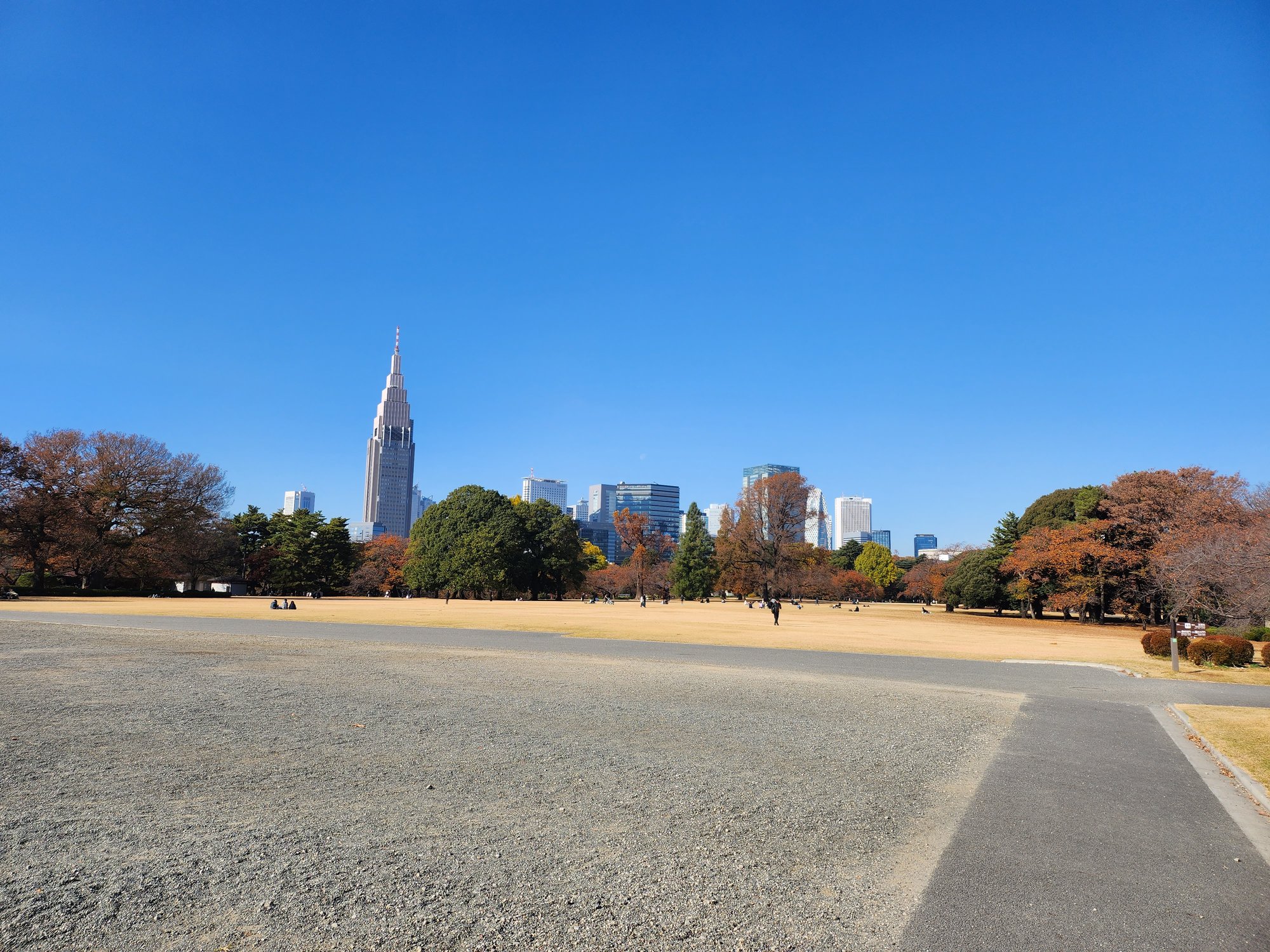
Our tip, from years of doing this: buy a bento (boxed lunch) at one of the department stores’ basement food halls (depachika) on your way in and eat it on the lawn. Bringing your own food is allowed, only alcohol is prohibited, with bag checks at the entrances, and it turns a garden visit into a full, relaxed lunch outing rather than a quick walk-through. There’s also a dedicated kids’ play area with playground equipment, a rare find inside a formal Japanese garden.
Go right at opening. The garden opens at 9:00 (it has also run early-opening days in some seasons, so check the official site). On a Saturday in October 2026, one of us walked in with our 4-year-old twins just after 9:00, after a morning set at the Komeda Coffee near Shinjuku-gyoemmae Station, and the garden was nearly empty. The leaves hadn’t turned yet, but the weather was ideal for a walk. At that hour you can have a bench to yourselves, and the Starbucks inside the garden, which usually has a line, was easy to get into.
Paying at the gate. We have an annual pass, but at the Okido Gate a sign pointed to a new option: since August 2026, Shinjuku Gyoen has been running a trial of ticketless entry by contactless card, scheduled through the end of March 2027 according to the Ministry of the Environment’s announcement. At Gate 1 you tap a Visa contactless card or a phone at the turnstile and walk in at the ¥500 adult rate. The sign noted that discounted rates (seniors and students) aren’t available this way, so those visitors still need the ticket window. IC transit cards like Suica also work at the gates, and kids of junior-high age and under are free either way.
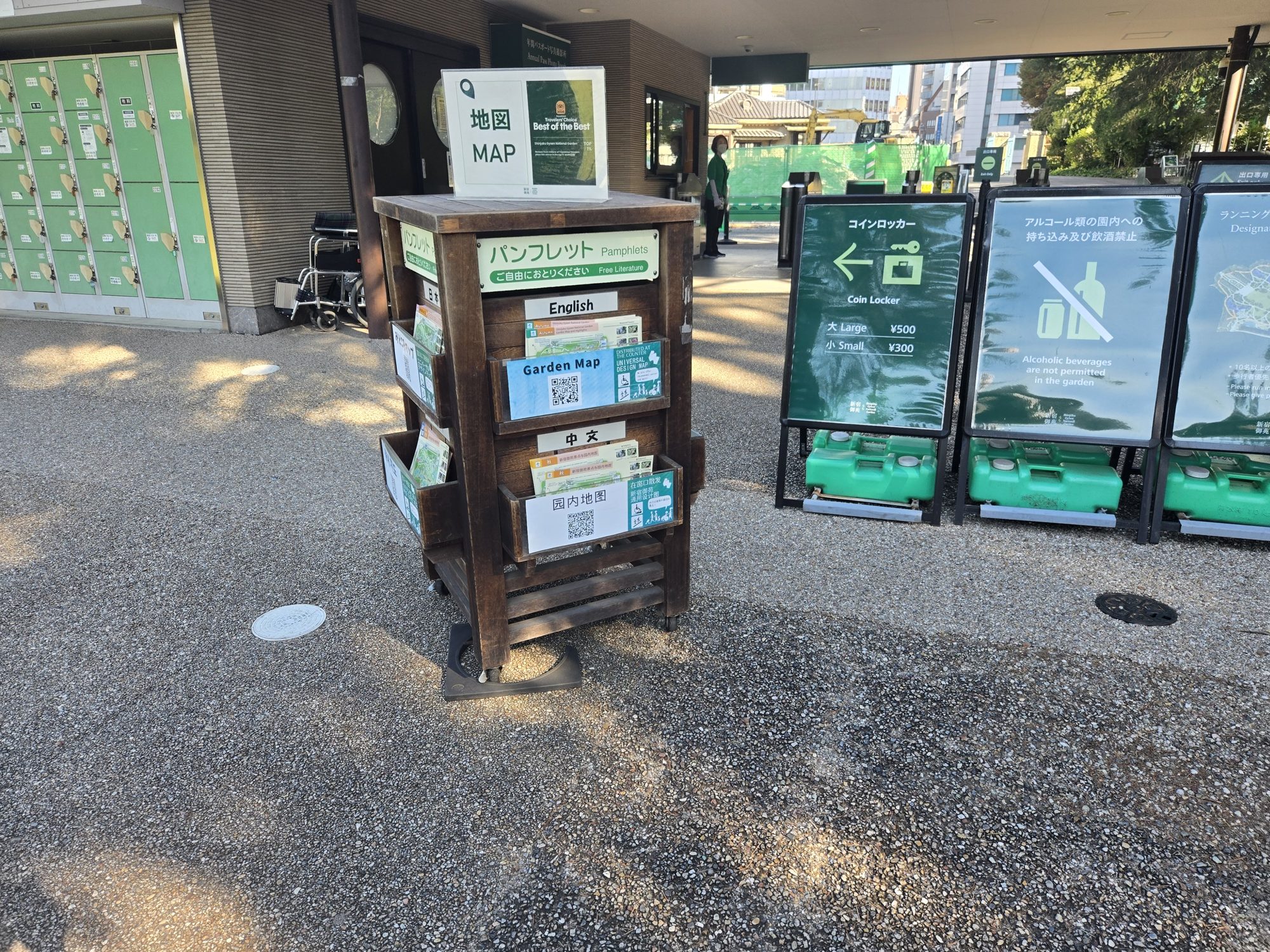
Just inside the Okido Gate there’s a rack of free garden maps in English, Chinese, and Japanese, and coin lockers (¥300 small, ¥500 large) for stashing bags before a picnic.
Leaving by the Sendagaya Gate. We walked across the garden and out the Sendagaya Gate, then took Shibuya City’s Hachiko Bus from the nearby Kokuritsu Nogakudo stop toward Aoyama and Omotesando. The fare is ¥100 for adults and children alike, and Suica and PASMO work. It’s a small bus, so it’s a tight fit with a stroller; the city asks riders to fold strollers in principle. It’s an easy way to link a garden morning with lunch in Omotesando; we went on to Kaiten Sushi Ginza Onodera.
Department Store Kids’ Facilities: Isetan, Takashimaya, Keio
This is where Shinjuku stands out from most other Tokyo districts for a family with a baby or toddler, and it’s worth knowing the differences between the three:
-
Isetan Shinjuku: a spacious, well-equipped Family Rest Area on the 6th floor for nursing, bottle prep, and diaper changes, plus a vending machine selling baby food you can heat in a microwave on-site. There’s also a rooftop “I-Garden” play area for children.
-
Takashimaya Shinjuku: the 9th floor is essentially a dedicated kids’ floor, with a baby rest area for breastfeeding, changing, and naps, multiple toy stores, and a kids’ hair salon.
-
Keio Department Store: the 7th floor “Baby’s Room” has curtain-separated private nursing seats, a small play area for infants and toddlers, changing tables, loaner strollers, high chairs, and a hot water dispenser and microwave for bottle prep.
Our honest take, from using all three regularly: any of them will bail you out in a pinch, but if a diaper change or feeding stop is the only goal, Isetan is closest to the station’s main east side and Keio sits right above the station’s south/west exits. Pick whichever is closer to where you already are rather than making a special trip.
Navigating with a Stroller
We’ll say this plainly, as parents who’ve done it weekly for years: stroller movement in Shinjuku is tiring, more so than most other Tokyo districts, because of sheer crowd density and the amount of underground walking involved. It’s manageable, but it’s not effortless, and it’s worth planning around rather than being surprised by.
A few specific things that make it easier:
-
Elevators at street level along Shinjuku-dori are inconsistent, but a couple of reliable ones exist. Isetan’s own street-level entrances connect down to the station’s underground network, and the Disney Store’s elevator is a genuinely useful, easy-to-find way to get between street level and the underground passages; we use it regularly.
-
If you’re boarding a JR train, don’t try to position yourself at the door before the train arrives. With a stroller in a crowded platform, it’s easier and less stressful to wait where you are and move to the doors once the train has actually stopped and people are already flowing off. Trying to pre-position in a moving crowd before the train arrives is where a stroller gets stuck or separated from you.
-
Budget more transfer time than you think you need at Shinjuku Station specifically. The elevator-based step-free route between lines is often a noticeably longer walk than the stairs, and this is one of the stations where that gap is most pronounced. For general Japan-wide stroller strategy, including our take on Metro versus JR, see our stroller guide.
Traditional Festivals & Events
One of the things we didn’t expect before living here: Shinjuku, for all its concrete and neon, hosts a genuine calendar of traditional Japanese festivals that are completely free to watch and often happen right in the middle of the shopping streets, a side of Shinjuku most visiting families never plan around, but one of the most memorable things you can stumble into with kids.
-
Hanazono Shrine Reitaisai (Grand Festival): usually held in late May, with mikoshi processions around the shrine and nearby streets.
-
Hanazono Shrine Bon Odori: a summer evening of traditional dancing in the shrine grounds; dates vary.
-
Shinjuku Eisa Matsuri: an annual summer street festival with Okinawan Eisa drum-and-dance groups around Shinjuku Station; confirm the current year’s route and date on the organizer’s official site.
-
Tori-no-Ichi (Cock Fair): held on “Day of the Rooster” dates in November at Hanazono Shrine, with rows of stalls selling ornate decorative rakes (kumade) for good fortune.
-
Kumano Shrine Reitaisai: held annually around the third weekend of September in Nishi-Shinjuku, a striking sight as mikoshi are carried through the skyscraper district using a distinctive “chidori” weaving carry style, per Yokoso Shinjuku’s festival page.
None of these require tickets or planning beyond checking the date before you go; if your visit happens to overlap with one, it’s worth rerouting your day to catch even twenty minutes of it. Kids respond to the drumming, the costumes, and the mikoshi in a way that’s hard to replicate with a scheduled attraction.
We’ve taken our twins to Hanazono Shrine’s festival four times, and to its bon odori as well. Our guides to Tokyo shrine festivals with kids and bon odori in Tokyo with kids cover what we’ve learned, from where to go with a stroller when the mikoshi comes through to lining up for the sweets handed out at Hanazono’s bon odori.
Rainy Day: Go Underground
Shinjuku’s biggest practical advantage on a wet day is its underground network. An East-West Free Passageway connects both sides of JR Shinjuku Station, and underground malls and passages link many surrounding buildings. Check the access page for the department store you plan to use, because the easiest indoor route depends on the line and exit.
Our tip: on a rainy day, plan your route store-to-store underground rather than fighting an umbrella and a stroller on the street. It’s slower than it sounds the first time (the tunnels are a genuine maze), but once you’ve done it a couple of times it becomes second nature, and it’s one of the few places in Tokyo where you can go from a train platform to a department store’s kids’ floor without ever stepping outside.
Family Tips
Depachika Bento for the Garden
Every major department store’s basement food floor (depachika) sells beautifully prepared bento boxes at a range of prices. Buying one on the way to Shinjuku Gyoen turns a garden visit into a proper meal out, without needing to find a restaurant with table space, a picnic blanket doing the job just as well on the lawn.
The Underground Elevator Shortcut
If you only remember one thing from this guide: the Disney Store’s elevator on Shinjuku-dori is one of the easiest, most reliable ways to move a stroller between street level and the underground passage network, more useful than it sounds, and one we rely on constantly.
Boarding JR Trains with a Stroller
Wait for the train to actually arrive and the platform to start clearing before moving toward the doors, rather than pre-positioning in a crowd that hasn’t started moving yet. It sounds like a small thing, but it’s the difference between a calm boarding and getting stuck mid-crowd with a stroller.
Common Mistakes Families Make
1. Trying to navigate Shinjuku Station by exit number
With 200+ exits, memorizing numbers is a losing game. Navigate by landmark, a specific department store entrance, instead, and agree on the same landmark if you’re meeting someone.
2. Not knowing about the department store baby rooms
Families often wander looking for a generic “nursing room” sign when Isetan, Takashimaya, and Keio all have full, well-equipped facilities a short walk from the station. These are worth knowing about before a diaper or feeding emergency, not discovering mid-crisis.
3. Fighting street-level crowds with a stroller instead of going underground
Shinjuku-dori at street level gets seriously congested. The underground passage network is slower to learn but far less stressful with a stroller, especially in rain.
4. Overlooking Shinjuku Gyoen as “just a park”
It’s one of the best green spaces in central Tokyo for kids, with a genuine play area and lawns built for running around, worth building real time into your itinerary rather than a rushed walk-through.
5. Missing a festival because you didn’t check the calendar
Hanazono Shrine and Kumano Shrine both host free, family-watchable traditional festivals through the year. A quick date check before your trip can turn an ordinary shopping day into a memorable one.
FAQ
Is Shinjuku Station too overwhelming for a family with young kids?
It looks intimidating, but the practical fix is simple: pick a department store or landmark as your anchor point rather than trying to understand the whole station. Once you have one or two reliable reference points, it becomes far more manageable, even for a first visit.
Where can I change a diaper or nurse in Shinjuku?
Isetan (6th floor), Takashimaya (9th floor), and Keio (7th floor) department stores all have dedicated, well-equipped baby rooms with changing tables, nursing seats, and bottle-prep facilities. Pick whichever is closest to where you already are.
Is Shinjuku Gyoen worth the entrance fee?
Yes: ¥500 for adults, free for junior-high age and under, for one of central Tokyo’s best combinations of formal Japanese garden and open lawn space. Bringing a bento from a department store’s food hall and picnicking on the lawn is a great way to spend a few hours with kids.
Is Shinjuku stroller-friendly?
Manageable but effortful: expect real crowds and a fair amount of underground walking. Knowing a couple of specific elevators (the Disney Store’s is a reliable one) and using the underground passage network rather than fighting street-level crowds makes a real difference.
What’s the best area of Shinjuku for families to focus on?
The Shinjuku Gyoen / Shinjuku-dori corridor between the station and the garden covers the department stores, baby facilities, and the garden itself within a comfortable walking (or underground) distance, a sensible core to build a day around rather than trying to cover all of Shinjuku’s sprawl.
Are there family-friendly festivals in Shinjuku?
Yes, more than most visitors expect. Hanazono Shrine alone hosts a spring Reitaisai, a summer Bon Odori, and a November Tori-no-Ichi, while nearby Kumano Shrine’s September festival parades mikoshi through the West Shinjuku skyscraper district. All are free to watch.
Is Kabukicho a concern for families?
Kabukicho, Shinjuku’s entertainment and nightlife district, sits north of the station and is a different character of area from the department-store and garden corridor this guide focuses on. It’s walkable and generally fine to pass through in daylight, but it’s not somewhere to plan family activities around, particularly after dark.
Getting There
Shinjuku Station is one of the best-connected points in Tokyo, served by JR (Yamanote, Chuo, Sobu lines), Odakyu, Keio, and the Tokyo Metro Marunouchi, Toei Oedo, and Toei Shinjuku subway lines, plus the separate but adjacent Seibu-Shinjuku Station. For IC card basics and general Tokyo train navigation, see our Tokyo trains guide.
| From | Line | Journey time (approx.) |
|---|---|---|
| Tokyo Station | JR Chuo Line (rapid) | ~15 min |
| Shibuya | JR Yamanote Line | ~7 min |
| Ikebukuro | JR Yamanote Line | ~8 min |
| Ginza | Tokyo Metro Marunouchi Line | ~15 min |
For arriving directly from an airport, see our guides to Narita and Haneda with kids.
Nearby and How to Combine
Shinjuku’s scale means most families won’t combine it with another full area in the same day. Plan a half or full day here on its own, and treat department store food halls and Shinjuku Gyoen as your anchor points if energy runs low.
If you do have energy for a second area, Shibuya and Harajuku are about 7 minutes away on the JR Yamanote Line. Our Shibuya & Harajuku with Kids guide covers Yoyogi Park, Meiji Shrine, and the department store baby rooms on that side.
Information checked: 2026/10