
TL;DR
-
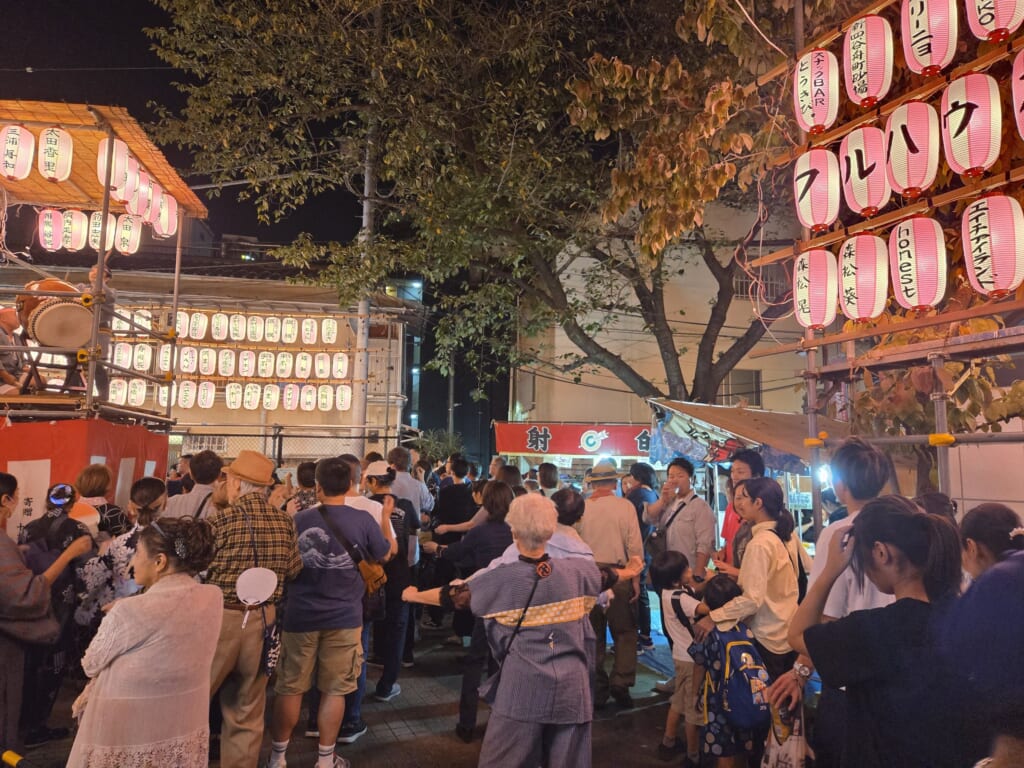
Bon odori is the summer circle dance held around a raised drum tower (yagura). The steps are simple enough to pick up by copying the person in front of you, so a family of visitors can join in for a few songs without any preparation
-
We’ve taken our twins every year since they were 1: neighborhood dances at Arakicho, Sugi-Daimon-Dori, and Akebonobashi, plus Hanazono Shrine’s in Shinjuku and the dances that come with the Sanno Matsuri and Akasaka Hikawa festivals
-
At the neighborhood dances we go to, the stalls are run by local restaurants and the neighborhood association, which makes them quite different from the usual festival stalls. Sugi-Daimon-Dori in particular has good food, beer, and sake from the restaurants along the street
-
Hanazono Shrine’s bon odori is bigger, with regular festival stalls, and the year we went they handed out sweets to kids around 8 p.m. Quantities are limited, so line up as soon as it’s announced. It’s also less crowded than a full shrine festival
-
What our kids get out of it has changed every year: at 1, watching from the stroller; at 3, joining a dance or two; at 4, mostly the toy stalls and games. They now recognize classics like Tanko Bushi when they come on
-
The crowd is mixed and relaxed, so visitors fit in fine. August dances are very hot, so plan for the heat
What Bon Odori Is
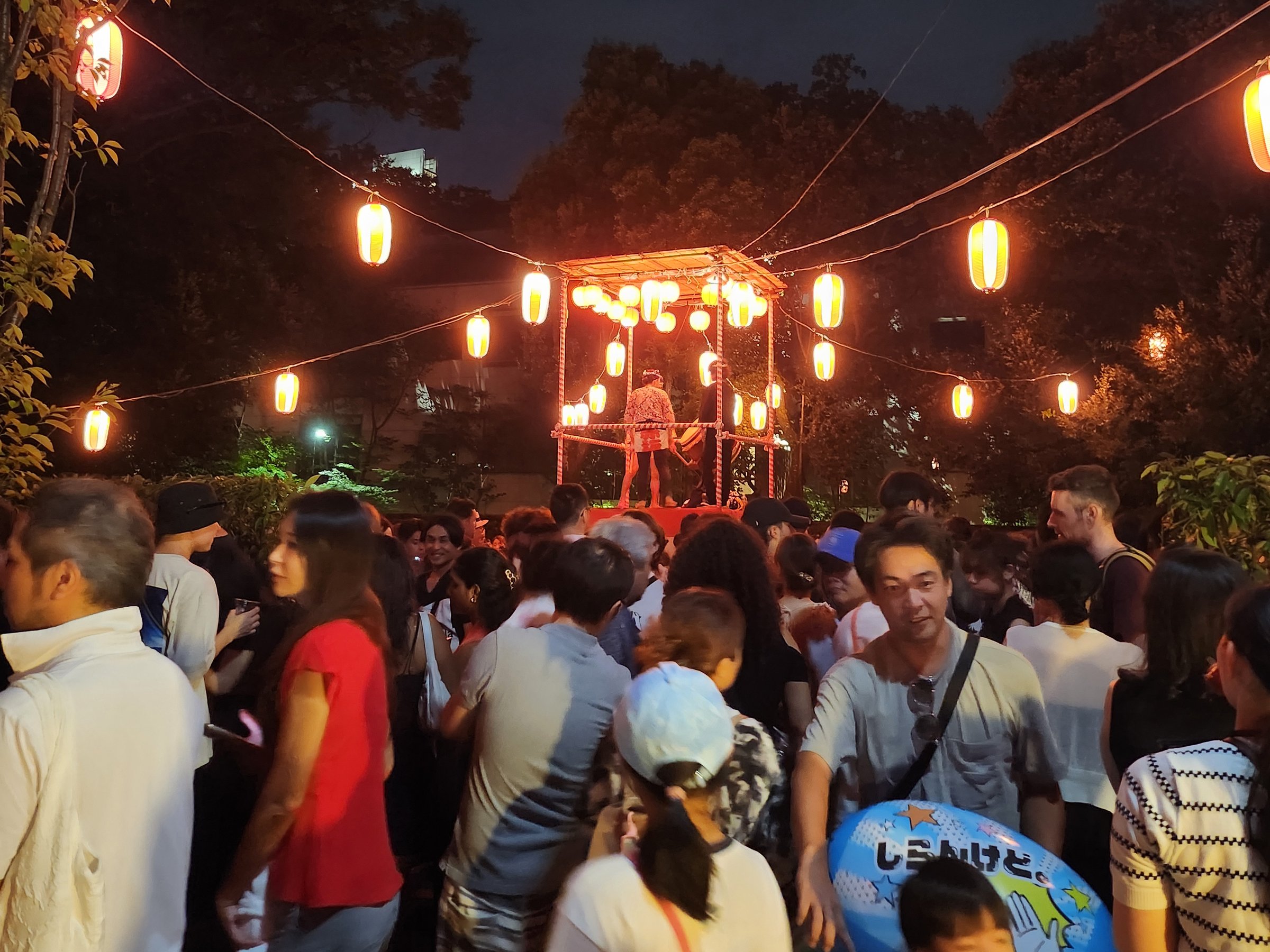
Bon odori started as dancing to welcome and see off the spirits of ancestors during Obon in summer. In Tokyo today, it’s mostly a community event: a neighborhood closes a street or uses a park or shrine grounds, sets up a yagura with a drummer on top, strings up paper lanterns, and everyone dances in a slow circle around it to a mix of folk songs and local favorites.
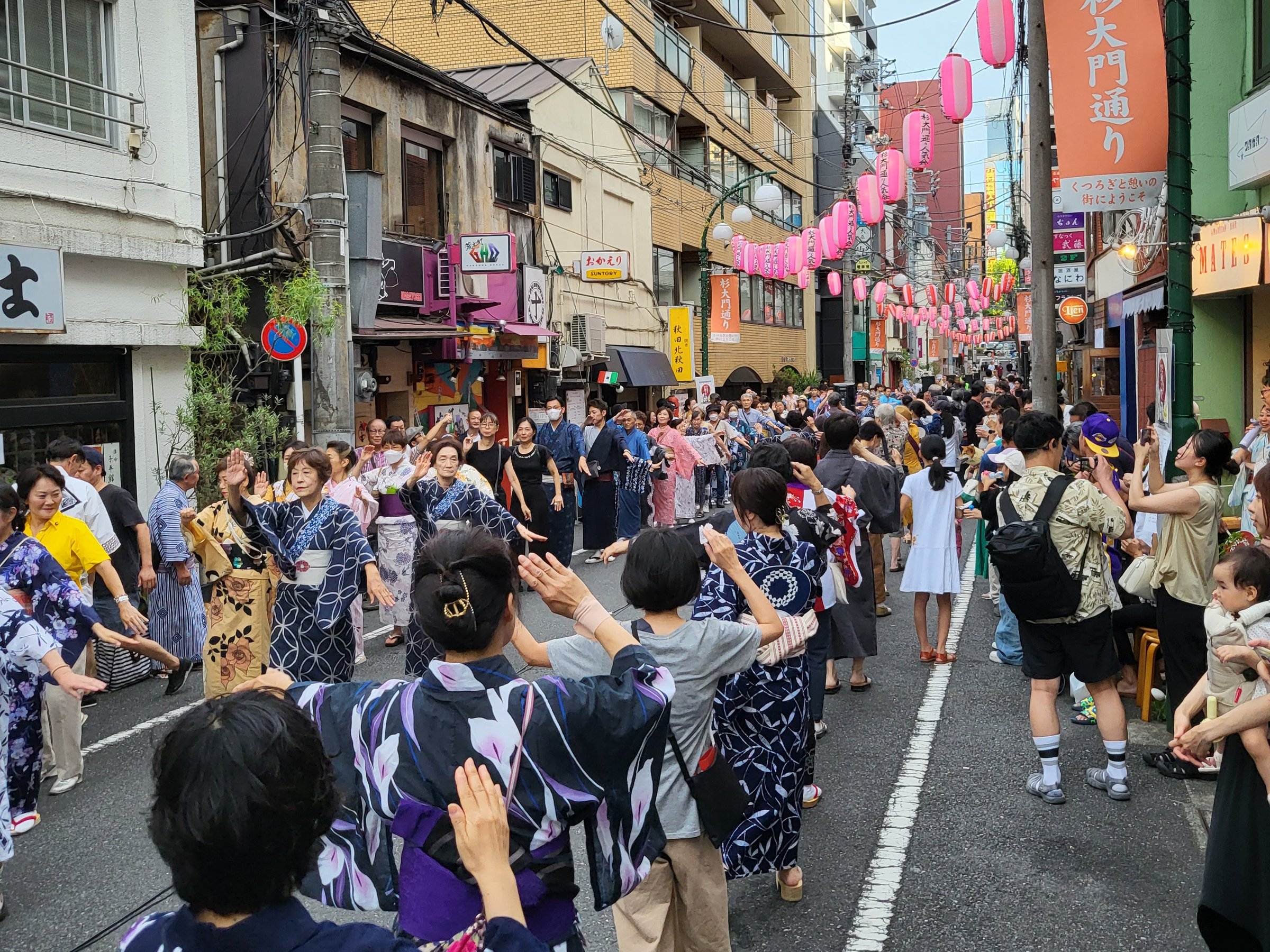
The choreography is simple, and the moves repeat within each song, so you can pick them up by copying whoever is in front of you. We usually join for a few songs, step out when the kids lose interest, and step back in later.
In Tokyo, bon odori season runs mostly from July through September, with August and September the busiest, and the Sanno Matsuri’s dance in June as an early start. If your trip falls in the summer, our best time to visit Tokyo with kids guide covers what else is going on.
Best Options: The Bon Odori We’ve Been To
Dates and details change from year to year. Neighborhood dances usually have their dates posted on the community notice boards around the area, and the ones held as part of a shrine festival appear in the shrine’s annual events listing on its website. Most of the dances we go to start somewhere around 5 or 6 p.m.
Sugi-Daimon-Dori (Yotsuya area), September. The restaurants along the street set up stalls for the evening, so you can have good beer, sake, and proper snacks from places that normally run a sit-down business. There are also stalls selling small toys, which helps keep children from getting bored. Of the neighborhood dances we go to, this is the one where we as parents eat and drink best.
Akebonobashi (Shinjuku), August. A shopping street is closed off for the dance, and it’s one of the larger neighborhood events we go to. It’s held around the same time as the local shrine festival’s mikoshi, but it’s a separate event. There are toy stalls and small games for children, which our kids love.
Arakicho (Yotsuya area), September. A very compact event, but it’s known locally for its song selection, with many songs you won’t hear at other bon odori. If you or your kids actually want to dance, it’s the most interesting of the ones we go to.
Hanazono Shrine (Shinjuku), August. Bigger than the neighborhood events, with regular festival stalls such as kakigori shaved ice and bouncy-ball scooping, both favorites of our kids. The year we went, there was an announcement around 8 p.m. asking children to come and line up for sweets. There’s a limited number, so get in line right away when you hear it. It rained that year, and plenty of people still turned up. It’s close to Shinjuku’s restaurants and shops, so if the timing works, it’s an easy walk after dinner. It also felt easier to get around than a regular shrine festival, with fewer people.
Sanno Matsuri dance (Akasaka), June. Part of the Sanno Matsuri. The evening dance is held at the plaza of the Sanno Park Tower near Tameike-Sanno Station and is often called the earliest bon odori of the year in Japan. It runs on different days from the big procession (in 2026, the procession was on June 12 and the dance on June 13 to 15), so check the festival schedule if you want to see both.
Akasaka Hikawa Festival dance (Akasaka), September. Akasaka Hikawa Shrine holds its dance in the shrine grounds during its September festival, alongside the stalls. On the days we’ve gone, we watched the mikoshi, played at the stalls, and stayed on for the dancing, which made for a long day at the festival. Our guide to Tokyo shrine festivals with kids covers the mikoshi and festival stalls in more detail.
Neighborhood Dances vs. Shrine Festival Dances
The neighborhood dances (organized by a local residents’ association or a shopping street) feel different from a big shrine festival:
-
Stalls: at neighborhood events, the stalls are mostly run by nearby shops, restaurants, and the neighborhood association itself, and we usually prefer the food there. At shrine festivals you’ll see the usual festival stalls with games, kakigori, and yakisoba
-
Crowds: neighborhood events are smaller and easier to move around with a stroller. Shrine festival dances are livelier but busier
-
Atmosphere: neighborhood events are run by and for the people who live there, and many in the crowd know each other. Visitors are still welcome to dance and buy from the stalls; the crowds at the events we go to are fairly mixed, and other people dropping in for a song or two is a normal sight
How Our Kids Enjoyed It at Each Age
At 1: our twins watched the dancing from the stroller while we ate from the stalls. That’s still a perfectly good way to enjoy it, since the drumming, lanterns, and music hold a toddler’s attention.
At 3: they started joining the dance for a little while and drinking ramune, the marble-sealed soda that’s a fixture of summer festivals.
At 4: the dancing was a smaller part of it. They were absorbed in the toy stalls and children’s games, then asking us to buy whatever food they wanted, and drinking ramune and taking in the atmosphere.
Because we go every year, they now react when familiar songs come on, Tanko Bushi (the “coal miner’s song”) in particular, and they can dance a bit more of it each year. Seeing that progress is one of the things we enjoy most, and with food and drink for the adults and games for the kids, it’s an evening we all look forward to.
Step-by-Step: How to Join a Bon Odori with Kids
- Find a dance near where you’re staying. Check the notice boards in your hotel’s neighborhood, or the annual events page of a nearby shrine’s website. Events near busy districts are the easiest to fit into a travel day
- Plan for the heat in August. Evening dances are still hot and humid. Bring water, a towel, and something to fan your kids with, and take breaks in the shade or somewhere air-conditioned nearby
- Arrive in the early evening. Most of the dances we go to start around 5 or 6 p.m. Eat from the stalls first, then dance once things get going
- Join the circle. Step in behind someone who seems to know the moves and copy them. Try a few songs and step out when your kids have had enough
- Let older kids roam the stalls. By 4, the toy stalls and games may hold their interest longer than the dancing does, and that’s fine
Yukata for Bon Odori
You’ll see many children in yukata (summer kimono) or jinbei at bon odori, and our kids enjoy dressing up for it. We bought ours online, but in summer, discount stores like Don Quijote carry inexpensive ones too, which makes them an easy thing to pick up during a trip. Just keep in mind that it’s one more thing to pack for the flight home.
FAQ
Can tourists join bon odori in Tokyo?
Yes. Bon odori is open to anyone, and the steps are simple and repetitive, so you can learn by copying the people in front of you. The crowds at the events we go to are mixed, and a visiting family joining for a few songs fits right in.
When is bon odori season in Tokyo?
Mostly July through September, with the busiest stretch in August and September. The Sanno Matsuri’s dance in mid-June is often described as the earliest of the year.
Do I need to know the dance before going?
No. The moves repeat for each song, and most people pick them up by watching the dancer in front. If you’d like a head start, Tanko Bushi comes up at the events we go to and is a good one to recognize.
Is bon odori suitable for babies and toddlers?
Yes. We started taking our twins at 1, and they watched from the stroller while we ate from the stalls. Neighborhood events are smaller and easier with a stroller than the dances held as part of a big shrine festival.
Is it too hot to go in August?
It’s very hot, even in the evening, so plan for it with water, breaks, and a cool place to retreat to. September dances are noticeably more comfortable with small children.
Do I need a yukata?
No. Plenty of people come in regular clothes. Wearing a yukata adds to the fun, though, and inexpensive ones are easy to find at stores like Don Quijote during the summer.
Information checked: 2026/10