

TL;DR
-
Sunshine Aquarium (Ikebukuro) suits toddlers and a tight schedule best. Visitor blogs and its own layout consistently point to about an hour to see everything, which matters more than “which one is bigger” when you’re managing a short attention span
-
Sumida Aquarium (Tokyo Skytree Town) suits elementary-age kids and a slower half-day better. Its 350-ton open penguin pool, viewable from two floors, plus a jellyfish lab and an eel tank give kids more to linger over, and family-visit blogs commonly report 1.5–2 hours there, more with small children
-
Sumida’s ticket flow is the more modern of the two: the whole purchase-to-entry process happens on your phone (buy a dated ticket, get a QR code by email, scan it at the gate). Sunshine also sells web tickets, but same-day entry can still be capped when it’s busy
-
Stroller access is the specific, practical difference Japanese parent blogs flag: Sumida’s slopes and elevators connect nearly every floor without folding, while Sunshine’s own child-facilities page notes some passages get hard to navigate with a stroller when it’s crowded and recommends using the stroller-parking area near the entrance. A baby carrier as backup is worth packing for Sunshine
-
Prices moved recently at both: Sumida raised its admission fees on February 10, 2026, and Sunshine uses date-based dynamic pricing that swings by up to roughly ¥600 for adults depending on the day you visit
-
Weekday mornings at opening are the reliably quiet window at both. Sumida-specific family blogs also flag the 11:00–14:00 weekend lunchtime stretch as the one to avoid if you can help it
-
Both have dedicated baby rooms with nursing space and hot water for formula. Sunshine’s is on 2F near the “Aqua Pocket” gift shop, Sumida has two separate baby rest rooms spread across its floors
-
Neither requires advance booking the way teamLab does. Reservations are recommended, not mandatory, at both, which makes this pair much easier to slot into a last-minute rainy-day plan than teamLab Planets or Borderless
Quick Comparison
| Sunshine Aquarium | Sumida Aquarium | |
|---|---|---|
| Location | Rooftop, World Import Mart Bldg 10F, Sunshine City, Ikebukuro | 5F–6F, Tokyo Solamachi, Tokyo Skytree Town, Oshiage |
| Nearest station | JR Ikebukuro (~10 min walk) / Tokyo Metro Higashi-Ikebukuro (~5 min, underground) | Tobu Skytree Line Tokyo Skytree Station (adjoining) / Oshiage Station |
| Hours | Varies a lot by season/day, as tight as 10:00–18:00 on off-peak weekdays, extended toward 9:30–20:00+ on weekends/summer; check the official calendar for your date | Weekdays 10:00–20:00 (last entry 19:00); weekends/holidays 9:00–21:00 (last entry 20:00) |
| Admission: Adult | ¥2,600–3,200 (date-based dynamic pricing) | ¥2,700 (revised Feb 2026) |
| Admission: Child | ¥1,300 (elementary/middle school) | ¥1,400 (elementary/middle) / ¥2,000 (high school) |
| Admission: Preschooler | ¥800 (ages 4+); under 4 free | ¥900 (ages 3+); under 3 free |
| Advance reservation | Recommended on weekends/peak days, not mandatory | Recommended for smoother entry, not mandatory |
| Ticket system | Web ticket + on-site counter/machines | Web ticket, entire purchase-to-entry flow on your phone, QR code scanned at the gate |
| Stroller access | Allowed; some passages get tight when crowded, stroller parking recommended near the entrance | Allowed throughout via slopes/elevators at multiple points |
| Baby room / nursing | 1 baby room (2F, near the Aqua Pocket shop) | 2 baby rest rooms across the building |
| Wheelchair rental | Priority elevators to almost all areas | Free rental, no reservation, limited units |
| Estimated time with kids | ~1 hour (compact, rooftop-focused route) | 1.5–2 hours (more with small children) |
| Signature exhibit | Rooftop open-air penguin tank; donut-shaped “Aqua Ring” with sea lions swimming overhead | 350-ton indoor open-plan Magellanic penguin pool; renovated jellyfish “Big Petri Dish” |
| Best for | Toddlers, tight schedules, pairing with Sunshine City shopping | Elementary-age kids, a slower half-day, pairing with Skytree |
Prices, hours, and ticket systems as of 2026/08. Both operators publish date-specific calendars; always check the official site before booking.
Sunshine Aquarium: What to Expect with Kids
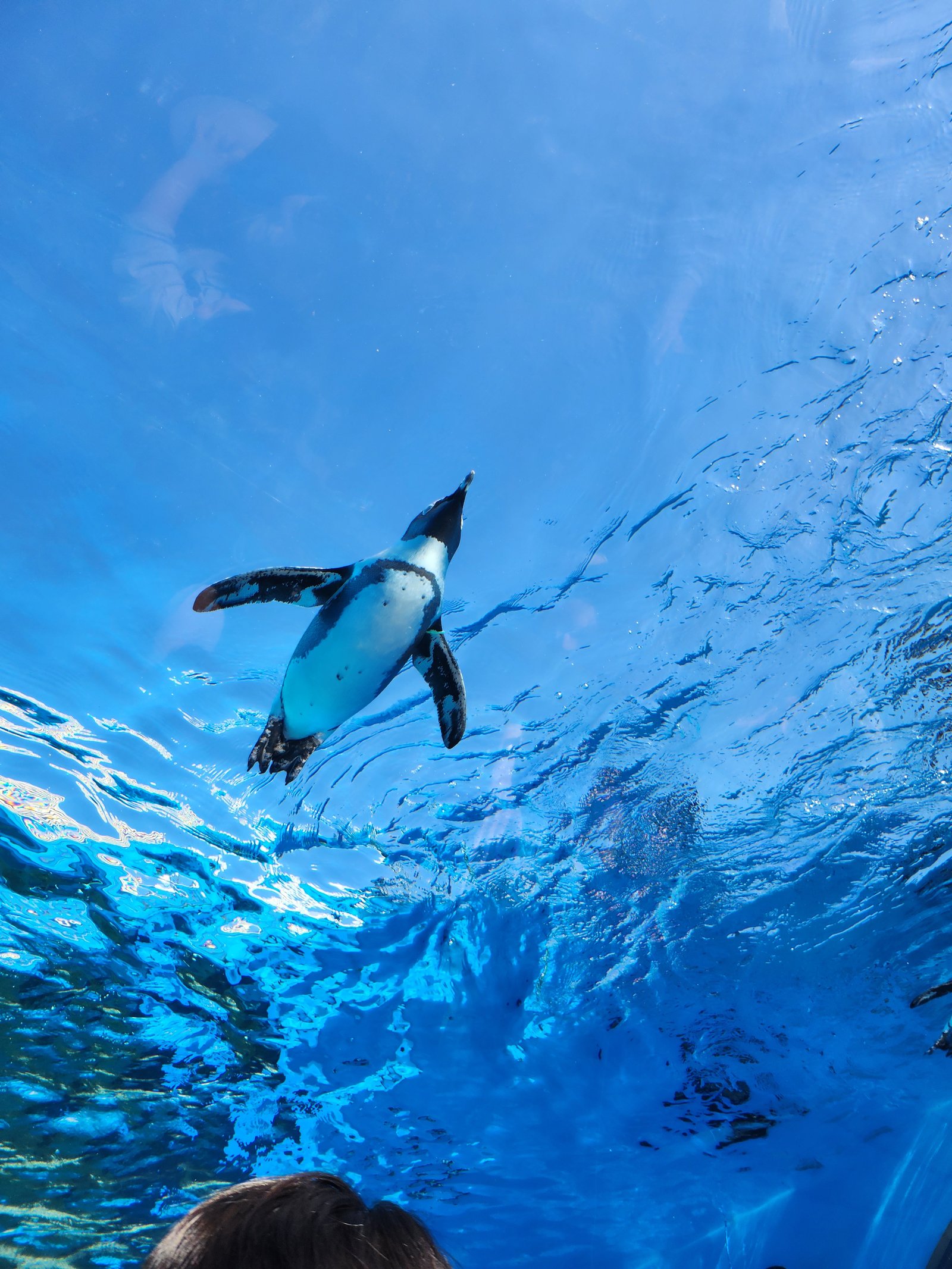
Sunshine Aquarium sits on the rooftop of the World Import Mart Building inside Sunshine City in Ikebukuro, a genuinely unusual location for a water-based attraction, and part of what makes it distinctive. You’re not underground looking at tanks; you’re outdoors, ten floors up, with penguins swimming against a skyline backdrop.
Signature Exhibits
The rooftop location is what Sunshine is known for. The “Sky Penguin” tank lets penguins swim in daylight rather than under aquarium lighting, and the donut-shaped “Sunshine Aqua Ring,” where California and South American sea lions swim in a loop directly over visitors’ heads, appearing to “fly,” is the exhibit almost every visitor photographs. It’s a compact, high-impact rooftop circuit rather than a long, slow build through room after room. We’ve taken our own twins here, and the penguins genuinely appearing to fly through the water is the moment that stuck with them.
Sunshine City itself is a big part of why we’d recommend it beyond the aquarium alone; it’s a large complex with plenty of restaurants and a toy store within the same building, so the visit doesn’t have to end when the aquarium does. Details on the sea lion exhibit are from Sunshine Aquarium’s own page (2026/08).
Size and Realistic Time with Kids
Sunshine is the more compact of the two, which is useful with a toddler. Plan roughly 60–90 minutes for a focused visit, then let the child’s pace decide whether to stay for the outdoor exhibits or a scheduled program. Treat that as a family-planning buffer, not an official required duration.
Baby Facilities and Stroller Access
The aquarium provides a nursing room and diaper-changing facilities. Check the current floor map when you arrive, since room locations and equipment can change.
Strollers are allowed inside. The aquarium’s own child-facilities page is specific about the trade-off: some interior passages get hard to navigate with a stroller once it’s busy, and it recommends using the designated stroller-parking area near the entrance rather than pushing through the whole route. Separately, its general FAQ notes that on especially crowded days, overall entry to the aquarium can be limited depending on how busy it gets; that’s a capacity control for all visitors, not a stroller-specific rule, but it compounds the same problem on a packed weekend. Packing a baby carrier as backup is a reasonable precaution rather than overkill (per Sunshine Aquarium – Visiting with Children, Sunshine Aquarium – Official FAQ; 2026/08).
If you didn’t bring your own stroller, Sunshine City’s Alpa building offers free stroller rental for children roughly 1 month to 2 years old, available 10:00–20:00, though note this is a Sunshine City service, not something the aquarium itself hands out at its entrance.
Crowding and Best Time to Visit
Weekend and designated-date admission can be restricted, and the aquarium recommends a timed reservation on those days. Check the official calendar because opening hours and prices vary by date; with a toddler, the opening window is usually the simplest target (per Sunshine Aquarium: Business Hours, Fees and Tickets; 2026/09).
Recent Changes (2025–2026)
Seasonal exhibits and evening events change throughout the year. Check the aquarium’s current event notices before your visit rather than building a plan around a past campaign.
Sumida Aquarium: What to Expect with Kids
Sumida Aquarium occupies floors 5 and 6 of Tokyo Solamachi at the base of Tokyo Skytree. It is a fully indoor aquarium built as a two-floor loop around a large open pool, a different shape of visit from Sunshine’s rooftop circuit, with more places to pause around a central exhibit.
Signature Exhibits
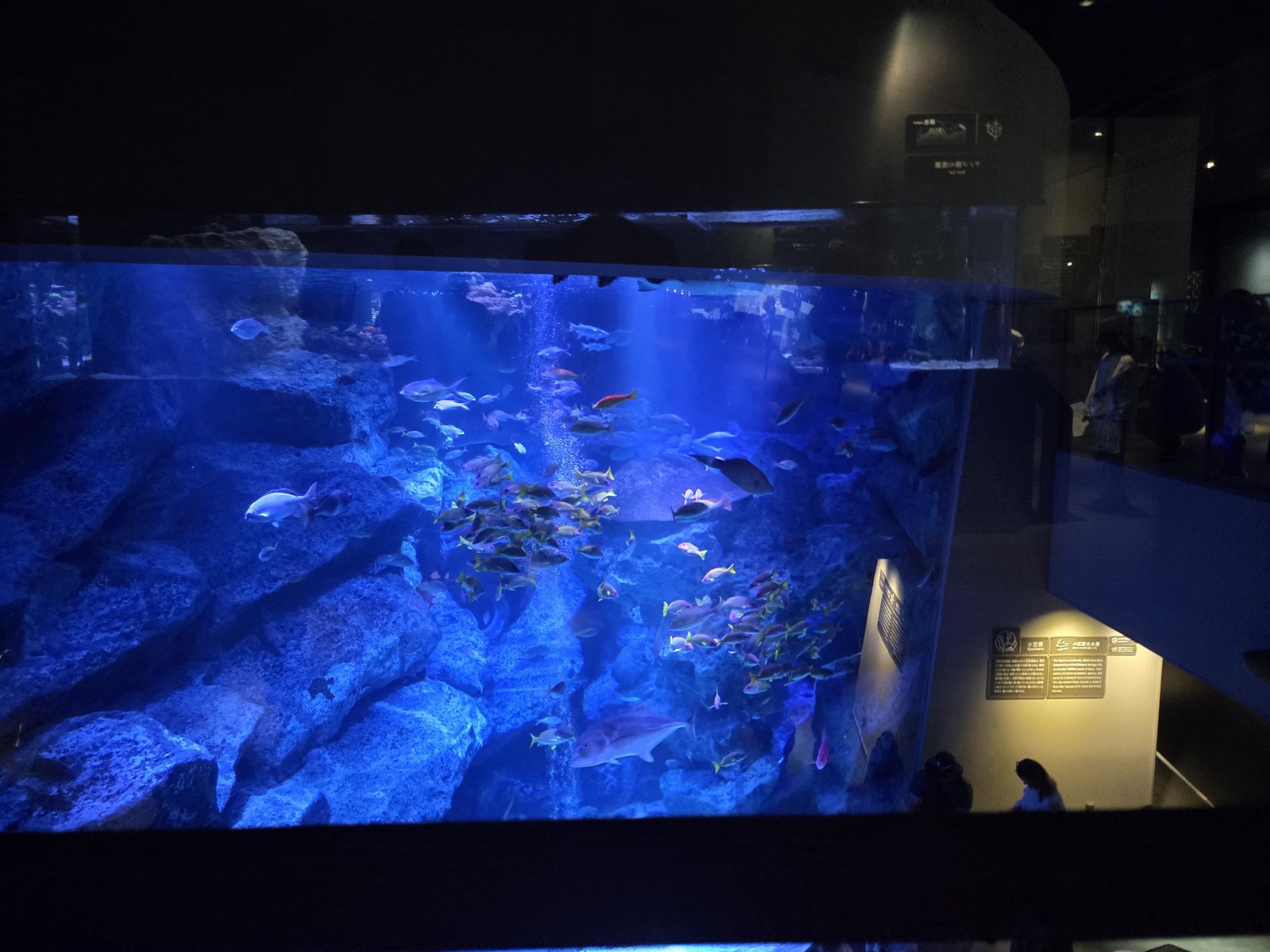
The centerpiece is a 350-ton indoor open-plan Magellanic penguin pool positioned at the center of the building, viewable from both the 5th and 6th floors at different angles and distances, a layout that works well for a family that wants to split up and still watch the same penguins from different vantage points. A garden-eel tank and a Bonin-blue-themed “Ogasawara” tank (around 50 species) are the other reliably kid-popular stops.
Sumida completed a large renovation of its jellyfish area, replacing the old tank with a roughly 7-meter, open-top “Big Petri Dish” designed to be viewed from directly above, surrounded by around 500 jellyfish bred in the aquarium’s own lab. A winter-season jellyfish event (“Yurameku Jikan-ten”) ran January 15–March 10, 2026, with an included audio guide (per Sumida Aquarium: Official News; 2026/09).
Size and Realistic Time with Kids
Plan roughly 1.5 to 2 hours as a family baseline, with room to leave earlier if a young child loses interest. The jellyfish area and penguin pool are the easiest places for a visit to stretch, so do not schedule the next timed activity too tightly.
We’ve been ourselves, and our honest take is that Sumida is compact enough that going purely for the aquarium can feel a little underwhelming. It works much better as part of a bigger day: pair it with going up Tokyo Skytree and wandering Tokyo Solamachi, rather than treating the aquarium as the whole destination. It’s also a bit further from central Tokyo than Sunshine, which is worth factoring in if you’re deciding between the two.
Baby Facilities and Stroller Access
Sumida has two baby rest rooms distributed across the building, each pairing a nursing room with a sink supplying purified hot water for formula. Free wheelchair rental is available with no reservation required, though the number of units is limited (per Sumida Aquarium – Visitor Support; 2026/08).
The aquarium’s own visitor-support page describes gentle slopes and elevators connecting the upper and lower floors at several points: a stroller can go almost everywhere without needing to be folded, which is a genuine edge over Sunshine’s narrower rooftop passages. A few spots still get tight when it’s crowded, so it’s still worth keeping a carrier in your bag as backup rather than relying on the stroller for the entire visit.
The specific route worth knowing if you’re arriving by stroller from Tokyo Skytree Station: take the east exit, find the elevator behind the escalator at the Solamachi entrance, and ride it up to 4F, where a sign for Sumida Aquarium is visible as you exit the elevator. From there, a dedicated aquarium elevator (next to the stairs/escalator facing you) takes you directly up to the 5F entrance, with no need to navigate the mall’s general walkways with a loaded stroller.
Sumida doesn’t rent strollers itself, but Tokyo Solamachi does, for a refundable ¥100 coin deposit.
Ticket System
Sumida’s web ticket lets you complete the entire purchase-to-entry process on a phone: buy a date (or date-and-time, during peak periods) ticket up to 30 days ahead, receive a QR code by email, and scan it at the gate. There’s nothing to print and no separate app to install. Same-day tickets are also available at on-site machines accepting cash, credit, IC cards, and digital payment, but the web ticket is the faster route on a busy day (per Sumida Aquarium – Official Ticket Guide; 2026/08).
Crowding and Best Time to Visit
Weekends, holidays, and school breaks are the least forgiving times for stroller movement and café seating. If avoiding crowds matters, choose a weekday and arrive near opening; otherwise keep the visit flexible rather than timing lunch around the aquarium café.
Recent Price Change (2026/08 note)
Sumida’s admission fees rose on February 10, 2026; the aquarium cited utility and facility-maintenance cost increases. Adult admission moved from ¥2,500 to ¥2,700, high school from ¥1,800 to ¥2,000, elementary/middle school from ¥1,200 to ¥1,400, and preschool (age 3+) from ¥800 to ¥900. If you’re comparing against an older blog post or a printed guidebook, expect the numbers there to be out of date (per Sumida Aquarium – Admission Fee Revision Notice; 2026/08).
Best Options: Which One for Your Family?
By your children’s ages
| Children’s ages | Recommendation |
|---|---|
| Under 3 (toddler, short attention span) | Sunshine, a genuine one-hour “highlights” option exists, which suits shorter attention spans |
| Mixed ages 3–6 | Either works; Sunshine if you’re tight on time, Sumida if you want a slower morning |
| Elementary age (6–12) | Sumida, the two-floor penguin pool and jellyfish lab hold attention longer |
| Traveling with a baby who naps on a schedule | Sunshine, shorter visit fits more easily around a nap window |
| A family that wants to pair it with a full day out | Sumida, paired naturally with the Skytree observation deck or a Solamachi lunch |
By your priorities
Go to Sunshine if:
-
You have a toddler or are short on time (a stopover between other Ikebukuro plans)
-
You want to pair the visit with Sunshine City’s other attractions (shopping, Namja Town, the planetarium) in one complex
-
You’re visiting on a weekday, when narrow-passage crowding and any general entry limits are least likely to come up
Go to Sumida if:
-
Your kids are elementary age and likely to enjoy exploring across two floors at their own pace
-
You’re already planning a Tokyo Skytree Town visit and want to pair it with the aquarium
-
You’re traveling with a stroller and want the smoothest slope/elevator route between floors
-
You’d rather book and enter entirely from your phone with no paper ticket
Go to both if:
-
You have several days in Tokyo; the two visits feel different enough (rooftop/compact vs indoor/two-floor) that seeing both isn’t repetitive
-
You’re splitting a trip between Ikebukuro and the Asakusa/Skytree side of the city anyway; see our Asakusa with Kids guide for what else is nearby on the Sumida side
Common Mistakes Families Make
1. Assuming Sunshine’s admission price is fixed
Sunshine uses date-based dynamic pricing; adult tickets can range from about ¥2,600 to ¥3,200 depending on the calendar day. Check the official pricing calendar for your specific date before budgeting, rather than going off a number you saw in an old blog post.
2. Showing up to Sunshine on a busy weekend with a stroller and no backup plan
Sunshine’s own child-facilities page warns that some passages get hard to navigate with a stroller once it’s crowded, and its general FAQ notes that overall entry can be limited on especially busy days. Neither is a flat stroller ban, but together they mean a busy Saturday can leave you improvising. Bring a carrier as backup, especially for a weekend or holiday visit.
3. Arriving at Sumida between 11:00 and 14:00 on a weekend expecting a quiet visit
Family-travel blogs covering Sumida consistently flag this window as the lunchtime crowd peak. If your schedule is flexible, arriving right at weekday opening is the more reliable way to move around freely.
4. Comparing Sumida’s admission price against an outdated source
Prices rose in February 2026. A guidebook, an older blog, or a search result cached from 2025 may still show the pre-revision numbers (¥2,500 adult rather than ¥2,700).
5. Assuming both require the same advance-booking discipline as teamLab
Neither Sunshine nor Sumida operates the strict sold-out-weeks-ahead timed-entry system that teamLab Planets and Borderless do. Reservations smooth out your visit and are worth doing, but you generally won’t be locked out entirely if you decide to go the same morning.
FAQ
Which is better for a toddler, Sunshine or Sumida Aquarium?
Sunshine, for most toddlers. It has a genuine “see the highlights in about an hour” option, which fits a toddler’s attention span better than Sumida’s typical 1.5–2-hour visit. The trade-off is that some Sunshine passages get harder to navigate with a stroller once it’s crowded, so a weekday visit or a baby carrier as backup makes the toddler-friendliness more reliable.
Can I bring a stroller into Sunshine Aquarium and Sumida Aquarium?
Both allow strollers. Sumida is the easier of the two; its slopes and elevators connect the floors at multiple points, so a stroller can go almost everywhere unfolded. Sunshine allows strollers too, but recommends using the stroller parking near the entrance because some interior passages get tight when it’s crowded, and its general entry can be limited on especially busy days.
Do I need to book tickets in advance for either aquarium?
Advance booking is recommended at both, not mandatory. Sunshine recommends a timed reservation for weekends and peak days when it may limit entry; Sumida’s web ticket (bought up to 30 days ahead, QR code scanned at the gate) makes entry faster and is worth using even though same-day tickets remain available at on-site machines.
What’s the current admission price for each?
As of 2026/08: Sunshine uses date-based dynamic pricing, roughly ¥2,600–3,200 for adults, ¥1,300 for elementary/middle-school children, and ¥800 for preschoolers age 4+ (under 4 free). Sumida, after its February 2026 revision, charges ¥2,700 for adults, ¥2,000 for high schoolers, ¥1,400 for elementary/middle-school children, and ¥900 for preschoolers age 3+ (under 3 free).
Which aquarium is bigger?
It’s closer than most guides suggest. By species count, Sunshine is actually the larger of the two (around 550 species to Sumida’s roughly 260), and their floor areas are similar. What differs is the visit itself: Sumida is spread across two connected floors built around a large open penguin pool, and most families need 1.5–2 hours to see it properly, while Sunshine’s rooftop circuit is deliberately compact; a highlights visit takes about an hour, which some families count as an advantage rather than a limitation.
Is there a nursing room and diaper-changing area at both?
Yes. Sunshine has one baby room on 2F, near the “Aqua Pocket” gift shop, reported to include private nursing stalls, diaper tables, and hot water for formula. Sumida has two separate baby rest rooms spread across the building, each with a nursing room and a hot-water sink for formula.
What’s the best time of day to avoid crowds?
At both aquariums, weekday mornings right at opening are the quietest window. At Sumida specifically, family blogs point to 11:00–14:00 on weekends as the lunchtime crowd peak, worth avoiding if your schedule is flexible.
Can I combine an aquarium visit with something else nearby?
Yes, in different ways. Sunshine sits inside the larger Sunshine City complex, so a visit combines naturally with shopping or Namja Town without leaving the building. Sumida sits inside Tokyo Skytree Town, so it pairs naturally with a Skytree observation deck visit or Solamachi shopping and dining, and it’s a short trip from Asakusa if that’s part of your itinerary.
Plan Your Japan Trip
Also useful:
Information checked: 2026/09