
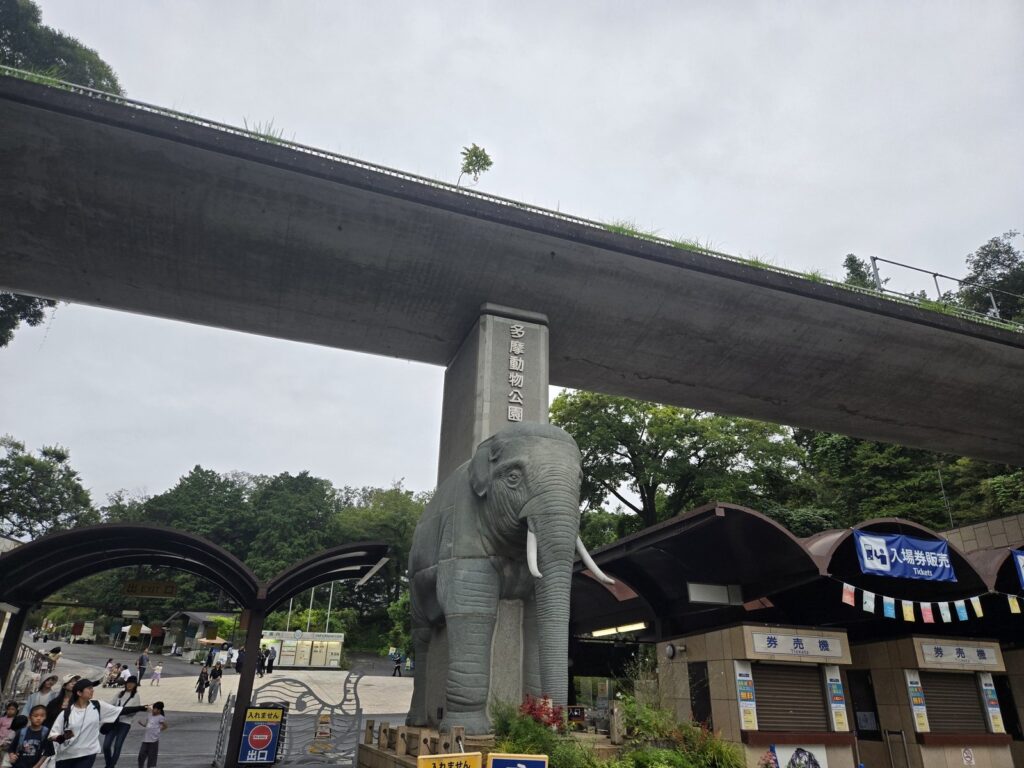
TL;DR
-
A hillside zoo in Hino, about an hour from central Tokyo, built around large open-plan habitats rather than individual enclosures. Expect more walking and real hills compared with Ueno Zoo, in exchange for giraffes and zebras sharing the same wide dirt plain
-
Admission is ¥600 for adults, free for elementary school age and under, and free for junior high schoolers who live or attend school in Tokyo (bring ID). It’s also free for everyone 60 and older, plus one companion, on open days during Respect for the Aged Week (September 15–21)
-
The Lion Bus and lion exhibit have been suspended since July 2026 after several lions fell ill (heatstroke is suspected, and some lions died); as of the most recent official update, a restart isn’t expected before October. Check the zoo’s website before you go if seeing lions matters to your visit
-
Stroller rental (¥500, ages roughly 7 months to 4 years, 18kg limit) is based at the Watching Center near the entrance. It’s fine on the main paths, but the steep climb into the African Zone is hard going with one, especially with an open umbrella in the rain
-
Four nursing rooms are spread around the park, with hot-water dispensers for formula at two of them; a few indoor exhibits (the insect house, the koala house, the mole house) don’t allow strollers inside at all
-
Some animals stop being displayed before the official 17:00 closing time; see a priority animal early rather than saving it for later in the day
At a Glance
| Entry | Adults ¥600 · 65 and over ¥300 · Junior high ¥200 (free for Tokyo residents/students with ID) · Elementary school and under: Free |
| Free days | Greenery Day (May 4), Zoo Anniversary (May 5), Tokyo Citizens’ Day (Oct 1), and 60+ with one companion on open days during Respect for the Aged Week (Sept 15–21) |
| Hours | 9:30–17:00 (last entry 16:00) · Closed Wednesdays (following day if Wednesday is a public holiday) and Dec 29–Jan 1 |
| Nearest station | Keio Line or Tama Monorail, “Tama Dobutsu Koen” Station, 1 minute on foot |
| Strollers | Rental ¥500 at the Watching Center near the entrance, for roughly ages 7 months to 4 years and up to 18kg. A few indoor exhibits don’t allow strollers at all |
| Lion Bus | Suspended since July 2026 due to a lion health issue; check the official website for the current status before you go |
| Typical visit | 4–5 hours, more with a sit-down lunch |
Is It Worth It?
Short answer: yes, if you’re prepared for the hills, and worth checking the Lion Bus status first.
Tama Zoo takes a different approach from Ueno Zoo: instead of a flat, compact layout with animals in enclosures along paved paths, it’s spread across a wooded hillside in western Tokyo, with large open-plan habitats. The African Zone is the clearest example: giraffes and Grevy’s zebras share one wide dirt plain instead of separate pens. On this visit, the standout moment was catching Amur tiger cubs Hibana and Tsubomi, born at the zoo in May 2026, out on one of their irregular “exhibit practice” sessions, still play-fighting with each other in front of a small crowd that had stopped to watch in the rain.
The honest trade-off is effort. Where Ueno Zoo can be done at a relaxed pace on flat ground, Tama Zoo means real hills, especially the climb up to the African Zone’s restaurant. Bring a stroller if your kids still need one, but be ready to carry a child through the steepest stretch if the paths are wet.
By age (from this visit, with our twins at four and a half):
At four and a half, our twins stayed interested in the animals throughout, and the walking was manageable with occasional rest stops, but the African Zone’s hill left them noticeably more tired by the end of the day than a full day at Ueno Zoo does. The tiger cubs were the clear highlight for both kids, the kind of sighting that depends on the zoo’s current animals rather than something you can plan around in advance.
We haven’t yet visited with a younger toddler or an older child, so we can’t speak to those age brackets from firsthand experience here. Based on the terrain alone: strollers are workable on the main paths but hard going on the African Zone hill, so a family still fully reliant on a stroller should expect to carry a child through that section rather than push the whole route.
Getting There with Kids
Nearest station: Keio Line or Tama Monorail, “Tama Dobutsu Koen” Station, 1 minute on foot.
There are two realistic ways in from central Tokyo:
Option 1: Keio Line, with one transfer. From Shinjuku, the Keio Line runs to Takahatafudo, where you change to the short Keio Dobutsuen Line, still part of the same Keio network, for one stop to Tama Dobutsu Koen Station.
Option 2: JR Chuo Line + Tama Monorail. From Shinjuku, the JR Chuo Line runs toward Tachikawa, where you transfer to the Tama Monorail and ride it down to Tama Dobutsu Koen Station. If you can get a seat in the monorail’s front or rear car, the driver’s-eye view is a hit with kids and worth angling for over a middle car.
A note on the return trip: on the Keio Line’s limited express, seats aren’t reserved, and standing for the ride back to Shinjuku with tired kids and no stroller is rough. If that’s a concern, the JR Chuo Line via Tachikawa is worth considering as an alternative on the way home, including its Green Car for a comfort upgrade if a seat is available. The Green Car is also unreserved, though, so it isn’t a guaranteed seat either, and it costs an additional fare on top of the regular ticket. For how the Green Car ticket, the free ride for young children, and the on-board conductor check actually work, see our guide to using IC cards in Japan with kids.
IC card: Suica or Pasmo work throughout, on both the Keio Line and the Tama Monorail.
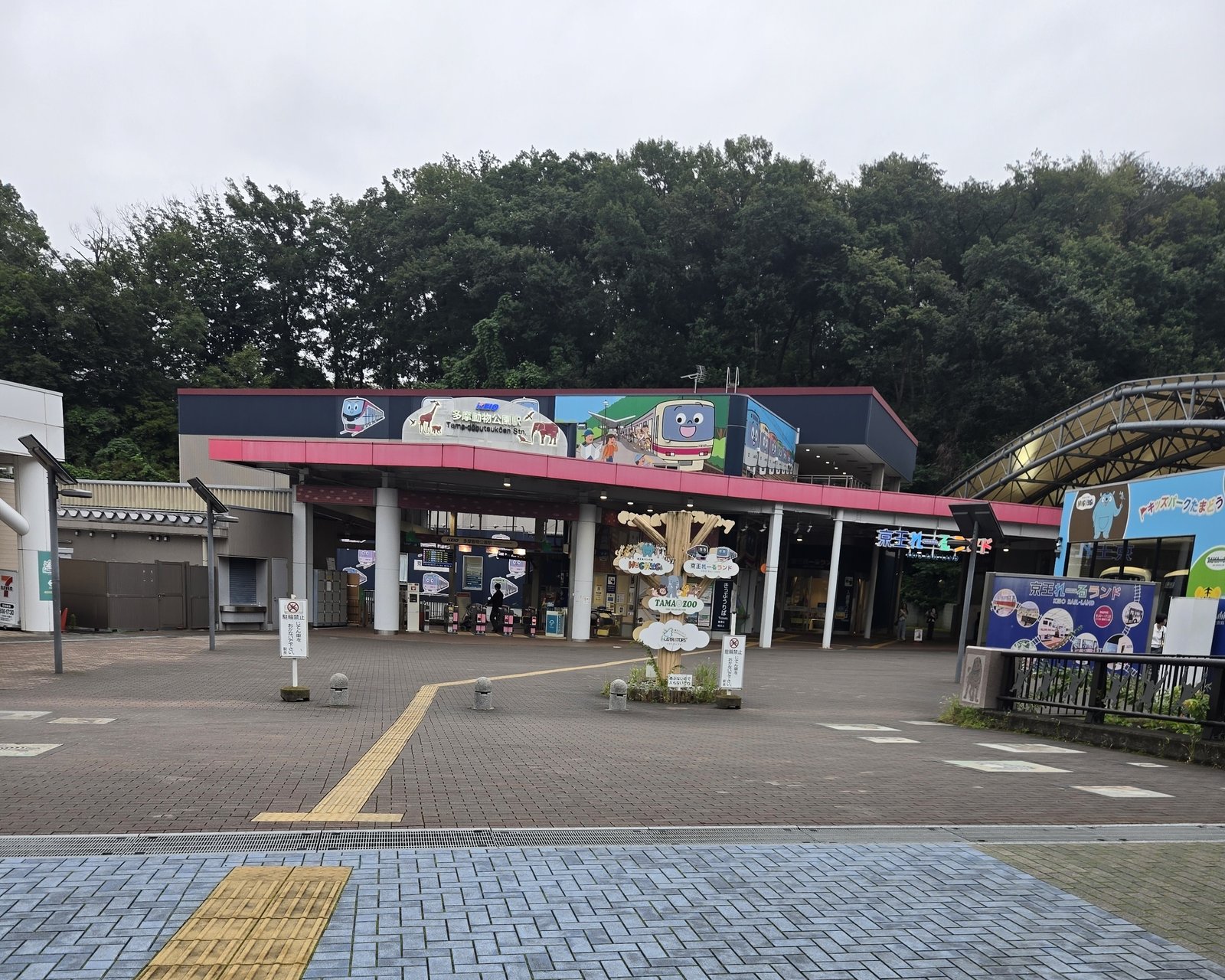
What to See: The African Zone
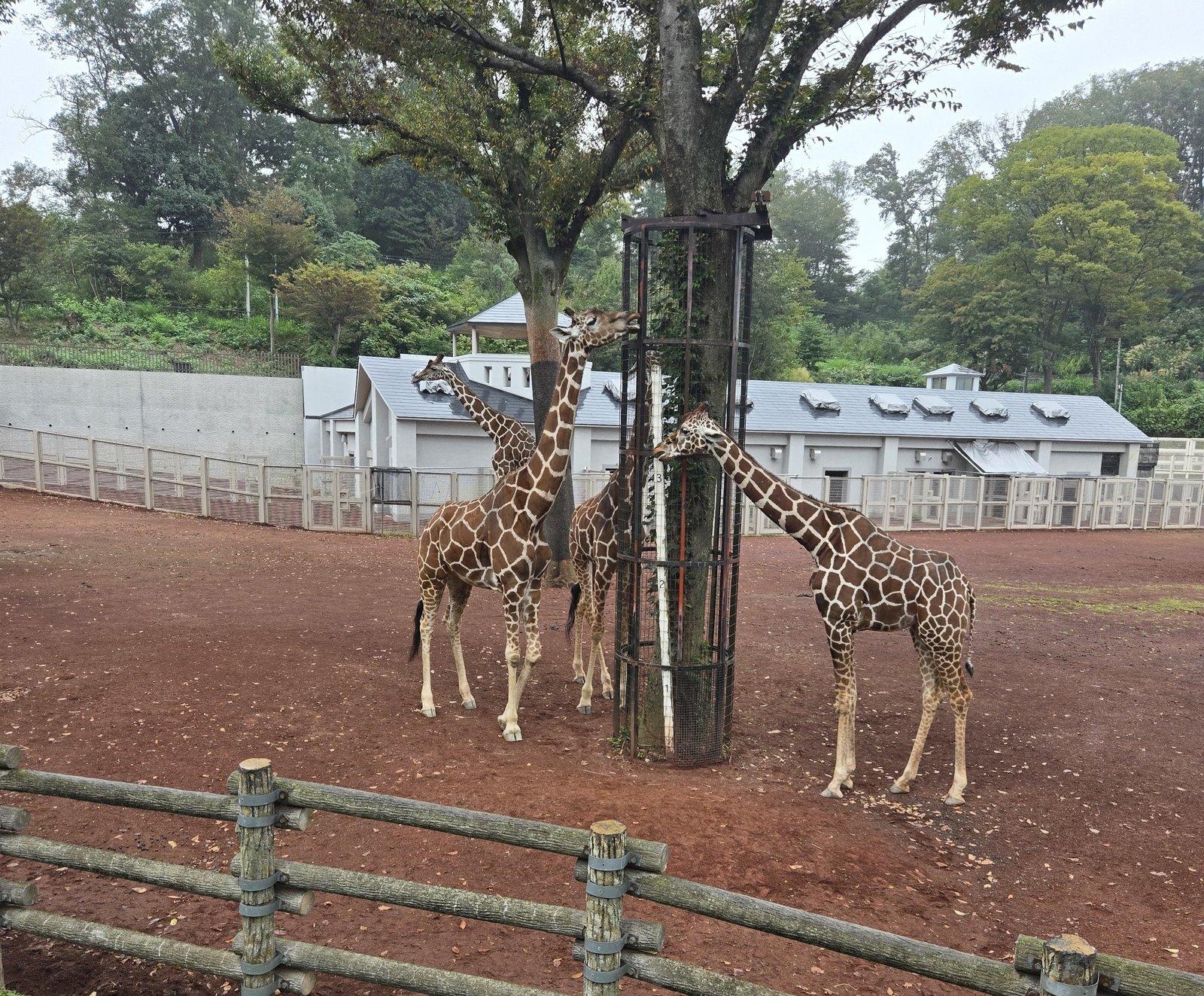
The African Zone is the zoo’s main draw. Instead of individual enclosures, giraffes and Grevy’s zebras share a single open plain, with a small herd of giraffes often clustered around a raised feeder mounted in a tree. On a wet, overcast day the animals were still out and active despite the weather.
The Lion Bus, and why it might not be running: in a normal year, the African Zone’s signature paid extra is the Lion Bus, a caged bus that drives through the lion enclosure for a close-up view. Since July 2026, though, both the lion exhibit and the Lion Bus have been suspended: several lions became ill (heatstroke-related circulatory failure is suspected) and some did not survive. As of the zoo’s most recent public update, the three lions that were under treatment have nearly recovered and the zoo’s other ten lions are unaffected, but a restart isn’t expected before October at the earliest. On this visit, the lions weren’t on view at all as a result. If seeing lions or riding the Lion Bus matters to your visit, check the zoo’s official website for the current status before you go rather than assuming it’s running.
The climb up: the path into the African Zone from the entrance area is steep, and it only gets steeper as it continues up toward the elephant area beyond. A restaurant sits at the top of the first climb, looking down over the plain, which makes for a good rest-and-view stop before deciding whether to continue further uphill. Managing a stroller and an open umbrella on this climb at the same time didn’t work on this visit; the stroller was returned partway through rather than continuing to fight the hill with both.
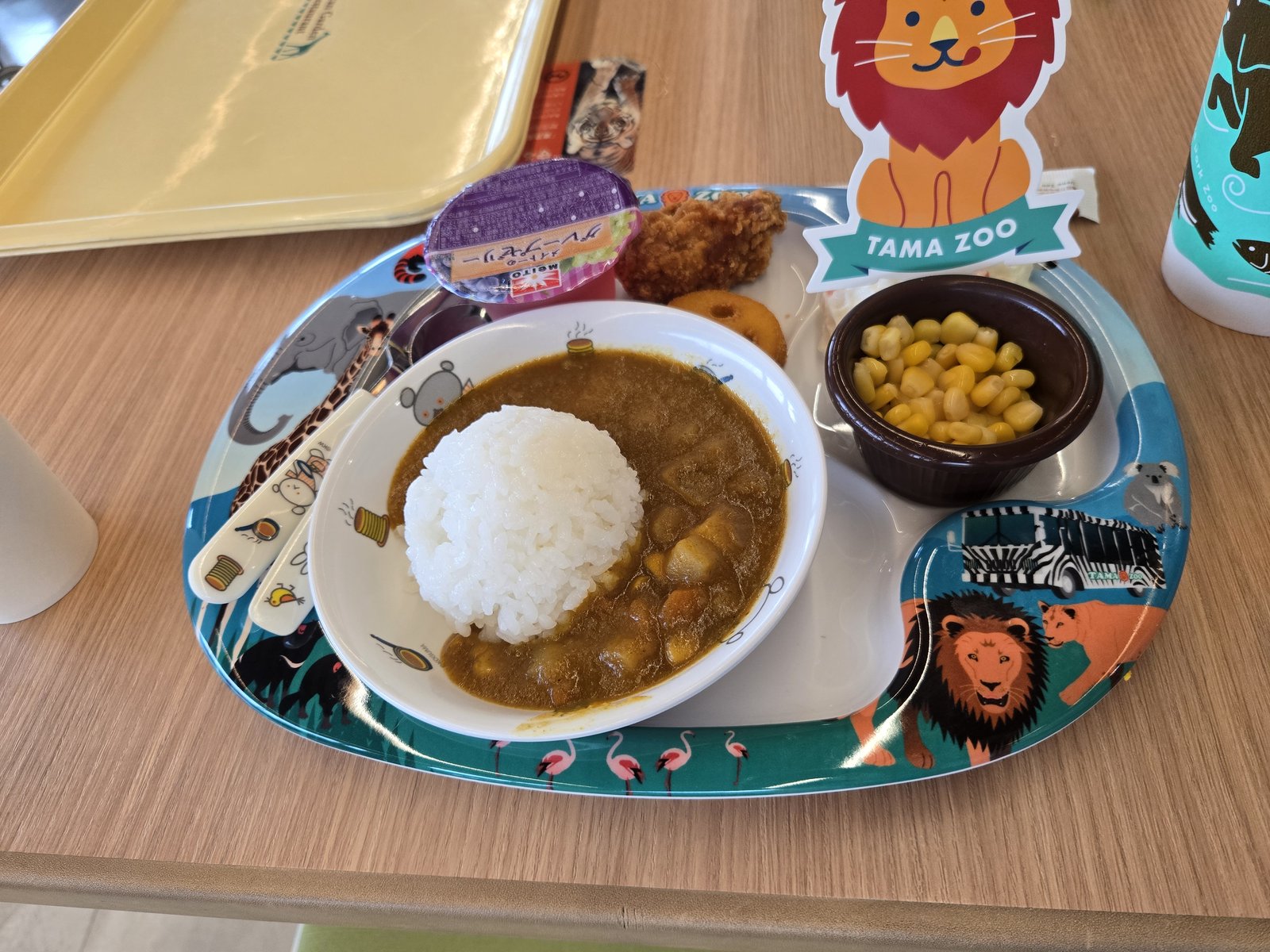
Food: the African Zone’s restaurant has both a kids’ menu and a full adult menu, including options like beef karanga (a mild, curry-like beef stew) with beer available. Seating spans a ground floor, a terrace, and an upper floor, and on this visit there was no trouble finding a table even on a fairly busy day.
What to See: Beyond the African Zone
Tiger Cubs on “Exhibit Practice” (Unannounced, Check on Arrival)
Amur tiger cubs Hibana and Tsubomi, born at the zoo in May 2026, started appearing outside with their mother, Ichi, on an irregular basis in mid-September 2026, part of what the zoo calls “exhibit practice”: short sessions meant to get the cubs used to moving between their indoor and outdoor spaces before they join the regular display rotation. The zoo doesn’t announce these sessions in advance or confirm whether one will happen on a given day, so this visit’s sighting, cubs out and play-fighting while a small crowd watched quietly in the rain, came down to timing rather than something that could be planned around.
The zoo also asks visitors during these sessions to stay quiet rather than startle the animals, and to avoid camping in one spot for extended photos so other visitors get a turn. The zoo has said it won’t answer inquiries about whether or when a session will happen, so there’s no way to plan a visit around one; checking its official news page beforehand only tells you whether exhibit practice is a current, ongoing thing at all, not whether you’ll catch it on a given day. Beyond this particular pair, which young animals are on show at the zoo changes with recent births more generally, so treat any specific animal the same way: worth checking recent official news for general awareness, but never a guaranteed sight.
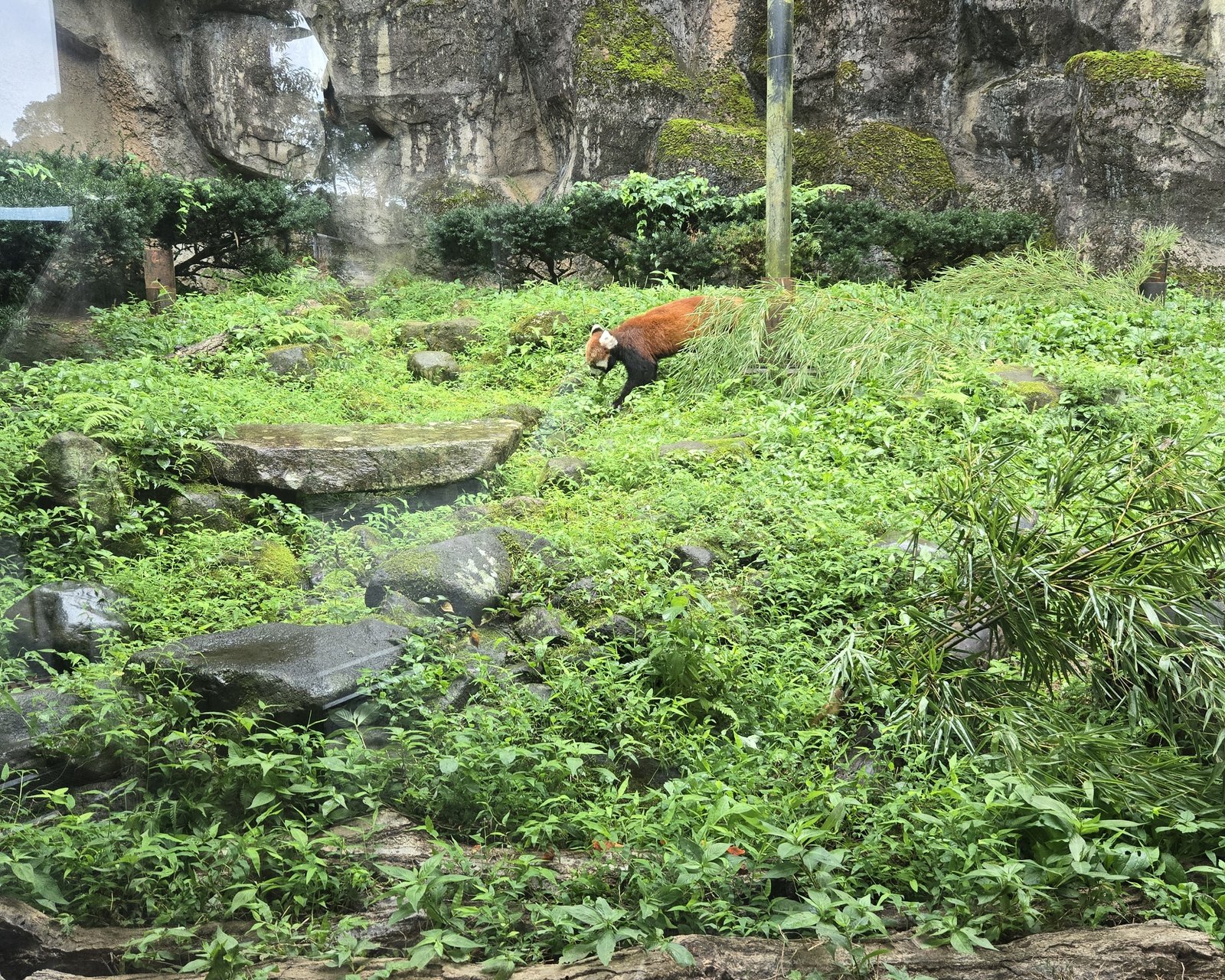
Red Panda
The zoo’s red panda enclosure is planted with dense greenery rather than a bare pen, which meant the animal took a moment to spot among the leaves and rocks on this visit, more so than at the more open red panda displays at some other Tokyo zoos.
Orangutan Skywalk
Tama Zoo is also known for its “Sky Walk,” a set of overhead routes that, when in use, let the resident orangutans move between structures above visitors’ heads rather than staying in a single enclosure. Like other animal-behavior exhibits, whether it’s active on a given day depends on weather and the animals themselves. This wasn’t part of this particular visit, but it’s one of the zoo’s signature exhibits and worth building into your route if it’s running.
Practical Tips for Families
Stroller Rental: Age and Weight Limits, and a Few No-Go Zones
Stroller rental is ¥500 for the day, in front of the Watching Center near the entrance (return there too), for children roughly 7 months to 4 years old and up to 18kg. It’s a reclining B-type stroller. Rental is free if the child using it holds a relevant disability certificate.
Two things to plan around: the African Zone’s steep climb is hard work with a stroller, harder still with an open umbrella in the rain, and on this visit the stroller ended up being returned partway through rather than continuing the climb with it. Separately, a handful of indoor exhibits, including the insect house, the koala house, and the mole house, don’t allow strollers inside at all, so expect to park it and carry or hand-hold your child through those.
Nursing Rooms and Formula Water
There are four nursing rooms around the park: at the Watching Center, the main insect house building, the rest area below the koala house, and the free rest area in the African Zone. Hot water for formula is available at the Watching Center and the African Zone rest area; elsewhere, the Savanna Kitchen restaurant in the African Zone has hot water and a microwave available on request. Note that the nursing rooms themselves are for women only.
Buy an Umbrella at the Gate If You Need One
If rain catches you by surprise, the gift shop just past the entrance sells umbrellas in both adult and child sizes, a small but useful detail if your family got caught without one.
Some Animals Stop Being Visible by Late Afternoon
As with Ueno Zoo, certain animals and exhibits close earlier than the official 17:00 closing time. On this visit, the koala exhibit had already closed for the day by the time a planned mid-afternoon break was finished, after being saved for later in the schedule. If there’s a specific animal your kids want to see, see it earlier in the visit rather than later.
Getting Home Without a Stroller
Walking back to Tama Dobutsu Koen Station and then standing for an unreserved Keio Line ride with tired kids is a rough way to end the day. See the route notes above: routing home via the JR Chuo Line and Tama Monorail through Tachikawa is worth considering if you skip the stroller rental or return it early, though neither route guarantees a seat.
Recommended Route
Main Gate → African Zone (giraffes, restaurant, Lion Bus if it has resumed) → return the stroller if the weather turns → uphill toward the tiger and red panda areas → wind down toward the entrance
- Enter through the main gate, right by Tama Dobutsu Koen Station
- Head into the African Zone first, while energy is highest
- Check the Lion Bus and lion exhibit status on the official website before you go; both have been suspended since July 2026 and a restart isn’t expected before October at the earliest
- Stop at the African Zone restaurant at the top of the first climb for a rest, a view over the plain, and lunch if it’s around midday
- Check the zoo’s official news page beforehand for any current young-animal exhibit practice, but don’t build your schedule around it since the zoo won’t confirm sessions in advance
- See the animals highest on your list earlier in the day, since some exhibits stop being visible before the official 17:00 closing time
Total time: approximately 4–5 hours, more with a sit-down lunch.
Where to Rest & Eat
The African Zone’s restaurant, at the top of the first climb, is the main sit-down option, with a kids’ menu, an adult menu including beef karanga and beer, and seating across a ground floor, terrace, and upper floor. The free rest area in the African Zone doubles as one of the park’s nursing-room locations if you need it. Bringing your own snacks and water is a reasonable backup, as with any zoo visit.
Honest Verdict
Tama Zoo asks more of you physically than Ueno Zoo does: the hills are real, and a headline attraction like the Lion Bus can be off the table entirely depending on when you visit (as it has been since July 2026). In exchange, the African Zone’s open-plan habitat, with giraffes and zebras sharing one plain, is something Ueno Zoo doesn’t offer, and there’s always a chance of seeing whatever young animals the zoo currently has on display.
Check the Lion Bus and lion exhibit status before you build a visit around them. If the hills aren’t a concern and you’d rather see animals in a more open layout, it’s worth the extra distance from central Tokyo. For an easier half-day with a toddler and less walking, Ueno Zoo remains the simpler choice.
Nearby: Keio Rail Land
Keio Rail Land is right at Tama Dobutsu Koen Station itself, the same station the zoo uses, so it combines easily without any extra travel. It’s a small train-themed museum and play area run by the Keio railway company. It wasn’t part of this visit, but it’s a reasonable add-on for a train-loving kid before or after the zoo, right at the same station.
FAQ
Is Tama Zoo far from central Tokyo?
It’s about an hour from Shinjuku by train, either via the Keio Line to Takahatafudo and then the Keio Dobutsuen Line, or via the JR Chuo Line to Tachikawa and then the Tama Monorail. Both routes end at Tama Dobutsu Koen Station, 1 minute on foot from the main gate.
Is Tama Zoo stroller-friendly?
Partly. Rental strollers (¥500 at the Watching Center, for roughly ages 7 months to 4 years and up to 18kg) work fine on the flatter paths, but the African Zone’s climb is steep enough that pushing one up it, especially while holding an umbrella in the rain, is genuinely difficult. A few indoor exhibits, including the insect house, koala house, and mole house, don’t allow strollers inside at all.
Is the Lion Bus running at Tama Zoo?
Not as of this writing. Both the lion exhibit and the Lion Bus have been suspended since July 2026 after several lions became ill, and some did not survive; the zoo suspects heatstroke-related circulatory failure. As of the most recent official update, the three lions that were under treatment have nearly recovered and the zoo’s other ten lions are unaffected, but a restart isn’t expected before October at the earliest. Check the zoo’s official website for the current status before you build a visit around it.
Is Tama Zoo free for kids?
Elementary school age and under enter free, as do junior high schoolers who live or attend school in Tokyo (student ID required). Junior high schoolers from elsewhere pay ¥200, adults pay ¥600, and visitors 65 and over pay ¥300 (age ID required). The zoo is also free for everyone 60 and older, plus one companion, on open days during Respect for the Aged Week (September 15–21), and on a few other set dates through the year (Greenery Day, the zoo’s anniversary, and Tokyo Citizens’ Day).
How does Tama Zoo compare to Ueno Zoo?
Ueno Zoo is flatter, more compact, and easier with a stroller and very young children, though its enclosures are smaller and more traditional. Tama Zoo’s African Zone gives animals like giraffes and zebras a wide, open habitat, at the cost of a genuinely hilly layout that’s harder work with kids in tow, and headline attractions like the Lion Bus can be unavailable depending on when you visit. Our own twins, at four and a half, engaged with the animals here for longer than they typically do at Ueno Zoo, largely on the strength of the African Zone and the tiger cubs, but the visit was more physically demanding for them by the end of the day.
Information checked: 2026/09