
TL;DR
-
KidZania Tokyo is a job-experience mini city in Toyosu where kids do roughly 100 different jobs and earn kidZo, the park’s own currency. Adults enter but don’t take part in the jobs themselves
-
You can only hold 2 job reservations at once. Wanting a third means cancelling one of the two you’re holding, which shapes how you plan the whole visit
-
A popular job’s next open slot can be hours away. On our visit, the candy shop wasn’t bookable until 19:05, so a chunk of the day became “what do we do until then”
-
Diamond entry puts you in the first priority group through the door, but your order within that group is set by booking time, not by how early you physically show up. Arriving early doesn’t move you up
-
Buy the strap for holding your child’s job card. We found it made the whole day easier
-
All four food outlets inside (RF1, Schauessen, Pizza-La Express, Mos Burger) are paid in regular yen, not kidZo. Budget cash or a card for meals separately from what your kids earn
-
Parents become bystanders by design. Staff ask kids directly about choices, cancellations, and allergies, not the accompanying adult
At a Glance
| Address | Urban Dock LaLaport Toyosu 1, North Port, 3F, 2-4-9 Toyosu, Koto-ku, Tokyo |
| Nearest station | Toyosu, on the Tokyo Metro Yurakucho Line (exit 2) or the Yurikamome, about 8 minutes on foot |
| Sessions | 1st Shift 9:00–15:00 · 2nd Shift 16:00–21:00 (doors open 30 minutes before each shift starts) |
| Admission booking rule | A booking of children (3–12) only, or adults only, isn’t accepted. A group of 13–15 year-olds only is fine without an adult |
| Job age range | 3–15, with under-3s admitted free but unable to join in. A guardian and a toddler alone (no older child) can’t enter |
| Currency | kidZo, paid as a “salary” for work-type jobs and spent on service-type jobs or shopping, or deposited at the in-park bank where it earns interest |
| English support | Select “E@K Activity” sessions, the paid English Activities Program, and weekly English Wednesday sessions; day-to-day signage and staff are otherwise Japanese-speaking |
Pricing (2026)
| Weekday (1st / 2nd) | Weekend & holiday (1st / 2nd) | Holiday season, Sept 19–23 (1st / 2nd) | |
|---|---|---|---|
| Standard, child (3–15) | ¥5,000 / ¥3,800 | ¥5,500 / ¥4,500 | ¥7,900 / ¥5,200 |
| Standard, adult (16+) | ¥2,600 / ¥2,300 | ¥2,700 / ¥2,400 | ¥3,400 / ¥2,600 |
| Diamond, child (3–15) | ¥7,000 / ¥5,800 | ¥7,500 / ¥6,500 | ¥9,900 / ¥7,200 |
| Diamond, adult (16+) | ¥4,600 / ¥4,300 | ¥4,700 / ¥4,400 | ¥5,400 / ¥4,600 |
Adults watch and accompany; they don’t do jobs themselves. Pricing changes by date beyond the pattern above, so check the official plan page or the reservation fee calendar for your exact visit date before you book.
Is It Worth It?
Short answer: yes, and the part that makes it worth it isn’t the pavilions themselves, it’s how deliberately the whole system hands decisions to your kids.
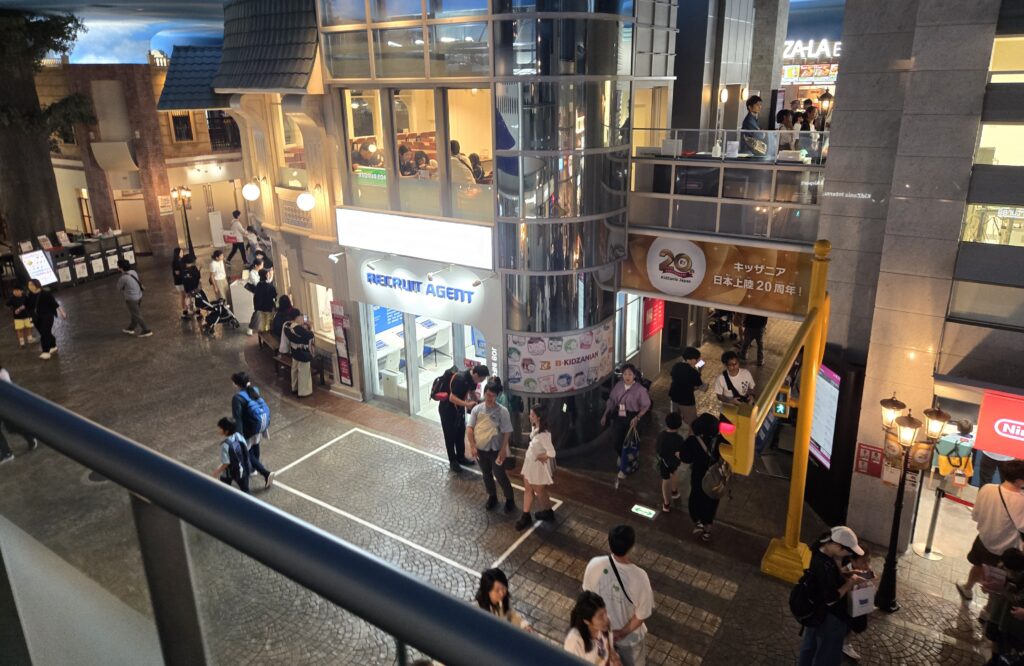
KidZania Tokyo is built as a miniature city, roughly two-thirds scale, where children take on close to 100 different jobs: pilot, cabin attendant, police officer, doctor, cook, shopkeeper, and many more. Some jobs pay kidZo as a salary; others cost kidZo, the way a real service would. Kids then use what they earn to shop, pay for a service, or deposit it at the in-park bank, where deposits earn interest.
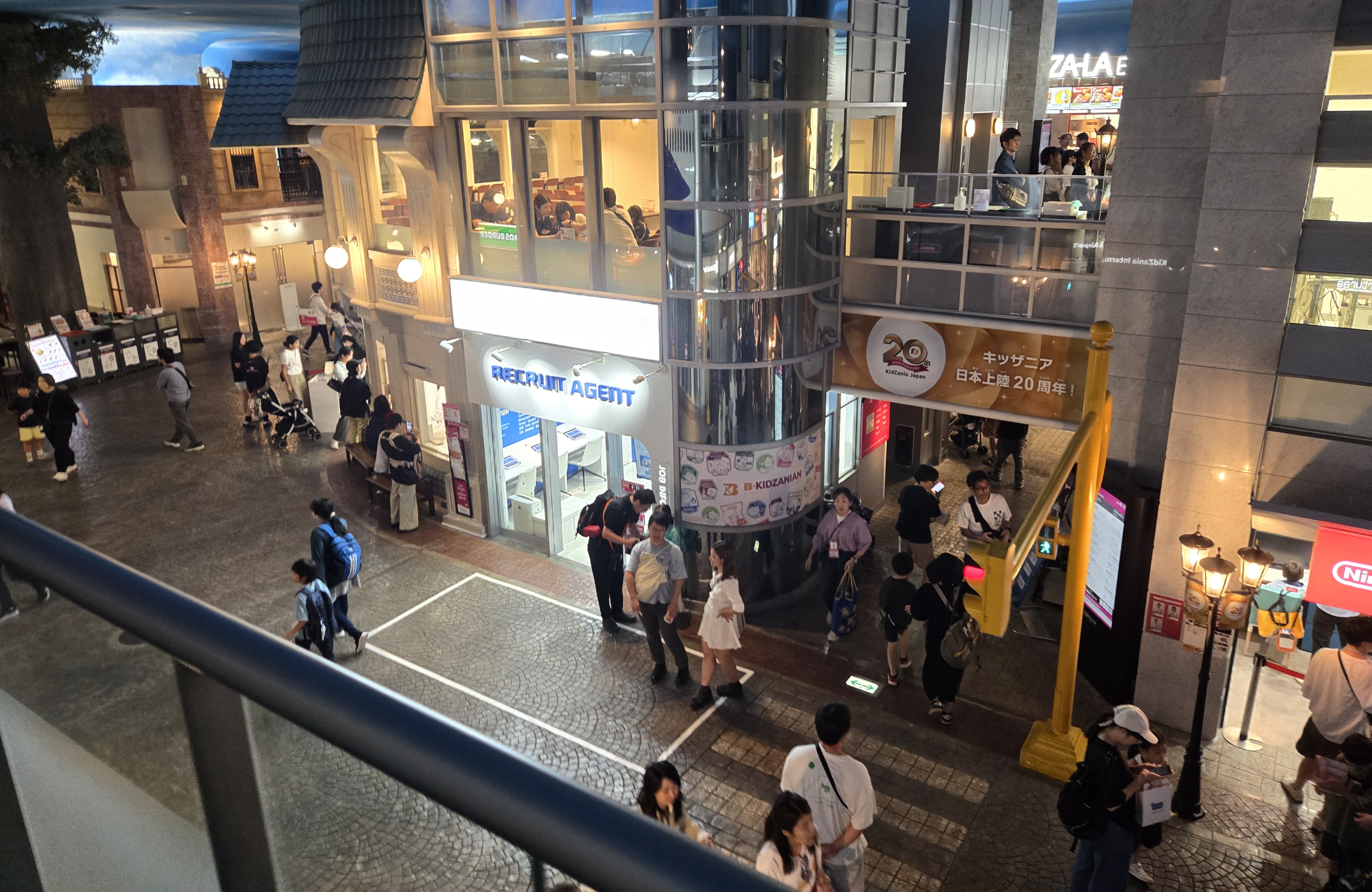
Many of the pavilions are run under real Japanese company names rather than generic play-shop branding: on our visit alone we walked past a Komatsu construction equipment pavilion, a Lion dental clinic, a Nichirei frozen food R&D centre, a Morinaga sweets factory, and an AUTOBACS car-service bay. It’s a detail that makes the “city” framing feel less like a theme, and more like the point.

A Tabinoko family visit: we went on a Saturday for the 2nd Shift with our four-and-a-half-year-old twins, using a Diamond priority ticket. Being first-timers, we didn’t really know the rhythm of the place yet. The first job we booked was the airplane pavilion: our son as pilot, our daughter as cabin attendant. We assumed we’d move straight on to the next thing once that finished, but there was a few-minute wait before a new slot opened up, which we hadn’t planned for. From there we booked the candy shop, one of the more popular jobs, and its next available slot wasn’t until 19:05. A good chunk of our afternoon turned into figuring out how to fill that gap rather than working through a checklist of jobs back to back.
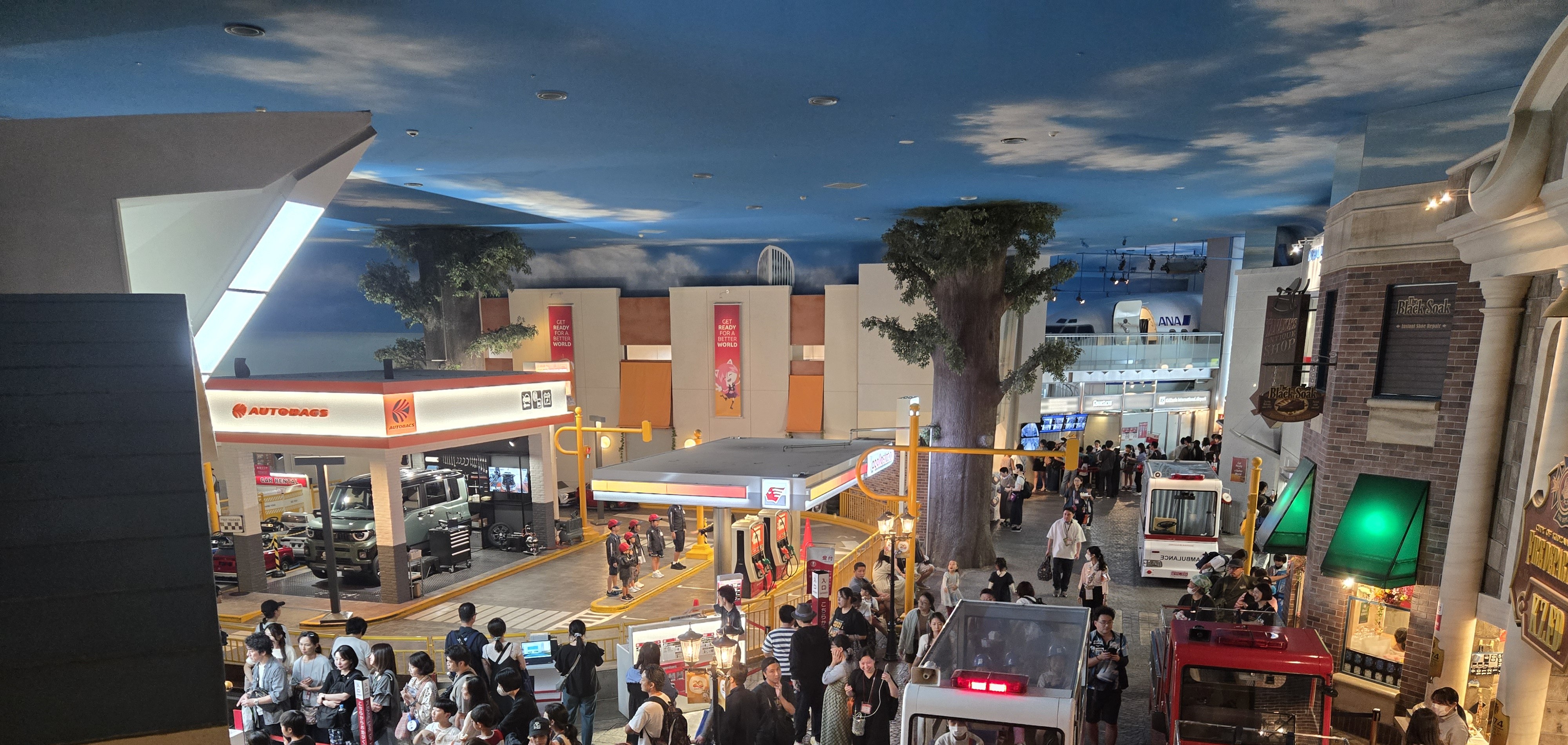
What stood out most wasn’t any single pavilion, though. The moment we walked in, our old habit as parents, stepping in to smooth things over and decide for our kids, stopped being useful. Staff ask the kids directly: do you want to cancel this reservation (and warn them they might not get it back)? Do you have any allergies? Which of these do you want? Not us, them. With cooking, the fire station, the police station, and the doctor’s office all on offer alongside the airplane and candy shop jobs, our twins’ eyes lit up at the choices, and more than once one of them wanted a job but held back because they’d rather spend one of their two reservation slots on something else instead. That kind of small, real trade-off, not always resolved happily, is closer to what we came away remembering than any single pavilion.
By age (from this visit, with our twins at four and a half):
Our twins stayed fully engaged for the whole session, even with the frustration of having to pick between jobs they both wanted. Job participation starts at age 3, and KidZania’s admission rules mean a booking of children only or adults only isn’t accepted, though a group made up entirely of 13–15 year-olds can book without an adult. We haven’t visited with a toddler under 3 or with older kids yet, so we can’t speak to those age ranges firsthand.
Getting There with Kids
Nearest station: Toyosu, served by the Tokyo Metro Yurakucho Line and the Yurikamome, both about an 8-minute walk from the facility. KidZania Tokyo is on the 3rd floor of the North Port building at Urban Dock LaLaport Toyosu, so once you’re at the mall, it’s an indoor walk the rest of the way, useful if the weather isn’t cooperating.
An IC card (Suica or Pasmo) covers both the Yurakucho Line and the Yurikamome without any special ticketing. For the basics on using IC cards with kids in Japan, including which fares apply to which ages, see our guide to IC cards with kids.
Tip from experience: a Diamond ticket puts your child in the first priority group through the door, ahead of standard admission, and KidZania’s own guidance is explicit that entry order within that group follows booking order rather than same-day arrival order, so there’s no need to line up early. We still arrived a little before 15:00 for a 16:00 (2nd Shift) start, well ahead of the 15:30 doors-open time, and were 16th in the Diamond line regardless, which matched the official explanation exactly: our position was set by when we’d booked, not by how early we stood there. We could have shown up closer to doors-open time and landed in the same spot.
How Job Reservations Actually Work
Understanding this before you walk in changed how we would have planned our own visit.
You can hold at most 2 job reservations at a time. A new reservation slot opens up automatically once one of your two current jobs is completed. If your child wants to book a third before that happens, one of the existing two has to be cancelled first instead. In practice, this means you’re constantly balancing “lock in the popular job now” against “stay flexible for whatever looks interesting as we walk around.”
Jobs split into two types: ones that pay kidZo as a salary (the “work” jobs, like the airplane pavilion), and ones that cost kidZo, the way a real service or lesson would. Our day ended up as a mix of both, with the paid jobs funding what the kids spent later.
Don’t assume you can chain reservations back to back with zero gap. On our visit, after our first reservation (the airplane pavilion) finished, we expected to walk straight into booking the next thing, but there was a short wait before a new slot became available. Build a little slack into your plan for moments like that.
Popular jobs can have a same-day slot that’s hours away. Our candy shop reservation wasn’t until 19:05, well into the evening for a 16:00 start. If a specific job matters to your child, book it as early in the visit as you can, then plan the rest of the day around the wait rather than being surprised by it later.
Cancellations for the day itself go through pavilion staff on-site, and if you’re changing your mind about the whole visit rather than a single job, KidZania’s official reservation guide allows fee-free changes and cancellations to your entry booking up until 23:55 the day before your visit.
Money: How kidZo Works
Kids earn kidZo as a “salary” for work-type jobs, then spend it on service-type jobs, shopping at the in-park department store, or depositing it at the bank pavilion, where deposits earn interest. Entry itself is paid in yen, and so is food (see below), but the jobs and shopping loop inside the city runs on kidZo, which is the part your kids actually handle and manage themselves.
Food & Drinks: What Needs Yen, What Needs kidZo
All four food outlets inside KidZania Tokyo, RF1, Schauessen, Pizza-La Express, and Mos Burger, are paid in regular yen (cash or cashless payment), not kidZo. Budget actual cash or a card for meals rather than assuming your kids’ earnings will cover them.
Bottled drinks and water inside tend to cost more than buying them beforehand. If you can, pick up water before you go in rather than relying on in-park prices once you’re there.
Practical Tips for Families
Buy the Strap for the Job Card
The KidZania Shop sells a strap for holding your child’s job reservation card. We found it worth picking up early: without it, you’re stuck holding or pocketing a loose card all day while your child runs between pavilions.
Parents Are Bystanders, and That’s the Design
Once you’re inside, staff address questions and choices to the kids directly, not the accompanying adult: whether to cancel a reservation, whether they have any allergies, which of two options they’d rather do. It’s a long day for the adults, mostly spent watching rather than doing, but for us it was also where we saw our own kids act the most independently.
Some Jobs Aren’t Visible to Parents; a Few Get Photographed
Some pavilions let you watch your child the whole time; others are set up so parents can’t see inside directly. For pavilions marked with a photo icon, official photographers take pictures during the activity. The prints go up on display panels inside the park, and you buy the ones you want at a dedicated photo counter on-site; digital data comes bundled with the purchase.
English Support Options Exist, but Day-to-Day Is Japanese
Regular sessions run in Japanese, and we noticed a fair number of other international visitors around the park on our visit, though we can’t speak to how much Japanese any of them actually needed. If you’d like more English built in, KidZania Tokyo runs a few named programs, including “E@K Activity” sessions, a paid English Activities Program, and a weekly “English Wednesday,” where more of the city runs in English. Check the official schedule for which dates and activities these cover.
Strollers Are Better Left in Storage
We visited with our twins at four and a half, old enough that a stroller wasn’t part of our own day, so this is from KidZania’s own published guidance rather than our experience: the park advises families with younger children that its paths can be narrow and paved in a cobblestone-style finish, and recommends leaving strollers in one of the designated storage areas around the venue rather than pushing them around inside. A baby carrier is the suggested alternative. Infants under 3 enter free but can’t take part in job activities, and groups made up only of a guardian and a toddler aren’t admitted.
Honest Verdict
The pavilions and jobs are what get kids through the door, but the reservation system, holding only 2 jobs at a time, popular slots sometimes hours away, staff who ask the kids rather than the parents, is what actually makes the day feel different from a typical theme park visit. Our twins left wanting to go back, and having watched them navigate choices, cancellations, and a long wait for the candy shop mostly on their own, we understood why.
It isn’t an easy day for everyone in the family, though. As parents, we spent most of the 2nd Shift watching rather than doing, which got tiring by the end. Our kids, for all their enthusiasm, also hit real friction: with only 2 reservation slots and jobs like cooking, the police station, and the candy shop all competing for attention, they had to give up things they wanted more than once, and it wasn’t always a graceful moment. A Diamond ticket softens the entry logistics, but it doesn’t remove that trade-off once you’re inside, and every food outlet runs on yen rather than kidZo, so meals are a separate budget line on top of whatever entry plan you choose.
Nearby
teamLab Planets TOKYO is in the same Toyosu neighbourhood, so it’s a realistic pairing across a multi-day trip if your family enjoys both, though each is a substantial half-day to full-day activity on its own rather than something to squeeze into the same day. See our comparison guide, teamLab Planets vs Borderless: Which One for Families?, for which of the two teamLab locations suits younger kids better.
If you’re considering basing yourselves near Toyosu for a multi-day visit built around KidZania or teamLab Planets, our Serviced Apartments in Tokyo for Families guide covers the closest realistic option for a longer stay in the area.
FAQ
How much does KidZania Tokyo cost?
Pricing depends on the shift, the day of the week, and whether you book standard or Diamond priority entry. As a weekday baseline, standard child entry (3–15) runs ¥5,000 for the 1st Shift (9:00–15:00) and ¥3,800 for the 2nd Shift (16:00–21:00), with Diamond priority entry at ¥7,000 and ¥5,800 respectively. Weekend and holiday-season pricing is higher. Always check the official fee calendar for your exact date.
Is Diamond entry worth it at KidZania Tokyo?
Diamond puts your child in the first priority group through the door, ahead of standard admission, which is a real benefit. What it doesn’t do is reward physically arriving early: your exact position within that priority group is set by booking order, and on our visit, arriving well before doors opened didn’t move us up in the Diamond line. It’s worth it for a predictable, pre-booked entry position without needing to queue early, not for skipping to the very front regardless of when you reserved.
How many jobs can my child do at KidZania Tokyo?
There’s no fixed daily cap on jobs, but you can only hold 2 reservations at once. Wanting to book a third means cancelling one of your current two first, and once a reserved job is completed, a new slot opens up for booking.
Do we need to speak Japanese to visit KidZania Tokyo?
Regular sessions run in Japanese, and day-to-day signage and pavilion staff are mostly Japanese-speaking. We noticed other international visitors around the park on our visit, though we can’t say how much Japanese any of them needed. If you’d like more English built in, look at KidZania Tokyo’s named English programs, including “E@K Activity” sessions, the paid English Activities Program, and weekly “English Wednesday” sessions, and check the official schedule for dates.
Can I bring a stroller into KidZania Tokyo?
You can bring one in, but KidZania’s own guidance for families with young children recommends storing it, since the park’s paths can be narrow and paved in a cobblestone-style finish. Designated storage areas are available around the venue, and a baby carrier is the suggested alternative. We visited with four-and-a-half-year-olds, past stroller age, so this is from KidZania’s published guidance rather than our own experience.
What age is KidZania Tokyo good for?
Job participation runs from age 3 to 15. Admission bookings can’t be made up of children only or adults only, though a group made up entirely of 13–15 year-olds can book without an adult. Infants under 3 enter free but can’t take part in jobs, and a guardian can’t enter with only a toddler and no older child. Based on our visit with four-and-a-half-year-old twins, that age engaged fully with the jobs and the day’s pacing.
Is food included in the KidZania Tokyo ticket price?
No. Entry is paid in yen, and the jobs themselves run on kidZo, the park’s own currency, earned as a salary and spent on services or shopping. All four food outlets, RF1, Schauessen, Pizza-La Express, and Mos Burger, are paid in regular yen instead, cash or cashless. Budget separately for meals rather than assuming your kids’ kidZo earnings will cover them.
Information checked: 2026/09