
TL;DR
-
On busy Tokyo commuter lines, a few hundred yen buys a reserved seat on certain trains, and JR’s Green Cars offer wider unreserved seats for a bit more. With two 4-year-olds, that meant we weren’t hunting for seats or standing with a child on our hip
-
The S-Train is a weekend and holiday all-reserved-seat train that runs straight through from Shinjuku-sanchome and Shibuya to Minatomirai and Motomachi-Chukagai in Yokohama. We used it with our 4-year-old twins and booked on Smooz without creating an account
-
JR East’s Green Cars on lines like the Chuo Line are double-decker cars with wider seats. The seats are unreserved, so a seat isn’t guaranteed. Load the Green ticket onto your Suica before boarding: we didn’t, and chose to get off at the next station to buy one rather than pay the higher onboard price
-
Up to two preschoolers ride free with each paying adult in the Green Car. On the S-Train and Keio Liner, a child who takes their own reserved seat needs a seat ticket
-
The Keio Liner sells a “together with kids” ticket on weekends and holidays: 2 seats for ¥500, one adult and one child of elementary school age or younger, in a dedicated car
-
Book online ahead of time wherever you can. On the S-Train, the Green Car, and the Keio Liner, buying on board costs more than buying in advance
The Situation in Tokyo
Most Tokyo trains have no reserved seats at all. You board, and if a seat is free you take it. On weekday rush hours and weekend trips out of the city, the trains that families want are often the same trains that are standing room only.
Several railway companies have added a middle option: commuter trains where you pay a small extra charge on top of the regular fare for a reserved seat. JR East takes a different approach, with Green Cars that offer wider, unreserved seats for an extra fare. They’re mainly designed for commuters with long rides home. We’ve found them just as useful for weekend family trips out of central Tokyo, when the regular trains toward places like Yokohama are crowded.
This guide covers the two we’ve used with our 4-year-old twins, the S-Train and the JR Green Car, plus two more reserved-seat services that families may come across, based on official information. For the Shinkansen and long-distance trains, see our guide to long journeys with kids in Japan.
The S-Train: A Guaranteed Seat to Yokohama on Weekends
The S-Train is an all-reserved-seat train that runs on weekends and public holidays straight through the Seibu, Tokyo Metro Fukutoshin, Tokyu Toyoko, and Minatomirai lines, with most trains running between Seibu-Chichibu and Motomachi-Chukagai (some start or end at Hanno or Tokorozawa). Heading toward Yokohama, you can board at Shinjuku-sanchome or Shibuya (Ikebukuro is drop-off only in that direction), and it stops at Yokohama and Minatomirai before reaching Motomachi-Chukagai. On weekdays, separate S-Train services run between the Seibu lines and Toyosu via the Yurakucho Line instead.
We used it on a Saturday in September 2026 for a day out at the Cup Noodles Museum Yokohama, mainly to avoid the crowds heading toward Yokohama. With seats booked, we didn’t have to work out which door would be least crowded or worry about standing with the kids for the whole ride.
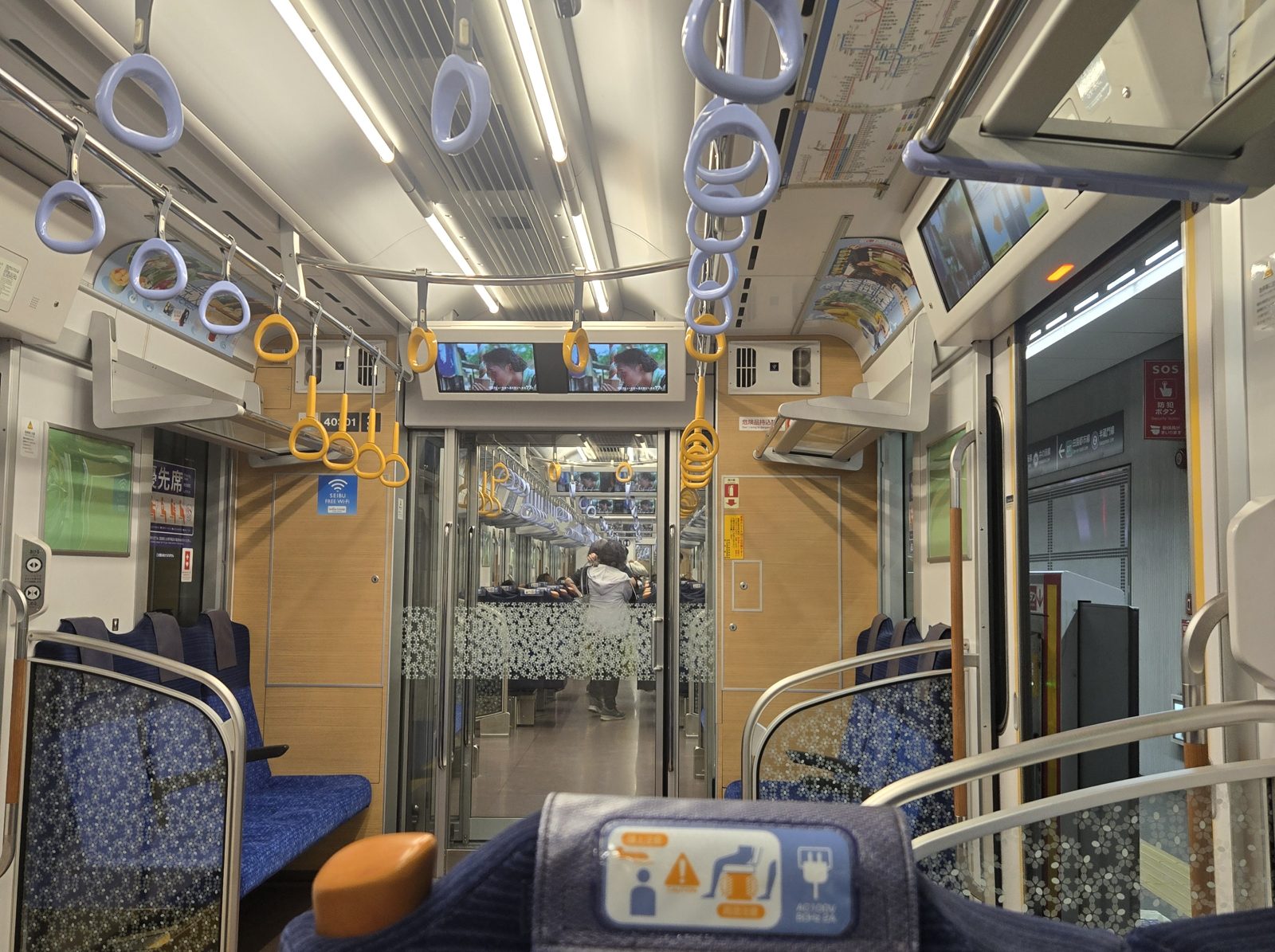
What it costs: a seat ticket on top of the regular fare. We booked four seats from Shinjuku-sanchome to Minatomirai on September 26, 2026, one for each of us: ¥560 per adult and ¥290 per child, ¥1,700 for the family in total. From Shibuya, Seibu lists the adult seat ticket at ¥350. On top of that we paid the regular fare: on our Suica cards for the adults, and child fare tickets for the twins (more on that below).
Booking on Smooz
We bought our seat tickets on Smooz, Seibu’s online booking site, and didn’t need to register for an account. Without an account, the purchase has to be completed at least 10 minutes before departure, and the confirmation email step at least 20 minutes before, so it’s not something to leave until you’re on the platform. If you board without a seat ticket, the onboard price is ¥200 higher than buying in advance. On our ride, a staff member was walking through the train selling seat tickets for cash only, asking each passenger where they got on and where they were getting off.
Choosing Seats with Kids
-
For window views, pick a seat in the middle of a row. The seats are laid out like a regular train’s, and the ones beside the doors have no window, or one that’s hard to see out of. On our train, the middle seats (numbers 5, 8 and 11) had the best views
-
The front and rear cars look out over the driver’s cab. On our booking those seats were in high demand, so book early if your kids want one
-
The toilet is in car 4. If your child is likely to need it, a seat in or near car 4 saves a long walk through a moving train
-
Only one door per car opens for boarding. At Shinjuku-sanchome, we found the spot on the platform where our car’s door would open and waited there, so boarding was easy
How We Sat
The twins wanted window seats, so we left the seats facing forward instead of turning a pair around to face each other, and sat side by side in one of the middle rows, with the kids by the windows. Inside, the S-Train is all on one level, with no stairs to deal with, and there was plenty of room for a stroller.
Tickets for Preschoolers
This is where we found a catch. Preschoolers normally ride free with a fare-paying adult, but a preschooler using their own reserved seat needs both a child seat ticket and a child fare ticket. At the Tokyo Metro station we used, we could only pay cash for the paper child fare ticket, so it’s worth having some yen ready.
Coming Back
There are also S-Train departures back toward Tokyo in the evening, but Motomachi-Chukagai is the end of the line and Minatomirai is the next stop, so we could get seats on a regular Toyoko Line train anyway. For our trip, the S-Train was worth it for the outbound ride and not necessary for the return.
The only real drawback is that it only runs at certain times of day. It was comfortable enough that next time, now that we know the timetable, we’ll plan the day around the S-Train departure rather than the other way around.
JR Green Cars: Double-Decker Seats on Commuter Lines
Some JR East commuter lines, including the Chuo Line Rapid (Green Car service since March 2025, between Tokyo and Otsuki), the Tokaido Line, and the Shonan-Shinjuku Line, include two double-decker Green Cars in each train. These are unreserved: you pay the Green fare and take any free seat. The seats are wider than in a regular car, and there’s an upper and a lower deck. Our twins specifically asked to ride upstairs, which is how we ended up trying it on the Chuo Line in September 2026.
What it costs, on top of the regular fare:
| Distance | Bought on Suica beforehand | Bought on the train or as a paper ticket |
|---|---|---|
| Up to 50km | ¥750 | ¥1,010 |
| Up to 100km | ¥1,000 | ¥1,260 |
| 101km or more | ¥1,550 | ¥1,810 |
As a rough guide, Shinjuku to Hachioji or Takao falls within the 50km band.
The Mistake We Made
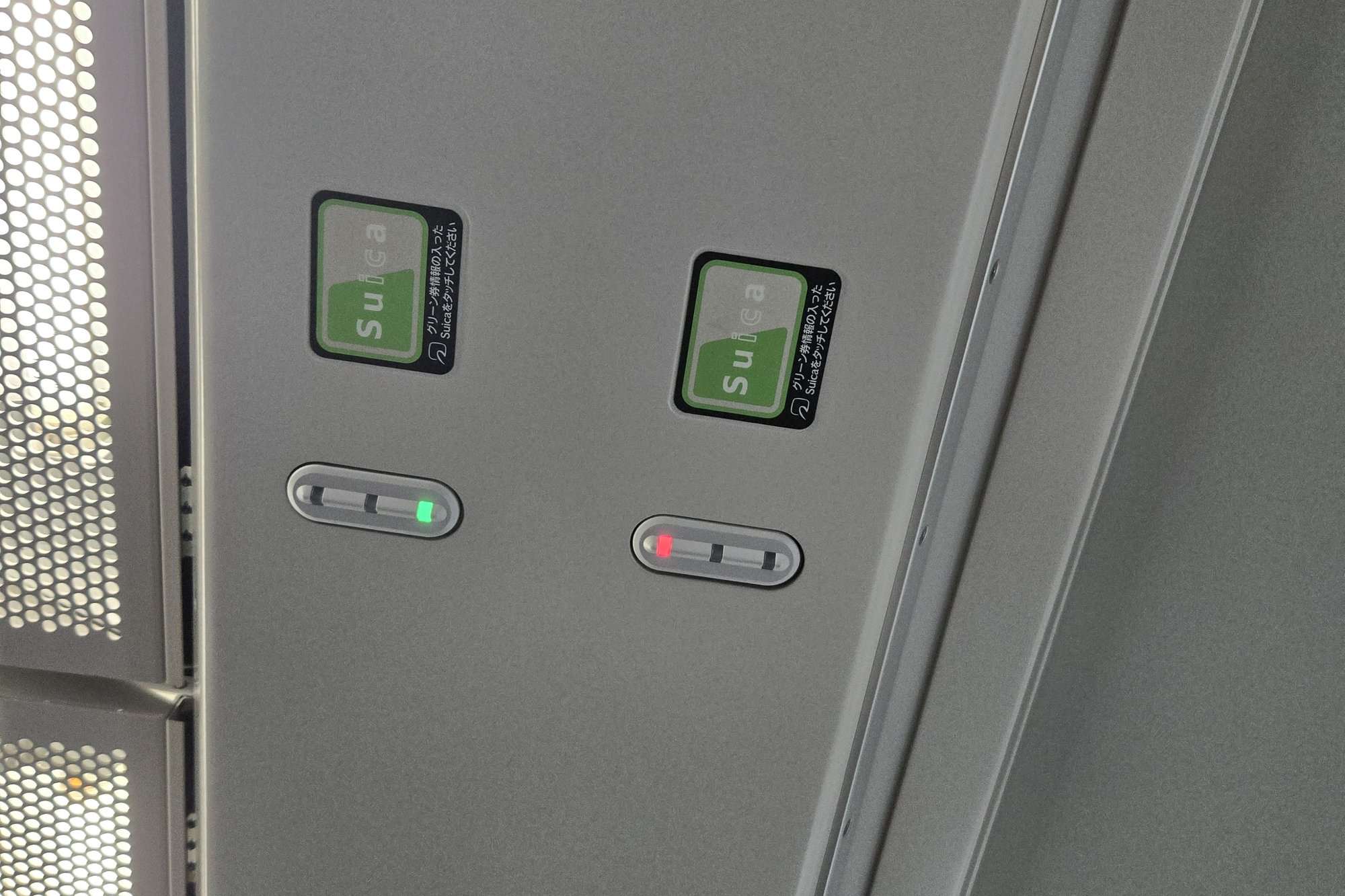
We didn’t know the Green ticket is meant to be loaded onto your Suica before boarding (buying one on the train costs more), so we got on with just our regular Suica. We chose to get off at the next station, buy the Green ticket at the Suica machine on the platform, and board the next train. We could also have bought one from the attendant on board, but at the higher regular price. If you use Mobile Suica, you can buy the Green ticket in the app instead. Once seated, you tap your Suica on the panel above the seat, and that’s it. For how the seat panel and its red and green lights work, see the Green Car section in our IC cards guide.
Kids in the Green Car
-
Up to two preschoolers ride free with each paying adult, and they don’t need a regular fare ticket either. When the Green Car attendant came through checking tickets, we told them where we were getting off, and they registered the kids’ seats for us
-
On our train, the Green Car attendant sold drinks and snacks, which surprised us: water, beer, and small snacks. Onboard sales only run on some services and sections, so don’t count on them
-
Strollers: from what we saw on board, a folded single stroller should be fine, but we don’t think a twin stroller would fit
We found open seats on our trip, and the extra width made it worth paying for with small kids. Unlike the S-Train and the liners below, though, a Green ticket doesn’t guarantee you a seat.
The Keio Liner: A Family Discount on Weekends
The Keio Liner is Keio Railway’s reserved-seat train, running between Shinjuku and Keio-Hachioji, Hashimoto, and Takaosanguchi, mostly in the mornings and evenings. Keio also runs the reserved-seat Mt. TAKAO trains toward Takaosanguchi, which we mention in our Mount Takao guide. We haven’t ridden either with our kids, so this section is based on Keio’s official information.
From October 1, 2026, a seat costs ¥500 on weekdays and ¥400 on weekends and holidays when bought online through the Keio ticketless service or app, or ¥600 and ¥500 at station ticket machines. Boarding without a seat ticket now costs ¥1,000 per person on the train.
For families: on weekends and holidays, every Keio Liner and Mt. TAKAO train sells a “together with kids” ticket: 2 seats for ¥500, for one adult and one child of elementary school age or younger. You can combine sets for larger families. It’s sold online only, and those passengers sit together in a dedicated car (car 10 on trains leaving Shinjuku, car 1 on trains heading into Shinjuku). Keio also notes that a child using a seat needs a seat ticket, even under age 1.
The TJ Liner: Evenings Out of Ikebukuro
The TJ Liner is Tobu Railway’s reserved-seat train on the Tobu Tojo Line, mainly useful for families heading out toward Kawagoe. It leaves Ikebukuro every 30 minutes in the evening, from 17:00 until late on weekdays and until 22:00 on weekends and holidays, with a few trains into Ikebukuro in the morning. Seats from Ikebukuro cost ¥360 for adults and ¥180 for children, bought on Tobu’s online ticket service (which also works without an account) or at ticket machines. We haven’t ridden it ourselves.
Best Options Compared
| S-Train | JR Green Car | Keio Liner | TJ Liner | |
|---|---|---|---|---|
| Main family use | Weekend trips to Yokohama from Shinjuku-sanchome or Shibuya | Chuo, Tokaido and other JR commuter lines | Shinjuku to west Tokyo and Takao | Ikebukuro toward Kawagoe in the evening |
| When it runs | Weekends and holidays (separate weekday service on another line) | All day | Mostly mornings and evenings | Evenings, plus some mornings into Ikebukuro |
| Extra cost | From ¥350 (Shibuya to Minatomirai) | ¥750 up to 50km on Suica | ¥400 weekends / ¥500 weekdays online | ¥360 adult / ¥180 child |
| Reserved seat? | Yes | No, any free seat in the Green Car | Yes | Yes |
| Preschoolers | Free unless using their own seat | Up to 2 free per adult | Seat ticket needed if using a seat | Check when booking |
| Best for kids | Window seats, toilet in car 4 | Upper deck, wider seats | 2 seats for ¥500 on weekends | Easy evening ride out of Ikebukuro |
| We’ve used it | Yes | Yes | No | No |
Common Mistakes Families Make
1. Boarding the Green Car without a Green ticket
The cheapest way is to load the Green ticket onto your Suica before you board, at the platform machine or in the Mobile Suica app. Buying it on the train costs more; we chose to get off at the next station and buy it there instead.
2. Leaving reserved-seat tickets until the last minute
Smooz guest purchases close 10 minutes before departure. On the S-Train, the Green Car, and the Keio Liner, buying on board costs more than booking ahead, and Keio’s ticket machines charge more than its online service. Weekend morning trains can sell out, so book early if you want seats with a view of the driver’s cab.
3. Assuming preschoolers are always free
They usually ride free on the regular fare, but a child taking their own reserved seat on the S-Train or Keio Liner needs a seat ticket. Decide in advance whether your preschooler will sit on your lap or in their own seat, and book accordingly.
4. Not checking where the door opens
On the S-Train, only one door per car opens for boarding. Find your car’s door on the platform before the train pulls in.
FAQ
Can preschoolers ride reserved-seat trains for free?
On the regular fare, yes: preschoolers normally ride free with a fare-paying adult. But on the S-Train and Keio Liner, a child who uses their own reserved seat needs a seat ticket, and on the S-Train a child fare ticket as well. In the JR Green Car, up to two preschoolers ride free with each paying adult.
How do I book the S-Train?
Online through Seibu’s Smooz site, which we used without creating an account, or at station ticket machines and windows. Without an account, the purchase has to be completed at least 10 minutes before departure. Boarding without a seat ticket costs ¥200 more.
Do I need a reservation for the JR Green Car?
No. The commuter Green Cars are unreserved: buy the Green ticket on your Suica before boarding, take any free seat, and tap your Suica on the panel above the seat. Buying on the train costs more.
Is there a family discount on Tokyo’s reserved-seat trains?
Keio’s “together with kids” ticket gives 2 seats for ¥500 to one adult and one child of elementary school age or younger, on all Keio Liner and Mt. TAKAO trains on weekends and holidays. It’s sold online only.
Can I bring a stroller on a reserved-seat train?
On our S-Train there was plenty of room for a stroller, and the car is all on one level. From what we saw in the JR Green Car, a folded single stroller should be fine, but we don’t think a twin stroller would fit. For more on strollers on Japanese trains, see our guide to getting around Japan with a stroller.
Is a reserved seat worth it for a short trip?
For a short hop of a few stops, we wouldn’t bother. For our weekend S-Train ride from central Tokyo to Yokohama, a few hundred yen for a reserved seat was worth it with two 4-year-olds. For general tips on Tokyo trains, see our guide to navigating Tokyo’s train system with kids.
Plan Your Japan Trip
Also useful:
Information checked: 2026/10