
At a Glance
| Entry | Free (outdoor areas, beach, Gundam statue) · ¥various for indoor attractions |
| Nearest stations | Odaiba Kaihin Koen / Daiba / Telecom Center (Yurikamome) · Tokyo Teleport (Rinkai Line) |
| Getting there | Yurikamome from Shimbashi (25 min) · Rinkai Line from Osaki (4 min) · Water bus from Hinode Pier or Asakusa |
| English support | Excellent. Odaiba is built for international visitors; English signage throughout and English-speaking staff at major attractions |
| Strollers | Yes. Flat, wide walkways throughout; elevators at all major stations and malls |
| Baby facilities | Available in all major shopping malls (Decks, Aqua City, DiverCity); best facilities at DiverCity |
| Typical visit | 2–3 hours (2 spots); half day (3–4 spots); full day if pairing with teamLab Planets in Toyosu |
Details above are per official attraction websites and Tokyo Cruise, checked 2026/06.
Is It Worth It?
Short answer: Yes, if you know what you’re going for.
Odaiba is one of Tokyo’s most photogenic family destinations, and the journey there, a ride on the Yurikamome monorail across Tokyo Bay, is a genuine highlight with children. But it’s a scattered collection of attractions spread across a large artificial island, not a compact neighborhood you can explore on foot.
The honest version: if you arrive without a plan expecting to wander and discover, you’ll spend a lot of time walking between venues wondering when the “real” Odaiba starts. But if you pick two or three specific things and build your day around them, it works very well, especially for younger children who’ll be captivated by the train ride, the beach view, and the life-size Unicorn Gundam.
The Yurikamome is part of the experience. This automated monorail runs over Tokyo Bay with floor-to-ceiling windows and views of Rainbow Bridge, the skyline, and the water below. Children love trains; the front seat of the Yurikamome takes it to another level. See Family Tips for how to secure it.
By age:
-
0–2 (baby/infant): The beach and outdoor areas are relaxed and stroller-friendly. Mall interiors are heavily air-conditioned, useful refuge in summer. The transit journey itself (water bus or Yurikamome) is engaging at any age.
-
3–6 (preschooler): The sweet spot for Odaiba. Yurikamome front seat, standing in front of the Unicorn Gundam, running on the sand: these are experiences young children respond to viscerally.
-
7–10 (primary school): Legoland Discovery Center, Miraikan (science museum), and Joypolis all land well. Old enough to appreciate what they’re seeing and choosing.
-
10+ (older kids): Joypolis for the rides; Miraikan for genuine science engagement; good for letting them lead the agenda.
What to Expect
The Layout
Odaiba is large and spread out. Unlike Asakusa or Ueno, you can’t cover it all on foot without significant walking between venues. The main clusters:
Northern cluster (Daiba and Odaiba Kaihin Koen stations):
-
Odaiba Seaside Park: free beach area, Rainbow Bridge views, Statue of Liberty replica
-
Aqua City Odaiba: shopping, food courts, and water views
-
DECKS Tokyo Beach: indoor mall with Legoland Discovery Center
Central (DiverCity area, between stations):
- DiverCity Tokyo Plaza: Unicorn Gundam statue outside; shops and food inside
Southern cluster (Telecom Center area):
-
Miraikan: National Museum of Emerging Science and Innovation
-
Tokyo Joypolis: indoor Sega amusement park
Realistically, choose two or three venues from one cluster and focus there. Trying to cross between the northern and southern ends of Odaiba on foot adds 20+ minutes of walking between stops.
Odaiba Seaside Park, the Free Anchor
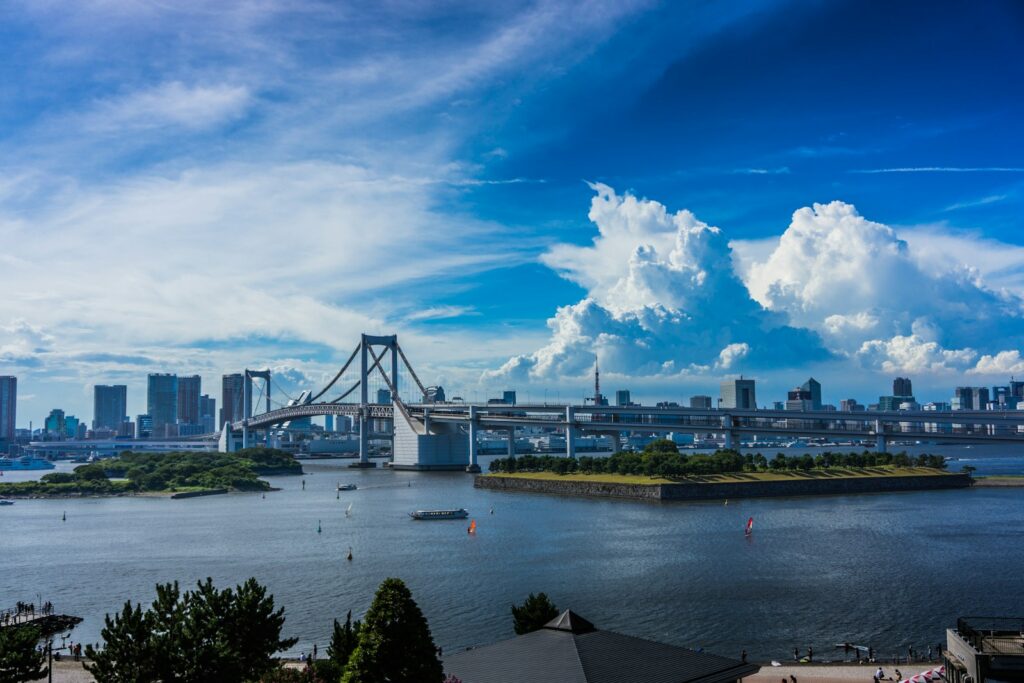
This free outdoor area is the natural starting point for families. A proper sandy beach, open lawn, and unobstructed views of Rainbow Bridge and the central Tokyo skyline across the water.
Younger children will want to stay here longer than you expect. The beach is calm bay water, not ocean, and there’s space to run. The small-scale Statue of Liberty replica is a reliable photo stop, and on clear mornings in winter or spring, Mt. Fuji is visible beyond Rainbow Bridge on the horizon.
The beach is suitable for paddling but not designated for swimming. Bring snacks; the nearest convenience store is a 5-minute walk inside Aqua City, per the Tokyo Port Authority’s own park information (checked 2026/06).
Unicorn Gundam, Free and Impressive
The RX-0 Unicorn Gundam statue outside DiverCity Tokyo Plaza stands nearly 20 metres tall. It transforms periodically: the head opens, parts extend, accompanied by music and lighting. The transformation schedule is posted at DiverCity’s entrance.
Viewing is free from the plaza, per DiverCity Tokyo’s own official site (checked 2026/06). Even children who have no idea what Gundam is respond to the scale.
Legoland Discovery Center Tokyo
Located in Decks Tokyo Beach (3F), this is a solid indoor option for children aged 3–10. Not a theme park in the Legoland resort sense; it’s a medium-sized indoor attraction with building zones, a 4D cinema, rides, and Lego-themed environments.
Best for a 1–2 hour visit. The free-building zones are the highlight for most children. Book tickets in advance to guarantee entry time slots and avoid queuing at the door, per Legoland Discovery Center Tokyo’s own booking guidance (checked 2026/06).
Miraikan
One of Tokyo’s best museums for curious children aged 6 and up. The National Museum of Emerging Science and Innovation covers robotics, space exploration, the internet, and Earth’s future through interactive exhibits designed to be touched and explored, not just viewed. Text-heavy panels have English translations; interactive zones need no language at all.
The Geo-Cosmos, a large floating LED globe in the main atrium, is immediately impressive for all ages. Live science demonstrations and robot shows run throughout the day; check the schedule at the entrance.
Entry: ¥630 adults / ¥210 children (6–17) / free under 6 (per Miraikan’s own official site, checked 2026/06). Allow at least 2 hours.
Family Tips
Securing the Front Seat on Yurikamome
Yurikamome is a fully automated monorail with no driver, meaning the front of the train has unobstructed floor-to-ceiling windows looking directly ahead over the track. As you cross Tokyo Bay, the views of Rainbow Bridge, the water, and the Tokyo skyline are spectacular.
Everyone wants the front seat. The practical approach: wait one train. If the front row is occupied when you arrive at the platform, let it go and take the next one. Trains run every few minutes, and the wait is rarely more than 5 minutes. With children who get excited about trains, the front seat is worth a short delay every time.
Board at Shimbashi (the line’s starting station) for the best chance, since you’re competing with fewer people than at mid-route boarding points.
Start Outdoors, Finish Indoors
Odaiba’s outdoor areas (beach, Gundam plaza) are best in the morning when energy is high and temperatures are manageable. Plan indoor venues (Legoland, Miraikan, mall food courts) for the afternoon when young children need shade and air conditioning.
In summer (July–August), the logic reverses: the beach is best before 10 AM, and Odaiba’s wide open plazas with minimal shade become genuinely unpleasant by mid-morning. On hot days, head straight indoors after the beach and don’t plan outdoor exploration between 11 AM and 3 PM.
Pairing with teamLab Planets (Toyosu)
teamLab Planets is in Toyosu, not Odaiba, but it’s on the Yurikamome line, just two stops from Daiba station (Shin-Toyosu station, then a short walk). This makes it a straightforward extension of an Odaiba day.
The most common combination: Odaiba in the morning (beach, Gundam), then Yurikamome to teamLab Planets in the afternoon. Book your teamLab Planets time slot in advance; it sells out.
See our full comparison: teamLab Planets vs Borderless: Which One for Families?
Food and Convenience
Multiple shopping malls mean food court options at every price point. Aqua City’s dining floor has good variety and Rainbow Bridge views; DiverCity’s food floor is practical and reliable; Decks has the most options if you’re there for Legoland.
Odaiba-specific reality: dining is concentrated inside the malls. There are almost no independent street-level restaurants. Plan your meals around mall food courts rather than expecting to stumble onto a neighborhood ramen shop.
Convenience stores: 7-Eleven inside Aqua City, FamilyMart inside Decks. Useful for breakfast before attractions open or for picnic supplies for the beach.
Rainy Day
Odaiba works well in rain: the main indoor attractions (Legoland, Miraikan, Joypolis) are unaffected, and the major malls are connected to Yurikamome stations by covered walkways.
The beach and Gundam plaza are the parts that suffer. Everything else continues.
Getting There
Yurikamome (Recommended with Kids)
The scenic option and the one children enjoy most. Use Suica or PASMO to tap in and tap out, with no tickets to buy and no language barrier at the machines. See our guide to navigating Tokyo’s train network: Navigating Tokyo’s Train System with Kids.
| From | Route | Journey time | Approx. IC fare |
|---|---|---|---|
| Shimbashi (JR / Tokyo Metro) | Yurikamome direct → Odaiba Kaihin Koen or Daiba | 25–30 min | ¥420 |
| Toyosu (Yurakucho Line / Yurikamome) | Yurikamome → Daiba | 15 min | ¥290 |
Station exits by destination:
-
Odaiba Kaihin Koen station: beach, Aqua City, Decks
-
Daiba station: DiverCity (Gundam), Fuji TV building
-
Telecom Center station: Miraikan
Rinkai Line (Faster, Less Scenic)
The faster but less interesting option. Good if you’re connecting from Shibuya or Shinjuku, or if you’ve already done the Yurikamome journey and want a different return route.
| From | Route | Journey time | Approx. IC fare |
|---|---|---|---|
| Osaki (JR Yamanote Line) | Rinkai Line → Tokyo Teleport | 4 min | ¥200 |
| Shinjuku (JR) | JR to Osaki + Rinkai Line | ~25 min | ¥380 |
| Shibuya (JR) | JR to Osaki + Rinkai Line | ~20 min | ¥350 |
Tokyo Teleport station connects by covered walkway to Decks and Aqua City.
Water Bus (Tokyo Cruise)
The water bus makes Odaiba’s arrival into an experience, and is genuinely one of the best ways to approach the island if you’re starting from central or eastern Tokyo.
| From | Route | Journey time | Approx. fare per adult |
|---|---|---|---|
| Hinode Pier (near Hamamatsucho JR) | Tokyo Cruise → Odaiba Seaside Park Pier | ~20 min | ¥520 |
| Asakusa | Tokyo Cruise → Odaiba Seaside Park | ~50 min | ¥1,560 |
Children under 6 travel free; ages 6–11 at half fare.
A common approach: arrive at Odaiba by water bus from Hinode (the views of Tokyo Bay and Rainbow Bridge from the water are excellent), explore Odaiba, return by Yurikamome. You get both transit experiences in one day.
Hinode Pier is a 5-minute walk from Hamamatsucho station on the JR Yamanote Line. Fares and schedules above are per Tokyo Cruise’s own official site (checked 2026/06).
Nearby and How to Combine
teamLab Planets, Toyosu (2 stops by Yurikamome)
The most natural Odaiba extension. Board at Daiba or Odaiba Kaihin Koen, get off at Shin-Toyosu, walk 5 minutes. Plan Odaiba in the morning and teamLab Planets in the afternoon, with your entry time slot booked in advance online.
teamLab Planets vs Borderless: Which One for Families?
Toyosu Senkyaku Banrai, One More Stop (Shijo-mae station)
One stop further on the Yurikamome from teamLab Planets (Shin-Toyosu → Shijo-mae) sits Toyosu Senkyaku Banrai, a food and entertainment complex that opened in January 2024 alongside Toyosu Market. The design recreates an Edo-period entertainment district, lanterns, wooden facades, open-air stalls, with a lineup of seafood restaurants, sushi counters, and casual food stalls drawing from the adjacent market.
For families, the outdoor food stall area works well: you can walk around, point at things, and let children try small portions without committing to a sit-down meal. The visual atmosphere is a genuine contrast to the glass-and-neon feel of Odaiba, a good way to end a long day on something distinctly Japanese.
The three-stop Yurikamome day: Odaiba (morning) → teamLab Planets at Shin-Toyosu (afternoon, pre-booked) → Senkyaku Banrai for dinner. All connected on the same line with no transfers. (Per Toyosu Senkyaku Banrai’s own official site, checked 2026/06.)
Asakusa via Water Bus
If you’re spending time in Asakusa earlier in the day or on the same trip, the Tokyo Cruise water bus connects both areas. Coming from Asakusa to Odaiba by boat turns a 50-minute transit leg into one of the day’s highlights, with kids sitting on the open deck watching the city slide by from the water.
The reverse also works: end an Odaiba day by catching the water bus back to Hinode Pier, then a short JR ride to anywhere on the Yamanote Line.
Full Asakusa guide: Asakusa with Kids: The Honest Family Guide
Information checked: 2026/09