

TL;DR
-
Teishoku (set meal) restaurants are the easiest sit-down option for families, with real tables, a familiar rice-plus-sides format, and a typical price of ¥1,000–1,500 per person
-
Many ramen shops are built around counter seating, which works fine for kids old enough to sit at a bar-height stool but can be a squeeze with a stroller or a toddler who needs a proper chair; table seating exists too, it just varies by shop
-
Ichiran, famous for its partitioned solo-dining booths, is actually more family-friendly than the booths suggest: many locations let you fold the partition down to sit with your child, offer table seating for groups, and give a free kids’ ramen to children up to 6th grade (register in Ichiran’s official app beforehand and show the in-app voucher; it’s not something you can just ask staff for on the spot), though high chairs are limited to one or two per shop, so budget extra time
-
Ramen ordering often starts at a ticket machine near the entrance (cash more common than at fast chains, though this is shifting), and the broth style you choose (shoyu, miso, tonkotsu) affects richness more than spice, which is usually a separate topping
-
High chairs are inconsistent at both ramen and teishoku restaurants, so it’s worth a quick glance in the window or asking “kodomo isu arimasu ka?” (do you have a kids’ chair?) before committing to a small shop
-
Soba and udon sit-down restaurants (as opposed to the fast-service chains) offer table seating and a slower pace, often in a converted traditional building with tatami seating options
-
This guide covers the “actually sit down and wait for food” tier. For grab-and-go speed instead, see our Quick Lunches guide
Why “Sitting Down” Is a Different Category From Quick Lunches
Our Quick Lunches guide covers gyudon and udon fast chains: counter service, food in minutes, out the door. This guide covers the other half of a Tokyo lunch: restaurants where you sit, wait a bit longer for food cooked to order, and get a meal with more variety and often more comfortable seating for a family that wants to slow down.
Ramen shops and teishoku-ya (set meal restaurants) are Tokyo’s two big categories here, and they behave differently with kids in ways worth knowing before you commit to a small shop with your family in tow.
Best Options Compared
| Ramen shops | Teishoku-ya (set meals) | Sit-down soba/udon | |
|---|---|---|---|
| Typical cost | ¥800–1,200 per bowl | ¥1,000–1,500 per person (¥1,500–2,000 at chain family restaurants) | ¥900–1,400 per bowl |
| Seating | Often counter-style; table seating varies by shop | Table seating standard | Table seating standard; some have a tatami floor-seating room |
| Ordering | Ticket machine near the entrance at many shops, cash more common | Menu at the table, usually photo-illustrated | Menu at the table, usually photo-illustrated |
| Spice level | Varies by broth; ask before ordering for a young kid | Mild by default | Mild by default |
| Best for | Kids old enough for counter seating, or a shop you’ve checked has tables | Toddlers and families wanting a balanced, familiar format | A calmer pace, or when tatami seating is a fun novelty rather than a hassle |
Ramen Shops: What to Expect
Ordering
Many standalone ramen shops use a ticket vending machine near the entrance, a machine with buttons or a touchscreen (often showing photos of each dish) where you pay before you’re seated: choose your ramen and any toppings, pay, take the printed ticket, and hand it to staff once you sit down. Payment methods and screen layouts vary. Look for an English button or photos, and ask staff before inserting money if the machine is unclear.
Some smaller, older shops skip the machine and take your order directly at the counter instead. If you don’t see a machine near the door, this is the format you’re in.
Seating Varies More Than the Food Does
This is the part that catches families off guard: a lot of ramen shops are built around a counter facing the kitchen, with stool-height seating and little to no floor space for a stroller. It’s not universal, but it’s common enough that it’s worth checking before you commit to a small shop with a family in tow. A glance through the window for tables (not just a counter) saves a walk back out with hungry kids.
Ichiran deserves a specific mention, because its format is widely misunderstood. The chain is famous for individual partitioned booths, which Ichiran’s own English-language materials call Flavor Concentration Booths, designed for solo, distraction-free dining, but many locations let you fold the partition down between adjacent seats so parents and kids can sit side by side and see each other, and some branches (Asakusa is a well-known example) have dedicated table seating for groups and families instead of booths at all. Ichiran also offers a free kids’ ramen bowl for children up to 6th grade, but it’s app-only: register in the official Ichiran app in advance, select the kids’ ramen voucher, and show it to staff when you order; each adult who orders a regular ramen covers up to 5 children. It’s not something you can request on the spot without the app, so set it up before you’re standing at the counter with hungry kids. It’s also worth checking a specific branch’s layout (some older locations keep the classic fixed-partition booths) rather than assuming it’s automatically a poor fit for families.
One real constraint to plan around: most Ichiran locations only have one or two proper high chairs, and the shop’s famous queues mean a wait is common at busy times, so if you’re visiting with a baby or toddler who needs a high chair, build in extra time and don’t assume one will be free the moment you’re seated.
Ichiran was actually the first ramen shop our own twins ever ate at, and it’s stayed a favorite; the official kids’ ramen program is real and worth setting up in the app before you go, not an afterthought.
Hidakaya: The Everyday Chain We Actually Use
Ichiran is the special-occasion, worth-planning-for choice. For a regular weekday lunch, our kids’ more frequent stop is Hidakaya, a budget ramen-and-Chinese chain with locations all over Tokyo. It doesn’t get the same attention in English-language guides, but it’s genuinely useful with kids: ramen, gyoza, and fried rice (chahan) cover most of what our twins will actually eat, it’s noticeably cheaper than a specialist ramen shop, and it’s common enough to find one within walking distance of wherever you are. Some locations provide kids’ tableware, and the ones with box seating (a booth with a table, rather than counter stools) make it much easier to keep two small kids contained through a meal.
Choosing a Broth for Kids
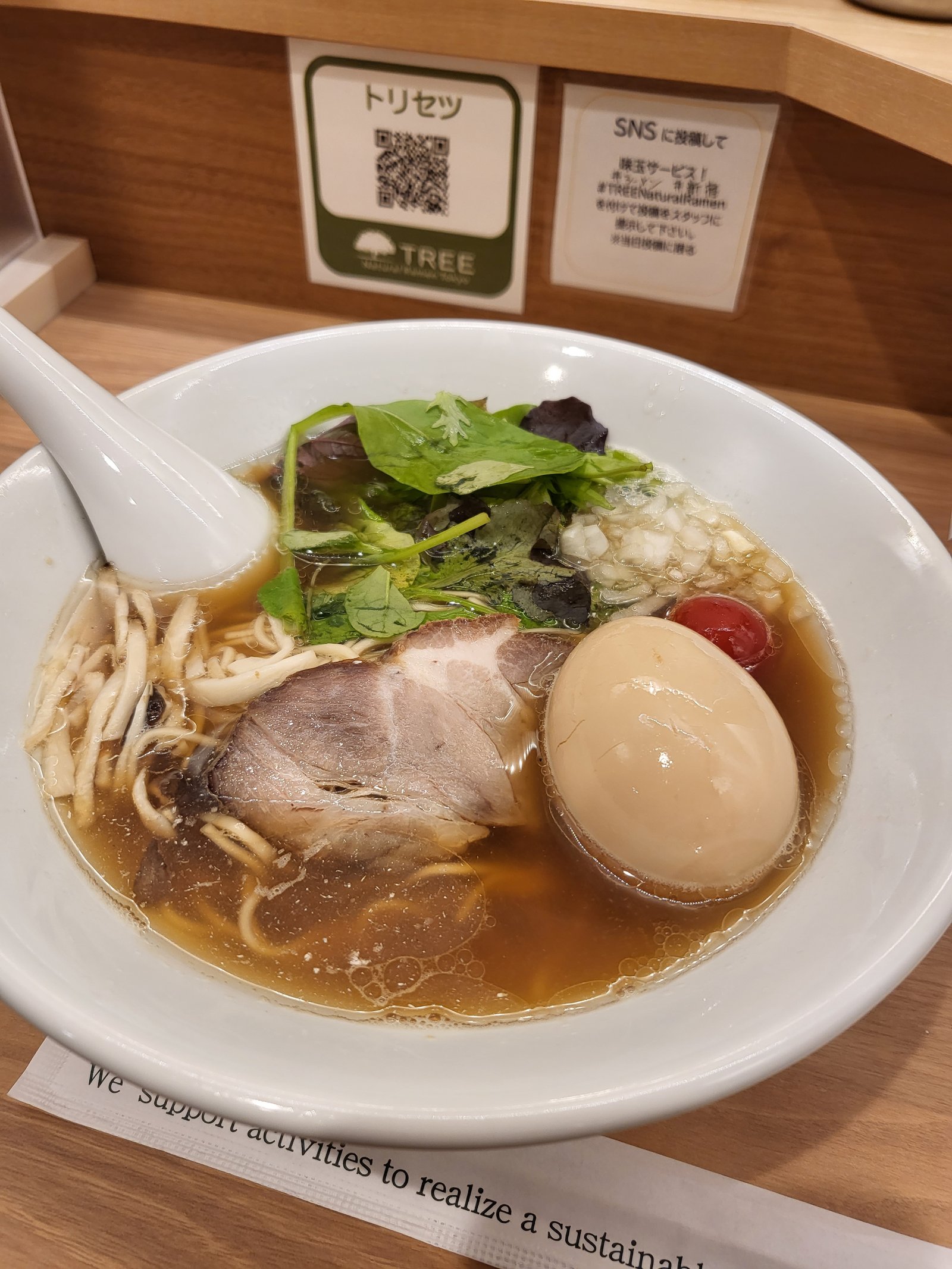
Ramen broth style is a better guide to flavor intensity and richness than to spice. Plain spiciness is usually an add-on topping, not baked into the broth, though this varies by shop:
-
Shoyu (soy sauce) ramen: generally the lightest, clearest broth, and often an easy starting point for a kid trying ramen for the first time
-
Miso ramen: richer and heartier, and not typically spicy on its own
-
Tonkotsu (pork bone) ramen: thick, rich, and creamy; some kids love the mild savoriness, others find it heavy
-
Tantanmen and spicy miso variants: worth double-checking on a menu, since chili oil or spicy miso is often mixed into the broth itself in these dishes rather than added separately
When in doubt, asking staff whether a dish is spicy (from a photo or by pointing) is worth the extra ten seconds, and asking to hold any spicy topping (“karai nashi de,” meaning “no spice, please”) is usually understood even without more Japanese.
Teishoku-ya: The Easiest Sit-Down Option
Teishoku, a set meal built around a main dish, rice, miso soup, and a couple of small side dishes, is arguably the most family-friendly sit-down format in Tokyo, and it’s worth actively seeking out over ramen if you have a toddler in the group.
Why it works well for families:
-
Table seating is far more common at teishoku-ya than at ramen counters, generally easier with a stroller or a child who needs a proper chair
-
The format is naturally balanced and mild: rice, soup, a protein (grilled fish, fried pork cutlet, chicken), and pickled or simmered vegetables on the side, which tends to give a picky eater at least one thing on the tray they’ll touch
-
Menus are frequently photo-illustrated, even at small local spots, making ordering straightforward without shared language
-
Price is reasonable: a teishoku set typically runs ¥1,000–1,500 per person at a dedicated teishoku restaurant, a bit more (¥1,500–2,000) at a family-restaurant chain version of the same concept, though it varies by shop
A practical tip: teishoku-ya are extremely common near office districts, since they’re the default lunch spot for Japanese office workers, which means the same 12:00–13:00 crowding pattern as gyudon and udon chains applies here too. An earlier or later lunch avoids the wait.
Soba and Udon: The Sit-Down Version
Separate from the fast-service udon chains covered in our Quick Lunches guide, Tokyo also has traditional sit-down soba-ya (soba noodle restaurants), often in older buildings, sometimes with a tatami-seating room in addition to regular tables.
These are a slower, quieter alternative to a bustling ramen counter, good for a family that wants a calmer setting, and the noodles themselves (soba in a light dashi broth, hot or cold) are mild and easy for kids. Tatami seating (sitting on the floor at a low table) is a fun novelty for some kids and a genuine hassle with a toddler who can’t yet sit still cross-legged, so ask for regular table seating (“tēburu-seki”) instead if you’d rather not manage that with young children.
Finding a Kid-Friendly Sit-Down Spot
A few quick signals to check before committing to a small restaurant with kids in tow:
-
Look for tables, not just a counter, visible through the window or door
-
Check if other families are already eating there, a genuinely useful, low-effort signal that the format works with kids
-
A photo menu posted outside suggests a shop used to walk-in tourists and less likely to be a tightly-packed specialist counter
-
It’s fine to ask “kodomo isu arimasu ka?” (do you have a kids’ chair?) at the door; most staff will either bring one out or point you to a booth table instead
Common Mistakes Families Make
1. Assuming a partitioned-booth ramen shop won’t work for a family
Chains like Ichiran look built for solo dining, but many locations let you fold the booth partitions down or offer dedicated table seating for groups, so it’s worth checking the specific branch rather than skipping the chain altogether, especially since some offer a free kids’ bowl.
2. Assuming any ramen shop has room for a stroller
Many are narrow, counter-only spaces with no floor space to spare. Fold the stroller and check for a spot to store it, or choose a teishoku-ya or a shop with visible table seating instead.
3. Not checking the broth before ordering for a young kid
Tantanmen and spicy miso ramen genuinely have heat cooked into the broth, unlike the mild-by-default gyudon and udon covered in our Quick Lunches guide. Shoyu or plain miso is the safer default order for a first-time kid diner.
4. Overlooking teishoku-ya as an option
Families often default straight to ramen because it’s the more internationally famous dish, but a teishoku set is frequently the easier, calmer, more balanced choice with real table seating, worth considering first rather than as a fallback.
5. Forcing tatami seating with a toddler who can’t sit still
Floor seating at a traditional soba-ya is a fun novelty for some families and a real struggle for others. It’s completely normal to ask for a table instead.
FAQ
Is ramen too spicy for kids?
Not by default. Shoyu and miso ramen are mild, with spice generally added as a topping (chili oil, spicy miso) rather than built into the broth. The exceptions to watch for are tantanmen and dishes explicitly labeled spicy miso, where heat is mixed into the broth itself.
Do ramen shops have high chairs?
Inconsistently. Smaller counter-focused shops often don’t, while larger or newer locations with table seating are more likely to. It’s worth a quick look through the window, or asking “kodomo isu arimasu ka?” before sitting down.
What is Ichiran, and is it good for families?
Ichiran is a well-known tonkotsu ramen chain famous for individual partitioned booths designed for solo, distraction-free dining, but it’s more family-friendly than that reputation suggests. Many locations let you fold the partitions down to sit with your child, some branches have dedicated table seating for groups, and Ichiran offers a free kids’ ramen for children up to 6th grade, but only through its official app, where you register and show an in-app voucher to staff (you can’t just ask for it at the counter). The one thing to plan around: most locations only have one or two high chairs and can have a queue, so budget extra time with a young child.
How much does a sit-down lunch cost per person?
A ramen bowl typically runs ¥800–1,200 as of 2026; a teishoku set meal runs ¥1,000–1,500 at a dedicated teishoku-ya, or ¥1,500–2,000 at a family-restaurant chain version. A family of four eating this way should budget roughly ¥4,000–6,000 for lunch.
Do I need to speak Japanese to order?
No. Ramen ticket machines and teishoku-ya menus are frequently illustrated with photos, and pointing works fine at most shops. A handful of useful words (kodomo isu for a kids’ chair, karai for spicy) help, but aren’t required.
Can I pay by card?
Increasingly yes, but less reliably than at fast chains. Many smaller ramen and teishoku shops, especially older or family-run ones, are still cash-only or cash-preferred. Carrying cash is the safer default for this category of restaurant specifically.
What time should we go to avoid crowds?
Both ramen shops and teishoku-ya near business districts fill up with office workers roughly 12:00–13:00 on weekdays, same as fast chains. An earlier (11:30) or later (13:30+) lunch usually means walking straight to a seat.
Plan Your Next Meal
Also useful:
-
Quick Lunches in Tokyo with Kids: Gyudon, Udon & Food Courts
-
Japan’s Convenience Store Food with Kids: 7-Eleven vs FamilyMart vs Lawson
-
How Much Does Tokyo Cost for a Family? (2026 Honest Budget Guide)
Information checked: 2026/09