

TL;DR
-
Some Tokyo cafes really are built around a quiet, adult-paced atmosphere; this is a real, practical pattern, not a myth. A small specialty-coffee shop or single-owner cafe often has narrow aisles, counter-only seating, and a room designed for solo regulars, not because it’s unfriendly, but because that’s genuinely what the space and clientele are set up for
-
Komeda Coffee is the reliable, Japan-wide choice for a family that wants to actually linger. Its booths use deep, fixed-height sofas and table partitions specifically designed to give each table a sense of private space, and its kids’ plate, called the Daisuki Plate (literally ‘Favorites Plate’) on the menu, commonly runs roughly ¥600–680 for a sandwich, mini fried chicken, potato salad, jelly, and a drink, though the exact menu and price can vary by store. Our own family has taken a 3-year-old there and simply ordered a regular kids’ juice rather than the full plate, which worked fine
-
Starbucks in Japan has a real Kids Beverages line, but it’s narrower than US norms suggest, and our own family found it was a short-lived novelty rather than a repeat order. Kids Milk and Kids Cocoa run from ¥220, a juice box (be juicy! kids) from ¥260, all for kids 12 and under. We ordered a Kids Milk once, but once our kids were old enough to drink juice, juice won out every time, and we never went back to it
-
Tully’s kids’ juice (¥370) comes with a toy and a paper apron, and that’s actually the more useful feature for a parent than the drink itself. Playing with the toy buys a few minutes where the adults at the table can actually finish a conversation, which is a genuinely practical reason to pick Tully’s over a plain juice box elsewhere
-
Hoshino Coffee offers a similar level of comfort to Komeda, but its kids’ menu isn’t listed on the official site and varies by store, worth confirming with the specific location rather than assuming
-
Family restaurants that double as cafes are a legitimate, often-overlooked option. Gusto’s kids’ plates run roughly ¥550–600, and a standalone kids’ drink bar is ¥130 (free age 3 and under); coloring sheets are commonly provided too. Parent-blog visit reports (not an official chain-wide policy) describe some Jonathan’s locations stocking baby-ready high chairs and warming store-bought baby food on request, worth confirming with the specific branch
-
Department store cafes are a strong choice for a longer stop with a baby. Isetan Shinjuku’s 6th floor is a dedicated baby/kids floor with its own cafe, and Takashimaya Shinjuku’s official kids’-guide lists dedicated children’s menus at 19 of its in-house restaurants, priced ¥300–1,980
-
Character cafes are worth treating as a special-occasion outing, not a default stop. Most require an advance reservation and a minimum one-item-per-person order, and run pricier than a normal cafe visit
This Isn’t About “Kids Aren’t Welcome,” It’s About Reading the Room Correctly
A lot of English-language advice about cafes in Japan frames this as a surprise: visiting parents supposedly discover, mid-visit, that a cafe doesn’t want their kids there. That framing overstates the mystery and understates the practical reality. A small specialty-coffee shop and a Komeda Coffee are different businesses serving different needs, the way a wine bar and a diner are different businesses in most countries, and Japanese cafe owners themselves describe the split in exactly those practical terms. The useful skill isn’t outrage, it’s being able to tell which kind of place you’re looking at before you sit down.
This article covers both halves of that: why some cafes genuinely aren’t the right fit for young kids, how to spot that before you commit to a table, and, the more useful part, where families with young kids actually go instead, and why, including a couple of chains our own family has actually used.
If you’re specifically interested in the old-school kissaten breakfast ritual (thick toast, siphon coffee, and the smoking-law details that come with some of the oldest shops), that’s covered separately in our Tokyo Kissaten Morning guide; this article is about the broader, everyday cafe landscape.
Best Options: Which Cafe Type Fits Your Situation
| Your situation | Best fit | Why |
|---|---|---|
| Toddler + you need to linger over lunch or a long break | Komeda Coffee (kids’ plate confirmed chain-wide) or Hoshino Coffee (check the specific branch) | Booth seating and a pace built for staying a while, not turning tables quickly |
| Baby who needs a nursing room, bottle-warming, or a real changing table | A department store cafe (e.g., Isetan Shinjuku’s 6th-floor kids floor) | Dedicated baby facilities on-site that a standalone cafe usually doesn’t have |
| Quick coffee stop with an older kid who wants a treat | Starbucks or Tully’s (order a kids’ juice or milk alongside your own drink) | Fast, everywhere, and has an actual kids’ drink; Tully’s paper toy is worth knowing about if you want a few extra minutes at the table |
| Whole family wants a real meal, not just coffee and cake | A family restaurant like Gusto or Jonathan’s | Full kids’ menu, free drink bar, tablet ordering that doesn’t need a server’s attention, and high chairs stocked as standard |
| Special occasion, a birthday, a rainy-day treat, a “big trip splurge” | A character cafe (reserve ahead) | Genuinely fun for kids, but priced and paced as an event, not a quick stop |
| You want real specialty coffee and the kids are with someone else, or napping in a carrier | A small independent specialty-coffee shop | This is exactly the kind of quiet, counter-seating room worth saving for when you don’t need it to be kid-flexible |
If your situation doesn’t fit neatly into one row, most trips don’t, the honest default for “we have young kids and want an easy stop” is a nationwide chain (Komeda, Hoshino, Starbucks, Tully’s, or a family restaurant) over an independent specialty shop. You lose some local character, but you gain a design that’s already been built around exactly this situation.
Why Some Tokyo Cafes Really Aren’t Built for Kids
This isn’t a matter of hidden hostility, it’s usually a straightforward space and clientele decision that a shop makes for practical reasons, and it’s worth understanding rather than treating as a gotcha.
A small, counter-heavy specialty-coffee shop optimized for solo regulars and quiet conversation is a different kind of business from a family chain with booth seating. In a narrow independent cafe, staff may ask you to fold a stroller simply because the aisle has to remain clear. Check the room before committing rather than treating either format as the default.
How to Tell Before You Walk In
A few concrete, checkable signals, most visible from the sidewalk or in a quick search before you commit:
-
Seating type. Counter-only or narrow bar seating (common at small specialty-coffee shops) signals a room built for solo or paired quiet visits. Booth or table seating with visible space between tables signals a room built for groups, including families.
-
Signage about strollers. A posted note asking guests to fold strollers on entry is a space constraint, not a rejection; it usually means the aisles are genuinely too narrow, and it’s worth taking at face value rather than as a broader signal about the shop’s attitude toward kids.
-
What’s on the table already. If every visible table has a laptop, a single cup, and nobody talking, that’s a working or solo crowd, not illegal to bring kids, but worth being realistic about how a toddler’s noise will land in that room.
-
The absence of a kids’ chair anywhere in sight. Not every family-friendly cafe has one, but a shop with visible high chairs stacked near the entrance is telling you something useful about who they expect.
-
Chain vs. independent. As a rough (not absolute) rule, nationwide chains built for volume, Komeda, Hoshino, Starbucks, Tully’s, family restaurants, have already made the design decisions in this section in the family-friendly direction. A one-off, owner-run shop hasn’t necessarily made either choice, and you won’t know which until you look inside.
None of this is a strict rulebook, and plenty of independent cafes are genuinely relaxed about kids; the point is that these are checkable in a few seconds, rather than something you only find out once you’re already seated.
Komeda Coffee: The Reliable All-Day Option
Komeda Coffee is a nationwide chain, genuinely everywhere, not just a Tokyo thing, and a common choice among Japanese families for staying a while with kids rather than grabbing something quick. The company’s own description of its interior design explains why: booth seating with deep, comfortable-tone sofas, thick and firmly fixed tables sized for real use (not just a coffee cup and a phone), and partitions set at a height meant to give each table a sense of private space, explicitly built around the idea of a “neighborhood living room,” not a fast-turnover coffee counter.
For families specifically, Komeda’s kids’ plate, the Daisuki Plate (‘Favorites Plate’), is a genuine meal, not a token snack: two types of small sandwiches, mini boneless fried chicken (or sausage), potato salad, fries, jelly, and a kids’ drink, commonly priced roughly ¥600–680, available for kids of elementary-school age and under. Our own experience visiting with a 3-year-old was simpler than that: we skipped the plate entirely and just ordered a regular kids’ juice, which was easy and didn’t require any explanation to staff. As with the rest of Komeda’s menu, exact pricing and availability of the full plate can vary by store, so the chain’s own menu-search tool will flag it if a specific location doesn’t carry it.
Booster seats and diaper-changing facilities also vary by store; Komeda’s own store-locator page lets you filter for specific amenities before you go, which is worth doing if either matters for your visit. If you’re specifically after the classic Nagoya-style “morning set” ritual (free toast and egg with a drink before roughly 11am), that’s covered separately in our Tokyo Kissaten Morning guide; this section is about Komeda as an any-time, all-day option rather than the morning-only custom.
Hoshino Coffee: Similar Comfort, Confirm the Kids’ Menu Locally
Hoshino Coffee runs on a similar model to Komeda, with table seating and an unhurried atmosphere at many branches. Kids’ menus, high chairs, and stroller space are not presented as consistent chain-wide guarantees, so confirm with the specific location if any of them is essential to your plan.
Starbucks and Tully’s: What Actually Works for Kids
Starbucks: real, but narrower than the US version
Starbucks in Japan does have a real, standing kids’ menu; it’s just narrower than what US visitors sometimes expect, and it’s worth checking the actual current lineup rather than assuming American Starbucks norms (a free “puppuccino”-style extra, for instance) apply here.
The official Kids Beverages line covers three drinks, all restricted to kids 12 and under: Kids Milk and Kids Cocoa, both from ¥220 (tax included), and be juicy! kids, a 100%-juice drink from ¥260. The hot versions of Kids Milk and Kids Cocoa are deliberately made at a cooler, child-safe temperature rather than the standard drink temperature.
Our own family ordered a Kids Milk once, and it turned out to be a one-time thing rather than a repeat order: once our kids were old enough to ask for juice, juice won out every time, and Kids Milk never came up again. If your kids are still at the age where a mild, milk-based drink appeals, it’s worth trying, but don’t expect it to become the default once they have a preference of their own.
One thing worth knowing so you don’t plan around something that isn’t actually there: the novelty Kids Frappuccino line is tied to Starbucks Japan’s “Family Friendly Store” format, a distinct store concept, not the standard layout, that launched at a single Saitama location (Koshigaya Lake Town) in September 2024 and has since expanded to a limited number of stores nationwide as of 2026, including locations in Osaka and Tokyo’s Tachikawa area. The flavor lineup has also changed since launch: current official flavors are Kids Milk Cream, Kids Chocolate, and Kids Strawberry Frappuccino. Don’t expect it at a random Starbucks in Tokyo; it’s specific to the small number of Family Friendly Store locations, and the standard Kids Beverages line is what’s realistically available almost everywhere else.
Tully’s: the paper toy is the actual feature
Tully’s Kids Apple Juice (¥370) comes with a toy and a paper apron, and in our own experience that toy matters more than the drink itself: it gives a young kid something to fiddle with at the table, which buys the adults a few extra minutes to actually finish a sentence. It’s a small, easy-to-overlook reason to pick Tully’s over a plain juice box at another chain when the goal is less about the drink and more about a few minutes of peace.
Family Restaurants That Double as Cafes
If the goal is an actual meal rather than just coffee and a snack, Japan’s family restaurant chains are a legitimate, often-overlooked option that functions like a cafe for a coffee-and-cake stop just as well as a full lunch; most stay open long hours, take walk-ins, and don’t require the ritual or budget of a sit-down restaurant.
Gusto, part of the Skylark group, is a well-equipped family option: kids’ plates (hamburger-and-curry, ketchup omelette rice, udon, pasta) run roughly ¥550–600, with some items priced higher, and a standalone kids’ drink bar is ¥130 (free age 3 and under, and sometimes bundled free with certain plates). Coloring sheets with colored pencils are commonly provided to occupy kids while food is prepared, and tablet ordering at the table means you’re not waiting to flag down a server with a fussy toddler in tow.
Jonathan’s, also part of Skylark, has booth-style seating at some locations. Whether it’s quieter than Gusto, and how many high chairs or how much help warming baby food a given branch offers, is more anecdotal (parent-blog visit reports rather than an official chain-wide policy) than confirmed; treat it as worth checking with the specific restaurant rather than something to plan around.
Neither chain will give you a distinctly “Japanese cafe” feeling, they’re closer to an American diner in format, but for a family that needs food, not just atmosphere, they solve the problem more reliably than gambling on an independent cafe’s kids’ menu.
Department Store Cafes: Good for a Longer Stop with a Baby
Major department stores in central Tokyo are an underused option for families, particularly with a baby or a toddler who needs real facilities, not just a booth.
Isetan Shinjuku’s 6th floor is dedicated specifically to baby and kids’ goods, and its in-house cafe (Latte Chano-Mama) is built around that floor’s audience: a spacious layout that strollers move through easily and a menu built around simpler, family-friendly dishes and house-made cakes. The floor also has a separate baby-rest area with nursing and changing facilities, per the department store’s own facilities page.
Takashimaya Shinjuku takes a broader approach: its official kids’-guide page lists dedicated children’s menus at 19 of its in-house restaurants, priced ¥300–1,980 depending on the dish (sushi, tonkatsu, ramen, pasta, and hamburger-steak versions all appear), most aimed at elementary-school age and under.
The tradeoff versus a standalone cafe or chain: department store restaurant floors get genuinely crowded around standard lunch hours (roughly noon–1pm), so a slightly off-peak visit is worth planning for if avoiding a wait matters more than avoiding a walk.
Character Cafes: A Special-Occasion Option, Not a Default
Tokyo (and greater Tokyo) has a real cluster of themed character cafes, Shaun the Sheep Village Shop & Cafe at Grandberry Park in Machida, a Sanrio Characters cafe, Pokémon and Kirby-branded spots among others, and they’re genuinely a hit with kids who recognize the characters. Note that this category turns over: standalone character cafes do periodically close (a well-known Moomin-themed cafe near Tokyo Skytree, for example, closed in 2023 when its operator’s licensing agreement ended), so it’s worth checking a specific cafe is still open before building a day around it. The honest framing for a trip-planning purpose: treat a currently-open character cafe as an event to build a day around, not a spontaneous coffee stop.
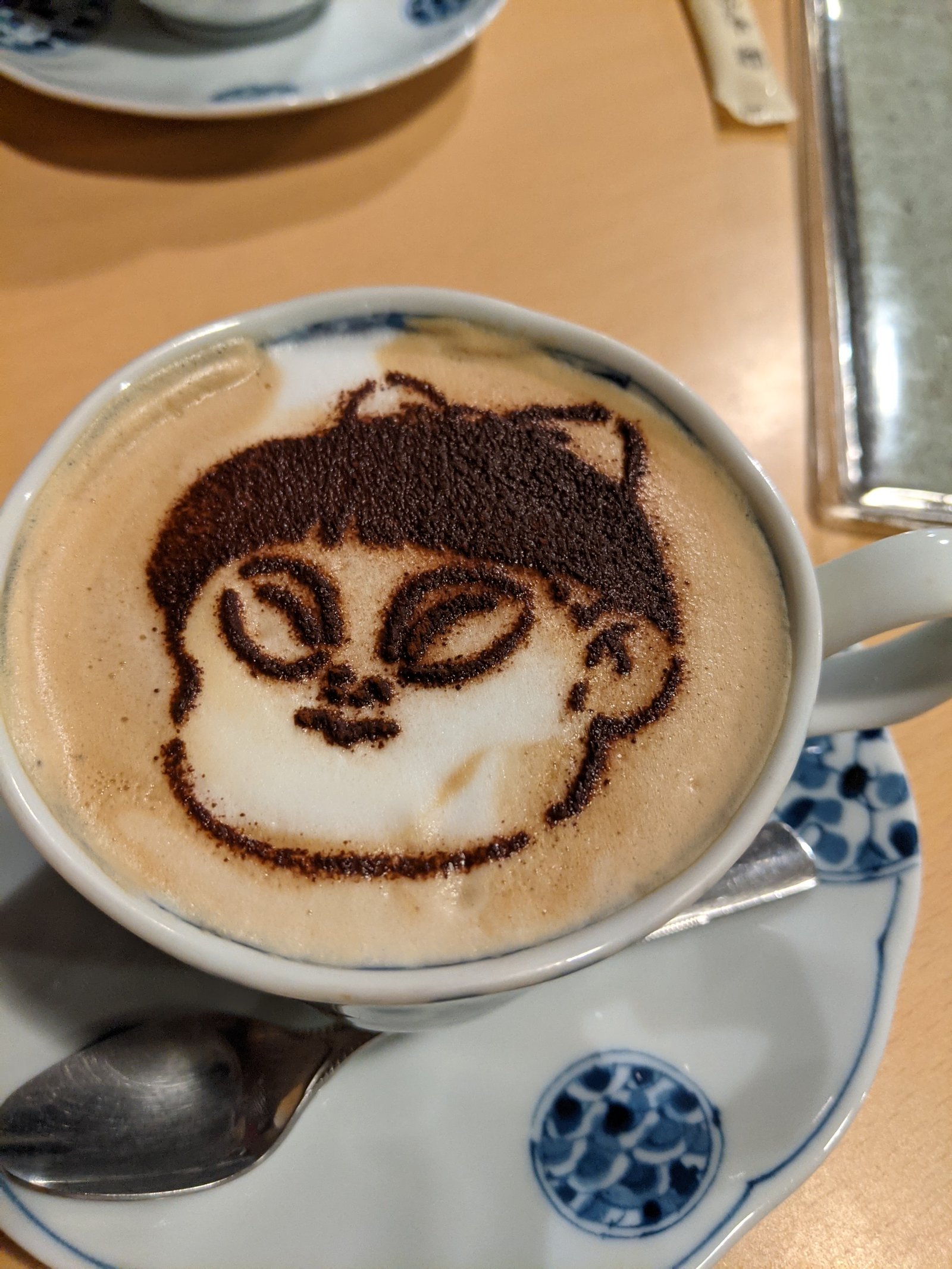
Reservation and ordering rules vary by cafe rather than following one Japan-wide standard; Shaun the Sheep Village Shop & Cafe, for instance, takes reservations up to 60 days ahead through its own booking site. Many character cafes also enforce a minimum one-item-per-person order, which is worth knowing since a party of four can mean four separate orders, not one dish to share; check the specific cafe’s own site for its policy before you go. Menu items at character cafes are usually priced at a premium over a standard cafe, which is the tradeoff for the character branding and photo-friendly presentation.
If your trip has room for one deliberate splurge stop, a birthday, a last full day, a rainy-day plan B, a character cafe is a good fit. As an everyday coffee break between sightseeing stops, it’s the wrong tool: slower, pricier, and usually booked in advance rather than walk-in.
Common Mistakes
-
Walking into a small, independent specialty-coffee shop with a stroller and a toddler at a busy hour, then reading a cool reception as rudeness. It’s usually a space and clientele mismatch, not hostility; check seating type and crowd before committing, using the checklist above.
-
Assuming any Starbucks in Tokyo will have the Kids Frappuccino. It’s tied to Starbucks Japan’s “Family Friendly Store” format, around 8 locations nationwide as of 2026, not a general Tokyo offering. The standard Kids Milk, Kids Cocoa, and be juicy! kids line is what’s realistically available almost everywhere else.
-
Ordering the full kids’ plate at Komeda by default. A plain kids’ juice is a perfectly normal order too, and it’s what our own family has ordered without any issue; you don’t need to commit to the full Daisuki Plate every visit.
-
Assuming any specific Komeda or Hoshino location will have every kids’ menu item or amenity you saw online. Both chains have store-level variation in menu and equipment; check the specific location’s own store page or call ahead if a particular item or facility matters for your visit.
-
Showing up to a character cafe without a reservation. Most require booking ahead through the shop’s own site; walking in and hoping for a table is a real risk of being turned away.
-
Overlooking department store cafes as “not the real Japan experience.” For a family with a baby needing a nursing room or a toddler who needs real space to move, a department store’s dedicated kids floor often solves more problems than a standalone cafe can.
-
Treating a family restaurant like Gusto or Jonathan’s as a downgrade from “a real cafe.” For an actual meal with young kids, the free drink bar, tablet ordering, and stocked high chairs solve more real problems than a smaller independent cafe’s ambience does.
FAQ
Is Starbucks in Japan kid-friendly?
Yes, in a specific and narrower way than US visitors sometimes expect. There’s a real Kids Beverages line, Kids Milk and Kids Cocoa from ¥220, be juicy! kids from ¥260, all for ages 12 and under, but the novelty Kids Frappuccino flavors (Milk Cream, Chocolate, Strawberry) are limited to Starbucks’ “Family Friendly Store” format, around 8 locations nationwide as of 2026, not a general Tokyo offering. Our own family tried Kids Milk once and moved on to juice once our kids could ask for it by name.
Does Komeda Coffee have a kids’ menu?
Yes, the Daisuki Plate (‘Favorites Plate’) commonly runs roughly ¥600–680 and includes small sandwiches, mini fried chicken or sausage, potato salad, fries, jelly, and a kids’ drink, aimed at elementary-school age and under. A plain kids’ juice is also a completely normal order if the full plate is more than you need; that’s what our own family has ordered there. Exact pricing, booster seats, and diaper-changing facilities can vary by store, so check Komeda’s own store-locator filters if any of that matters for your visit.
Is Tully’s worth choosing over Starbucks with kids?
If the goal is a few minutes of peace at the table, yes. Tully’s Kids Apple Juice (¥370) comes with a toy and a paper apron, and in our experience the toy does more work than the drink: it gives a young kid something to do while the adults finish talking.
How can I tell if a cafe in Tokyo actually welcomes kids before I walk in?
Check seating type (booth or table seating signals family-friendly; counter-only signals a quieter, adult-paced room), look for stroller signage at the entrance, and notice whether the visible crowd is solo laptop users or mixed groups. Nationwide chains, Komeda, Hoshino, Starbucks, Tully’s, family restaurants, have generally already made the family-friendly design choices; an independent shop hasn’t necessarily made either choice.
Are family restaurants like Gusto or Jonathan’s a good alternative to a cafe?
Yes, especially if you want an actual meal rather than just coffee and cake. Gusto’s kids’ plates run roughly ¥550–600, with a standalone kids’ drink bar at ¥130 (free age 3 and under), and parent-blog visit reports describe some Jonathan’s locations offering baby-ready high chairs and warming store-bought baby food on request; worth confirming for your specific location. Both use tablet ordering, which removes the need to flag down a server.
Do department store cafes in Tokyo allow strollers and offer kids’ menus?
Generally yes, and they’re a strong option with a baby specifically. Isetan Shinjuku’s 6th floor is a dedicated baby/kids floor with its own family cafe and a separate baby-rest area for nursing and changing, and Takashimaya Shinjuku’s official kids’-guide lists dedicated children’s menus at 19 of its restaurants, priced ¥300–1,980. Expect more crowding around the standard noon–1pm lunch hour.
Are character cafes worth visiting with young kids?
As a deliberate, planned outing at a cafe that’s currently open, yes, especially for a birthday or a rainy-day plan. Check that the specific cafe is still operating before you plan around it, since this category does see closures (a well-known Moomin-themed cafe near Tokyo Skytree, for instance, closed in 2023). As a spontaneous coffee break, character cafes are generally the wrong tool: many require an advance reservation and enforce a one-item-per-person minimum order, and run pricier than a standard cafe visit.
Why do some Japanese cafes feel unwelcoming to kids?
Usually a space and clientele decision, not hostility. A small specialty-coffee or single-owner cafe often has narrow aisles and counter-heavy seating built for a quiet, solo-leaning crowd; a stroller in that layout can be a genuine physical hazard, not just an inconvenience. It’s a different kind of business from a roadside family chain, and recognizing the difference before you sit down avoids most of the friction.
Plan Your Japan Trip
Also useful:
-
Tokyo Kissaten Morning: How to Experience a Japanese Breakfast with Kids
-
Best Snacks for Kids in Tokyo: From Dagashi to Matcha Sweets
Information checked: 2026/09