
TL;DR
-
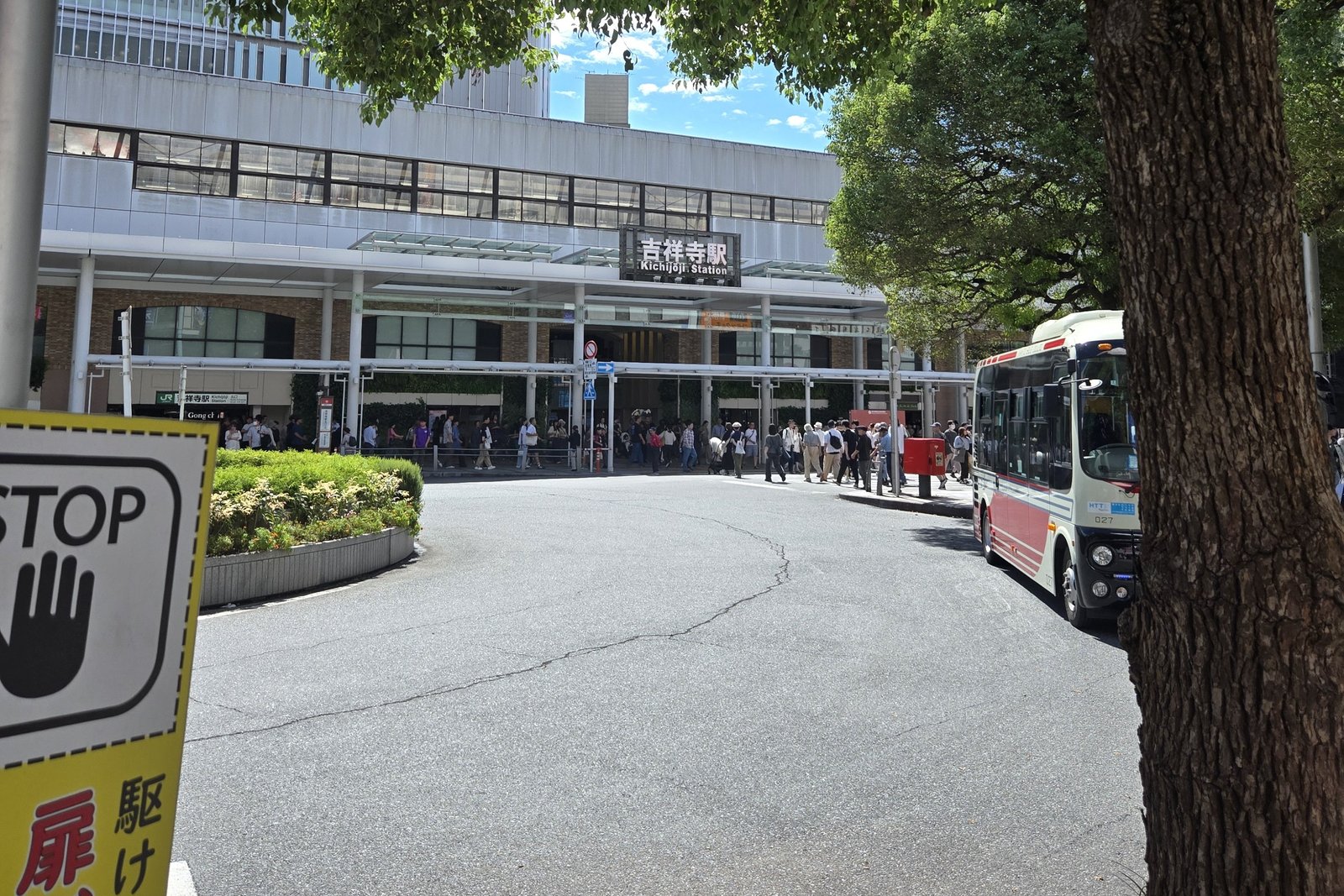
Take Kichijoji Station’s Koen-guchi (Park Exit, on the station’s south side). It’s the more direct route toward Inokashira Park, through a shopping street rather than the station’s busier commercial side
-
On the way in you’ll pass Isseya’s park branch (Koen-ten), one of the yakitori chain’s three Kichijoji locations. It opens at noon, draws a line beforehand, and is closed Mondays
-
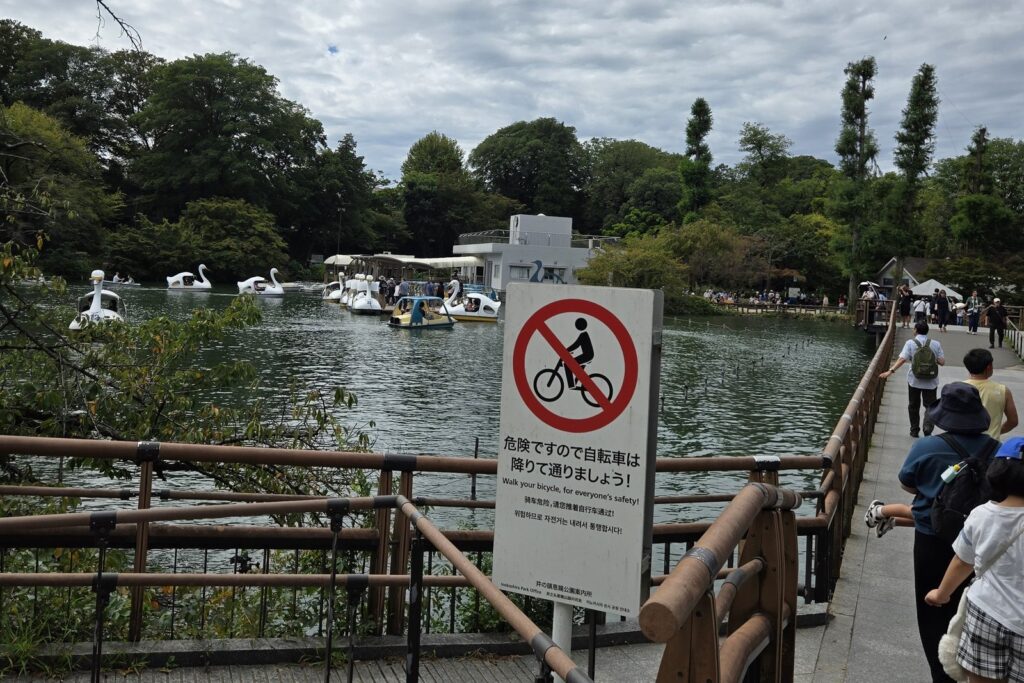
At the park’s central pond, a bridge splits your options: coming from the Koen-guchi side, the zoo entrance is to the right, the boat dock is to the left
-
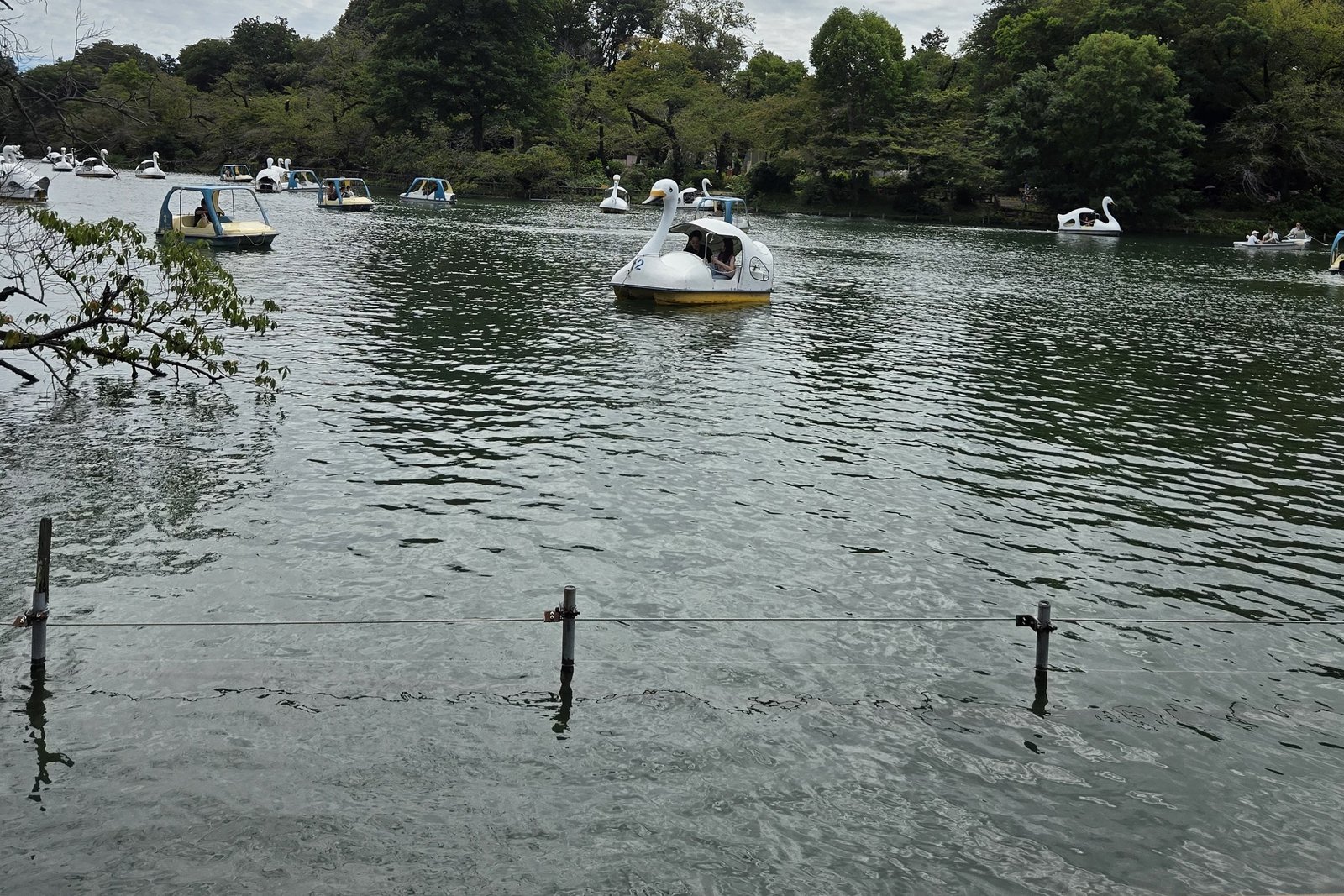
Swan and pedal boats officially hold up to 2 adults and 1 child each. Two kids who both want to be on the water at once means two boats side by side, not one boat shared
-
A 4-year-old can’t reach the pedals but can work the steering handle, which was the actual highlight for our kids, not the ride itself
-
Inokashira Park Zoo is right across the bridge if you have time: ¥400 for adults, free for elementary school age and under. We haven’t been inside ourselves yet
-
The Ghibli Museum sits further into the park, but it needs a timed ticket booked in advance, so it’s not something you can casually add on the same day without one already in hand
At a Glance
| Nearest station | JR Chuo Line or Keio Inokashira Line, Kichijoji Station; use the Koen-guchi (Park Exit, on the station’s south side) |
| Walk to the park | About 5–10 minutes from the Koen-guchi, through the shopping street |
| Boats | Rowboat (up to 3 adults) ¥800/30 min · Cycle boat or swan boat (up to 2 adults + 1 child) ¥1,000/30 min · closed Wednesdays, December–February only |
| Inokashira Park Zoo | Adults ¥400 · 65+ ¥200 · Junior high ¥150 · Elementary school age and under free · 9:30–17:00 (last entry 16:00) · closed Mondays (next day if Monday is a holiday) and Dec 29–Jan 1 |
| Isseya, park branch (Koen-ten) | Opens 12:00 daily except Mondays; a line forms before opening |
| Typical visit | Half a day for the park and the boats; we haven’t budgeted time for the zoo ourselves yet |
Is It Worth It?
Short answer: yes, and it works as a genuinely relaxed half day rather than something you need to plan hard around.
We visited toward the end of Japan’s Silver Week with our four-and-a-half-year-old twins, coming in on the Chuo Line from Shinjuku. What stood out wasn’t any single attraction; it was how little effort the day took. The walk from the station is short, the pond and the boats are the natural centerpiece, and there’s a real yakitori institution sitting right on the route in if you want to build a meal around the visit.
By age (from this visit): at four and a half, our twins couldn’t reach the boat’s pedals, so the ride became a steering exercise instead, working the handle to turn the boat while an adult handled the pedaling. That turned out to be the part they cared about most, not the boat ride as a concept but the fact that they were the ones making it turn. We didn’t go into the zoo or walk on to the Ghibli Museum on this visit, so we can’t speak to those from firsthand experience with our own kids yet.
Getting There: Use the Park Exit (Koen-guchi)
Kichijoji Station has several exits, and it’s easy to come out the wrong one and end up walking the long way around. Look for the exit marked Koen-guchi, the Park Exit, and take that.
Coming out of the Koen-guchi, cross the road just outside the exit and follow the shopping street ahead, crossing another road or two on the way through, until it brings you to the park. It’s a walk of about 5 to 10 minutes, and it’s a nicer approach than cutting through the station’s busier commercial side, even if it isn’t a single unbroken straight line.
One thing worth knowing if you’re traveling with a stroller: both JR and Keio have elevator routes at Kichijoji Station, but which one gets you down fastest depends on which platform and ticket gate you come out of. On this visit, with a double stroller and coming from a particular platform, we ended up on a route with a fair number of stairs and a real detour to reach street level. With twins in tow, this was the one part of the day that felt like more effort than it needed to be. If you’re managing two children and only one adult, it’s worth allowing extra time here, and asking station staff for the elevator route if you’re not sure which way to go.
The Walk In: Isseya and the Shopping Street
The street between the station and the park is lined with small shops: zakka stores, cafes, and a few bars, the kind of places that work well as a stop before or after the park rather than a destination in themselves.
The one name worth knowing specifically is Isseya, a well-known Kichijoji yakitori business with three locations in the area; the one directly on this route, between the station and the park, is the park branch. It opens at 12:00 and is closed Mondays. On this visit, a long line had already formed outside before the noon opening. We didn’t eat there ourselves this time, so we can’t say how long the wait actually runs once it opens, but if a line has already built before opening, arriving right at 12:00 is a safer bet than showing up sometime after.
Once you’re past Isseya, the shopping street gives way to Inokashira Park itself.
Inokashira Park: The Pond and the Bridge
Inokashira Park’s centerpiece is a large pond, and the path in from the Koen-guchi side brings you to a bridge across the middle of it. Arriving this way, facing the pond from the bridge, the zoo entrance is on the right and the boat dock is on the left.
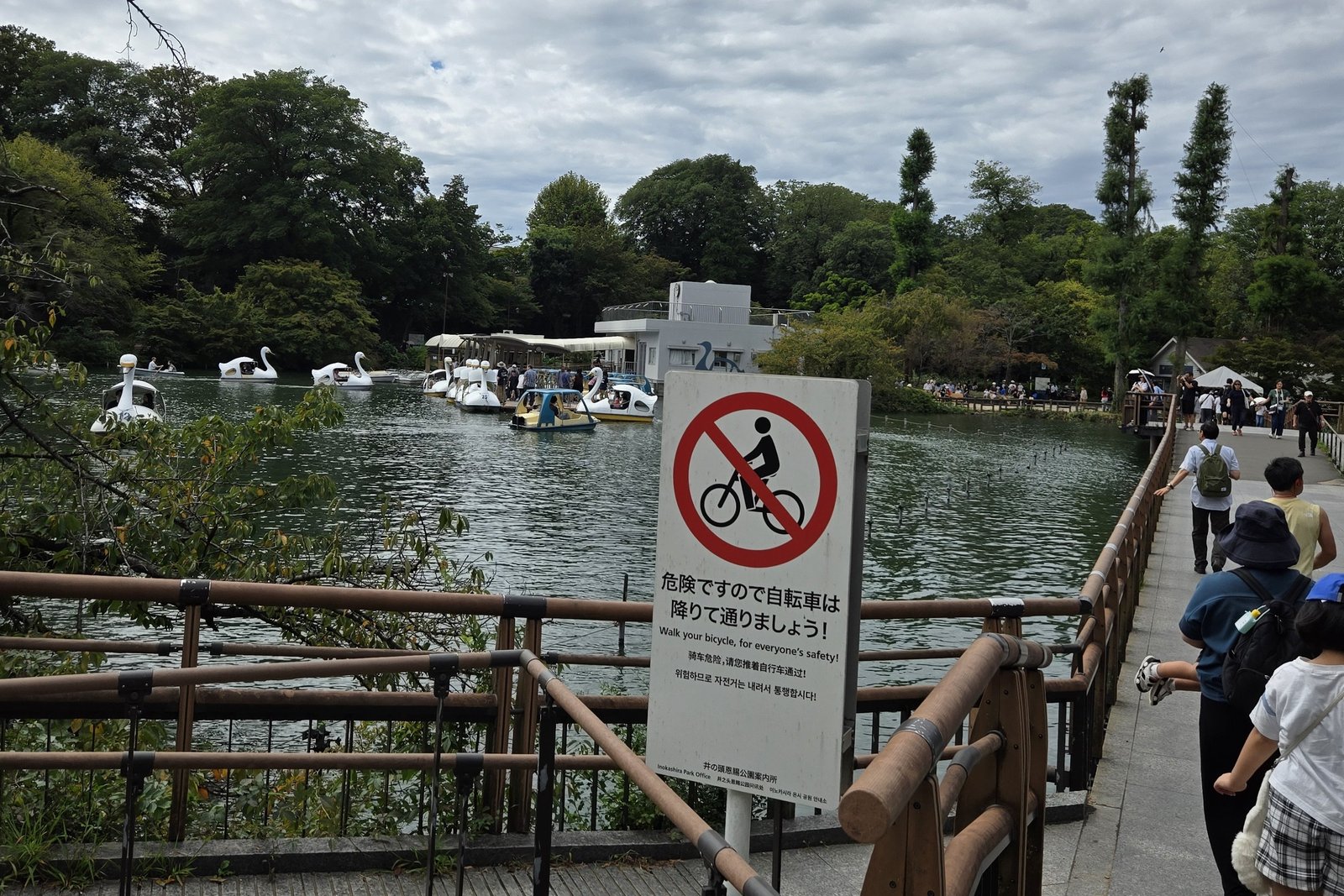
With only part of a day available, we headed left for the boats rather than right for the zoo. If you have more time, there’s no wrong order. Going right first means the zoo, going left first means the water.
Renting a Swan or Pedal Boat with Kids
According to the official boat dock page, Inokashira Park’s boat dock has three options: a rowboat for up to 3 adults at ¥800 per 30 minutes, and a cycle boat or swan boat, each for up to 2 adults and 1 child, at ¥1,000 per 30 minutes. (A separate Tokyo Metropolitan Government facility page lists a higher child capacity for the swan boat specifically; the boat dock’s own page above is the one to check before you go.) Hours run roughly 10:00–17:50 with last boarding at 16:50 for most of the April–September season, extending to 18:20 (last boarding 17:20) from August 1 through the third Sunday of August, and starting earlier in the colder months. The dock closes on Wednesdays during December through February.
The capacity limit is worth planning around if you have more than one child: each swan or cycle boat only allows one child alongside two adults. If you want both kids on the water at the same time, as we did, that means renting two boats side by side rather than trying to fit everyone into one, and it means both parents need to be there to pedal each boat.
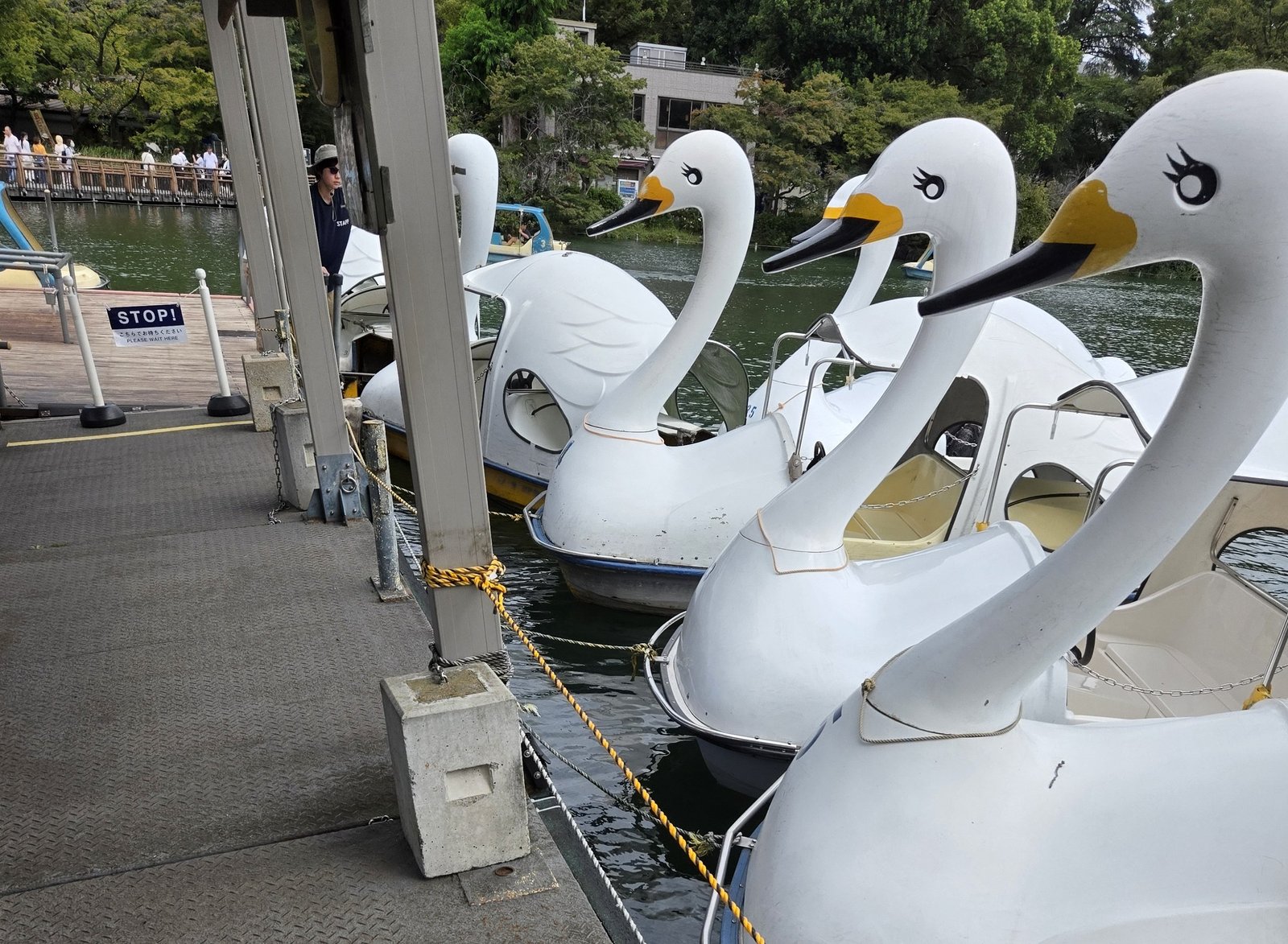
At four and a half, our kids’ feet didn’t reach the pedals, so the boat became a two-role job: an adult pedaling, a kid steering with the handle. That division ended up being the best part of the ride for them; being the one who decided which way the boat turned held their attention for a full 30 minutes, longer than we expected going in.
We can’t say how it goes on a busier day: the dock was quiet when we arrived, and we were on the water within a few minutes. Once out on the pond, though, there were plenty of other boats around us, close enough that it’s worth telling kids in advance to steer carefully rather than aim for speed.
Inokashira Park Zoo (Across the Bridge)
We didn’t go inside on this visit, so this section leans on the zoo’s official information rather than our own experience of it. Inokashira Park Zoo sits just across the bridge from the boat dock, split into a main zoo area and a separate aquatic life area a short walk apart.
Admission is ¥400 for adults, ¥200 for ages 65 and up, ¥150 for junior high students (free for junior high schoolers who live or attend school in Tokyo), and free for elementary school age and under. It’s open 9:30–17:00 with last entry at 16:00, and closed Mondays (the following day if Monday is a public holiday) and December 29 through January 1.
For zoos we’ve actually spent a full day at with our own kids, our Ueno Zoo and Tama Zoo guides go into that kind of detail. We’ll update this section once we’ve been inside ourselves.
Nearby: The Ghibli Museum
The Ghibli Museum sits inside Inokashira Park’s grounds, a further walk beyond the pond toward Mitaka. We didn’t continue on to it this time, since we had somewhere to be that afternoon. It’s not somewhere you can casually decide to visit on the day: every ticket is for a specific date and entry time, booked in advance, so it only fits into a Kichijoji day if you already hold one. Our Ghibli Museum guide covers how the booking system works and what to expect once you’re inside.
Family Tips
Ask for the Elevator Route If You’re Bringing a Stroller
Kichijoji Station has elevator access, but which route is fastest depends on your platform and ticket gate. We ended up on a stair-heavy route with a double stroller; asking station staff for the elevator to the Koen-guchi is worth the extra minute if you’re not sure.
Splitting Kids Across Two Boats Needs Both Parents There
Each swan or cycle boat takes one child at most. If you want more than one child on the water at the same time, budget for two boats and two adults, not one boat for the whole family.
Recommended Route
Koen-guchi exit → shopping street (Isseya’s park branch if the timing works) → central pond and bridge → boats or zoo → Ghibli Museum only if you already hold a ticket
- Exit via the Koen-guchi, using the elevator route if you have a stroller
- Walk the shopping street toward the park, timing a stop at Isseya’s park branch for right at its 12:00 opening if you want to eat there
- At the pond, decide left (boats) or right (zoo) based on how much time you have
- Rent a swan or cycle boat, one per child if you want them on the water together
- Only build in the Ghibli Museum if you already hold a booked entry time; it isn’t a same-day add-on
Total time: roughly half a day for the park and boats, more if you add the zoo or the Ghibli Museum.
FAQ
Is Inokashira Park free?
The park itself is free to walk around. The boats and Inokashira Park Zoo are separate paid attractions inside it.
How much are the swan boats at Inokashira Park?
¥1,000 for 30 minutes, for up to 2 adults and 1 child. Cycle boats are the same price and capacity; rowboats are ¥800 for 30 minutes and hold up to 3 adults instead.
Can two kids ride the same swan boat?
No. The official capacity is 2 adults and 1 child per boat. A family with two children who both want to be on the water at once needs two boats and two adults, one pedaling each; alternatively, one adult and one child can ride while the other adult and child wait or explore the zoo side.
Which exit should I use at Kichijoji Station for the park?
The Koen-guchi (Park Exit, on the station’s south side). It’s the more direct route toward Inokashira Park, through a shopping street rather than the station’s busier commercial side.
Is Kichijoji Station stroller-friendly on the way to the park?
Partly. The shopping street itself is flat and easy, and both JR and Keio have elevator access at the station, but which route is fastest depends on your platform and ticket gate. Ask station staff for the elevator route to the Koen-guchi if you’re not sure, especially with more than one child.
Is Isseya open every day?
The park branch, the one on the route between the station and the park, is closed Mondays and opens at 12:00 the rest of the week, with a line forming beforehand. Isseya has other locations in Kichijoji with their own hours.
Can I walk to the Ghibli Museum from Inokashira Park?
Yes, it’s inside the same park grounds, a further walk beyond the pond toward Mitaka. The museum requires its own advance-booked tickets; see our Ghibli Museum guide for how that works.
Information checked: 2026/09